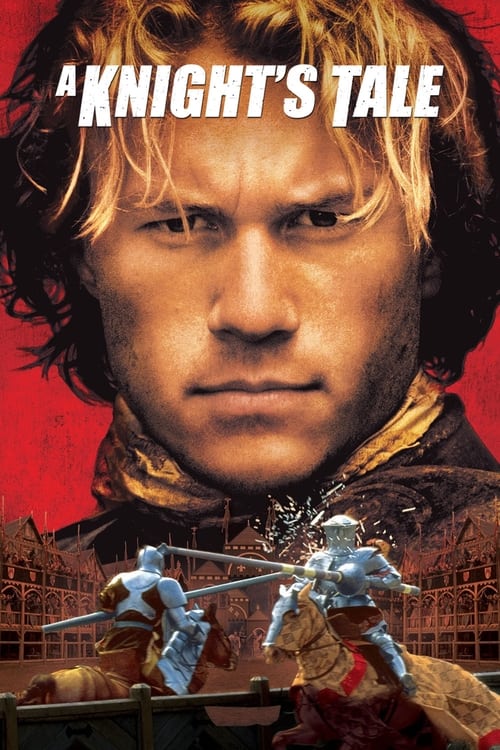
A Knight's Tale
William Thatcher, a knight's peasant apprentice, gets a chance at glory when the knight dies suddenly mid-tournament. Posing as a knight himself, William won't stop until he's crowned tournament champion—assuming matters of the heart don't get in the way.
Working with a moderate budget of $65.0M, the film achieved a steady performer with $117.5M in global revenue (+81% profit margin).
4 wins & 13 nominations


Plot Structure
Story beats plotted across runtime


Narrative Arc
Emotional journey through the story's key moments
Story Circle
Blueprint 15-beat structure
Arcplot Score Breakdown
Weighted: Precision (70%) + Arc (15%) + Theme (15%)
A Knight's Tale (2001) reveals meticulously timed plot construction, characteristic of Brian Helgeland's storytelling approach. This structural analysis examines how the film's 15-point plot structure maps to proven narrative frameworks across 2 hours and 13 minutes. With an Arcplot score of 6.9, the film balances conventional beats with creative variation.
Characters
Cast & narrative archetypes

William Thatcher
Jocelyn
Geoffrey Chaucer
Roland
Wat
Count Adhemar
Kate
Main Cast & Characters
William Thatcher
Played by Heath Ledger
A peasant squire who disguises himself as a knight to compete in jousting tournaments and change his stars.
Jocelyn
Played by Shannyn Sossamon
A noble lady who becomes William's love interest and challenges him to prove his devotion.
Geoffrey Chaucer
Played by Paul Bettany
A debt-ridden writer who becomes William's herald and fabricates his noble lineage.
Roland
Played by Mark Addy
William's loyal friend and fellow squire who supports his jousting aspirations.
Wat
Played by Alan Tudyk
William's hot-tempered friend and squire with a fierce loyalty to his companions.
Count Adhemar
Played by Rufus Sewell
A cruel and arrogant nobleman who serves as William's primary rival in tournaments and love.
Kate
Played by Laura Fraser
A skilled female blacksmith who forges William's armor and becomes part of his team.
Structural Analysis
The Status Quo at 1 minutes (1% through the runtime) establishes William Thatcher, a peasant squire, watches his master Sir Ector compete in a jousting tournament. He dreams of glory but is bound by his lowborn status in a rigid feudal world where "a man can't change his stars.".. Notably, this early placement immediately immerses viewers in the story world.
The inciting incident occurs at 16 minutes when Sir Ector dies suddenly before the final joust. William sees the tournament winnings slipping away and makes an impulsive decision: he will don Ector's armor and compete himself, breaking every rule of chivalry and social hierarchy.. At 12% through the film, this Disruption aligns precisely with traditional story structure. This beat shifts the emotional landscape, launching the protagonist into the central conflict.
The First Threshold at 34 minutes marks the transition into Act II, occurring at 25% of the runtime. This illustrates the protagonist's commitment to William fully commits to the deception. Chaucer forges papers creating "Sir Ulrich von Liechtenstein." William and his crew make the active choice to enter the tournament circuit as a knight, knowing discovery means death. They can't go back., moving from reaction to action.
At 67 minutes, the Midpoint arrives at 50% of the runtime—precisely centered, creating perfect narrative symmetry. Structural examination shows that this crucial beat False victory: William wins the tournament and Jocelyn's favor. He's at the height of his success, believing he's proved he can change his stars. But Count Adhemar, a true nobleman and antagonist, becomes suspicious and begins investigating William's background. The stakes raise., fundamentally raising what's at risk. The emotional intensity shifts, dividing the narrative into clear before-and-after phases.
The Collapse moment at 98 minutes (74% through) represents the emotional nadir. Here, William is exposed as a commoner in front of the entire tournament crowd. He's arrested and placed in the pillory to be humiliated and executed. His dream dies publicly. His identity as "Sir Ulrich" is literally killed, and he faces actual death., shows the protagonist at their lowest point. This beat's placement in the final quarter sets up the climactic reversal.
The Second Threshold at 105 minutes initiates the final act resolution at 79% of the runtime. The Prince (Edward, the Black Prince) reveals he's known William's true identity all along and pardons him. More crucially, he knights William for real—validating that nobility comes from courage and honor, not birth. William synthesizes his peasant authenticity with earned knighthood., demonstrating the transformation achieved throughout the journey.
Emotional Journey
A Knight's Tale's emotional architecture traces a deliberate progression across 15 carefully calibrated beats.
Narrative Framework
This structural analysis employs proven narrative structure principles that track dramatic progression. By mapping A Knight's Tale against these established plot points, we can identify how Brian Helgeland utilizes or subverts traditional narrative conventions. The plot point approach reveals not only adherence to structural principles but also creative choices that distinguish A Knight's Tale within the adventure genre.
Brian Helgeland's Structural Approach
Among the 5 Brian Helgeland films analyzed on Arcplot, the average structural score is 7.0, reflecting strong command of classical structure. A Knight's Tale takes a more unconventional approach compared to the director's typical style. For comparative analysis, explore the complete Brian Helgeland filmography.
Comparative Analysis
Additional adventure films include The Black Stallion, The Bad Guys and Puss in Boots. For more Brian Helgeland analyses, see The Order, Legend and 42.
Plot Points by Act
Act I
SetupStatus Quo
William Thatcher, a peasant squire, watches his master Sir Ector compete in a jousting tournament. He dreams of glory but is bound by his lowborn status in a rigid feudal world where "a man can't change his stars."
Theme
William's father tells young William: "You can change your stars." This thematic statement directly opposes the social order and becomes William's guiding principle—that identity is earned through action, not birth.
Worldbuilding
Establishing the tournament world, William's squire life, his friendship with Roland and Wat, Sir Ector's death before completing the tournament, and the desperate financial situation that leaves them stranded.
Disruption
Sir Ector dies suddenly before the final joust. William sees the tournament winnings slipping away and makes an impulsive decision: he will don Ector's armor and compete himself, breaking every rule of chivalry and social hierarchy.
Resistance
William wins the joust and tastes glory but must face the consequences. His friends debate whether to continue the deception. They meet Chaucer, a naked gambling addict who can forge patents of nobility. William wrestles with the morality and danger of his choice.
Act II
ConfrontationFirst Threshold
William fully commits to the deception. Chaucer forges papers creating "Sir Ulrich von Liechtenstein." William and his crew make the active choice to enter the tournament circuit as a knight, knowing discovery means death. They can't go back.
Mirror World
William meets Lady Jocelyn, a noblewoman who embodies courtly love traditions. She challenges him to prove his worth through deeds, not words. This romantic subplot will teach William about authentic identity versus performance.
Premise
The promise of the premise: jousting montages, William competing and winning tournaments, the crew living the high life, courtly romance with Jocelyn, training sequences, and the thrill of nearly getting caught but succeeding through skill and audacity.
Midpoint
False victory: William wins the tournament and Jocelyn's favor. He's at the height of his success, believing he's proved he can change his stars. But Count Adhemar, a true nobleman and antagonist, becomes suspicious and begins investigating William's background. The stakes raise.
Opposition
Adhemar intensifies his pursuit of both William's title and Jocelyn. William's pride grows dangerous—he's becoming the very arrogance he opposed. Jocelyn tests his authenticity. Adhemar pressures and investigates. The crew faces increasing danger of exposure.
Collapse
William is exposed as a commoner in front of the entire tournament crowd. He's arrested and placed in the pillory to be humiliated and executed. His dream dies publicly. His identity as "Sir Ulrich" is literally killed, and he faces actual death.
Crisis
William endures public humiliation in the stocks. He confronts his shame and the consequences of his deception. His friends stand by him but can do nothing. This is his dark night—stripped of pretense, facing who he really is.
Act III
ResolutionSecond Threshold
The Prince (Edward, the Black Prince) reveals he's known William's true identity all along and pardons him. More crucially, he knights William for real—validating that nobility comes from courage and honor, not birth. William synthesizes his peasant authenticity with earned knighthood.
Synthesis
William returns to the final joust as his true self: William Thatcher, a knight. He faces Adhemar in climactic combat, fighting now for honor rather than deception. He wins through skill and the support of common people who cheer his name. Love and identity are resolved authentically.
Transformation
William removes his helmet before the crowd—no longer hiding, no longer pretending. He stands as himself, accepted by nobles and commoners alike. Jocelyn embraces him. The final image shows a peasant boy who changed his stars by being true to himself.