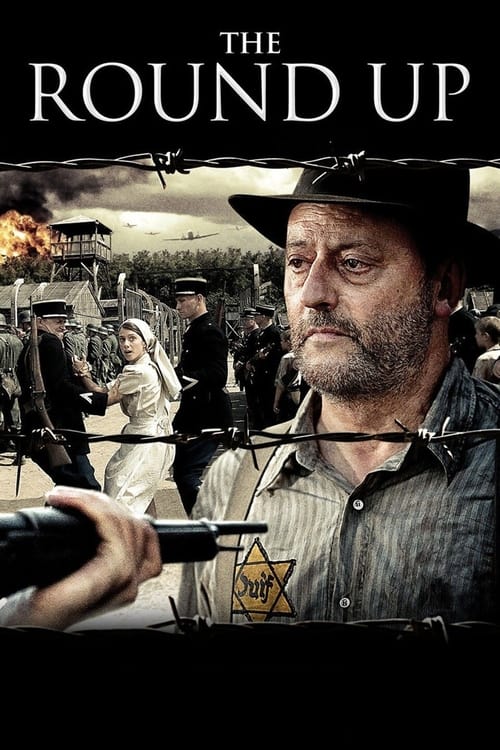
The Round Up
A faithful retelling of the 1942 "Vel' d'Hiv Roundup" and the events surrounding it.
Working with a moderate budget of $20.0M, the film achieved a respectable showing with $25.3M in global revenue (+27% profit margin).


Plot Structure
Story beats plotted across runtime


Narrative Arc
Emotional journey through the story's key moments
Story Circle
Blueprint 15-beat structure
Arcplot Score Breakdown
Weighted: Precision (70%) + Arc (15%) + Theme (15%)
The Round Up (2010) showcases meticulously timed narrative architecture, characteristic of Roselyne Bosch's storytelling approach. This structural analysis examines how the film's 15-point plot structure maps to proven narrative frameworks across 1 hour and 55 minutes. With an Arcplot score of 7.4, the film balances conventional beats with creative variation.
Structural Analysis
The Status Quo at 1 minutes (1% through the runtime) establishes Jewish children playing in the streets of Paris, wearing yellow stars. Young Jo Weisman and his friends live ordinary lives under occupation, attending school and playing games despite restrictions.. Structural examination shows that this early placement immediately immerses viewers in the story world.
The inciting incident occurs at 14 minutes when French police receive orders for a massive roundup of Jewish families. The bureaucratic machinery of the Vel' d'Hiv operation begins. Families sense something terrible is coming but don't yet know the scale.. At 13% through the film, this Disruption is delayed, allowing extended setup of the story world. This beat shifts the emotional landscape, launching the protagonist into the central conflict.
The First Threshold at 29 minutes marks the transition into Act II, occurring at 25% of the runtime. This reveals the protagonist's commitment to July 16, 1942, 4 AM: The roundup begins. French police bang on doors throughout Paris. Families are forcibly removed from their homes. The Weismans and thousands of others are arrested and taken from their world forever., moving from reaction to action.
At 58 minutes, the Midpoint arrives at 50% of the runtime—precisely centered, creating perfect narrative symmetry. Notably, this crucial beat Families are transferred from the Vel' d'Hiv to transit camps at Beaune-la-Rolande and Pithiviers. False hope that conditions will improve is crushed—the camps are worse. The systematic separation of families begins., fundamentally raising what's at risk. The emotional intensity shifts, dividing the narrative into clear before-and-after phases.
The Collapse moment at 86 minutes (75% through) represents the emotional nadir. Here, The children are loaded onto cattle cars for deportation to Auschwitz. Jo and the surviving children face their darkest moment, orphaned and doomed. Annette watches helplessly as the trains depart. The "whiff of death" is literal—these children are being sent to extermination., demonstrates the protagonist at their lowest point. This beat's placement in the final quarter sets up the climactic reversal.
The Second Threshold at 92 minutes initiates the final act resolution at 80% of the runtime. The film shifts to testimony and remembrance. The realization that bearing witness and remembering is the only way to honor the dead and prevent future atrocities. The survivors' responsibility to tell the story., demonstrating the transformation achieved throughout the journey.
Emotional Journey
The Round Up's emotional architecture traces a deliberate progression across 15 carefully calibrated beats.
Narrative Framework
This structural analysis employs structural analysis methodology used to understand storytelling architecture. By mapping The Round Up against these established plot points, we can identify how Roselyne Bosch utilizes or subverts traditional narrative conventions. The plot point approach reveals not only adherence to structural principles but also creative choices that distinguish The Round Up within the drama genre.
Roselyne Bosch's Structural Approach
Among the 2 Roselyne Bosch films analyzed on Arcplot, the average structural score is 7.1, reflecting strong command of classical structure. The Round Up represents one of the director's most structurally precise works. For comparative analysis, explore the complete Roselyne Bosch filmography.
Comparative Analysis
Additional drama films include After Thomas, South Pacific and Dirty Dancing: Havana Nights. For more Roselyne Bosch analyses, see My Summer in Provence.
Plot Points by Act
Act I
SetupStatus Quo
Jewish children playing in the streets of Paris, wearing yellow stars. Young Jo Weisman and his friends live ordinary lives under occupation, attending school and playing games despite restrictions.
Theme
Nurse Annette Monod tells Jewish families: "You must have hope. We cannot give up our humanity." The film's central question: Can humanity survive in the face of systematic dehumanization?
Worldbuilding
Establishment of Jewish community life in occupied Paris, 1942. Introduction of the Weisman family, Zygler family, and other Jewish residents living under increasing restrictions. Shows daily humiliations, yellow star requirements, and Nazi-Vichy collaboration planning the roundup.
Disruption
French police receive orders for a massive roundup of Jewish families. The bureaucratic machinery of the Vel' d'Hiv operation begins. Families sense something terrible is coming but don't yet know the scale.
Resistance
Warnings circulate through the Jewish community. Some families debate fleeing or hiding. Dr. Sheinbaum and others try to prepare. Nurse Annette Monod mobilizes medical supplies. The community wrestles with disbelief that France would betray its own citizens.
Act II
ConfrontationFirst Threshold
July 16, 1942, 4 AM: The roundup begins. French police bang on doors throughout Paris. Families are forcibly removed from their homes. The Weismans and thousands of others are arrested and taken from their world forever.
Mirror World
Inside the Vélodrome d'Hiver stadium, 13,000 people imprisoned without food, water, or sanitation. Nurse Annette Monod enters as a rescuer, embodying the film's theme of maintaining humanity. Her relationship with the families becomes the moral compass.
Premise
The nightmare of the Vel' d'Hiv: families crammed in unbearable conditions for five days. Children crying, elderly dying, suicides. Annette and other rescuers fight to bring supplies. Small acts of resistance and humanity amid systematic cruelty. The community tries to survive together.
Midpoint
Families are transferred from the Vel' d'Hiv to transit camps at Beaune-la-Rolande and Pithiviers. False hope that conditions will improve is crushed—the camps are worse. The systematic separation of families begins.
Opposition
At the transit camps, authorities separate children from parents for deportation. Families are torn apart violently. Parents are sent to Auschwitz while children remain behind. Jo Weisman and other children witness their parents disappear. Annette fights desperately to save children but the machine is unstoppable.
Collapse
The children are loaded onto cattle cars for deportation to Auschwitz. Jo and the surviving children face their darkest moment, orphaned and doomed. Annette watches helplessly as the trains depart. The "whiff of death" is literal—these children are being sent to extermination.
Crisis
The emotional aftermath. Annette and other rescuers process their failure to save most victims. The weight of witnessing genocide. A few children were saved through desperate last-minute interventions, but thousands perished.
Act III
ResolutionSecond Threshold
The film shifts to testimony and remembrance. The realization that bearing witness and remembering is the only way to honor the dead and prevent future atrocities. The survivors' responsibility to tell the story.
Synthesis
Epilogue showing the historical aftermath: 13,152 people arrested, including 4,115 children. Fewer than 100 survived. Text cards reveal the fates of real individuals portrayed. France's eventual acknowledgment of responsibility in 1995. The film completes its memorial purpose.
Transformation
Final images of the real Vel' d'Hiv memorial in Paris today, with names of victims. The transformation is not of the victims but of collective memory—from silence to acknowledgment. The film itself becomes an act of resistance against forgetting.