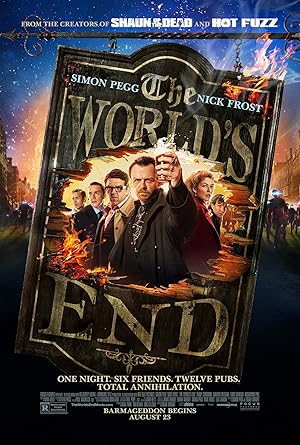
The World's End
20 years after attempting an epic pub crawl, five childhood friends reunite when one of them becomes hell bent on trying the drinking marathon again. They are convinced to stage an encore by mate Gary King, a 40-year old man trapped at the cigarette end of his teens, who drags his reluctant pals to their home town and once again attempts to reach the fabled pub, The World's End. As they attempt to reconcile the past and present, they realize the real struggle is for the future, not just theirs but humankind's. Reaching The World's End is the least of their worries.
Despite a mid-range budget of $20.0M, The World's End became a commercial success, earning $46.1M worldwide—a 131% return.
4 wins & 28 nominations


Plot Structure
Story beats plotted across runtime


Narrative Arc
Emotional journey through the story's key moments
Story Circle
Blueprint 15-beat structure
Arcplot Score Breakdown
Weighted: Precision (70%) + Arc (15%) + Theme (15%)
The World's End (2013) exhibits meticulously timed plot construction, characteristic of Edgar Wright's storytelling approach. This structural analysis examines how the film's 15-point plot structure maps to proven narrative frameworks across 1 hour and 49 minutes. With an Arcplot score of 4.0, the film takes an unconventional approach to traditional narrative frameworks.
Characters
Cast & narrative archetypes

Gary King
Andrew Knightley
Steven Prince
Peter Page
Oliver Chamberlain
Sam Chamberlain
The Network
Main Cast & Characters
Gary King
Played by Simon Pegg
A middle-aged man stuck in the past who convinces his childhood friends to attempt an epic pub crawl they failed to complete 20 years earlier.
Andrew Knightley
Played by Nick Frost
Gary's former best friend, now a successful lawyer who harbors deep resentment over a past betrayal.
Steven Prince
Played by Paddy Considine
A successful architect who still carries a torch for his high school sweetheart and struggles with unresolved feelings.
Peter Page
Played by Eddie Marsan
A timid car salesman who was bullied in school and still carries the emotional scars from his youth.
Oliver Chamberlain
Played by Martin Freeman
A corporate executive and family man who is the most reluctant to join Gary's pub crawl scheme.
Sam Chamberlain
Played by Rosamund Pike
Oliver's younger sister and Steven's former flame who gets caught up in the bizarre events of the night.
The Network
Played by Bill Nighy
The alien intelligence controlling the robot replacements infiltrating Newton Haven.
Structural Analysis
The Status Quo at 1 minutes (1% through the runtime) establishes Gary King narrates his glory days in 1990, describing the legendary failed attempt at the Golden Mile pub crawl with his four best friends. The nostalgic montage establishes Gary's peak moment—a night that defined him and that he's never moved past.. The analysis reveals that this early placement immediately immerses viewers in the story world.
The inciting incident occurs at 12 minutes when Gary convinces all four friends to return to Newton Haven for a reunion attempt at the Golden Mile. Despite their better judgment and busy lives, they agree—disrupting their ordinary worlds and setting the story in motion.. At 11% through the film, this Disruption aligns precisely with traditional story structure. This beat shifts the emotional landscape, launching the protagonist into the central conflict.
The First Threshold at 25 minutes marks the transition into Act II, occurring at 22% of the runtime. This reveals the protagonist's commitment to In the pub bathroom, Gary gets into a fight with a teenager whose head comes off, revealing him to be a robot filled with blue liquid. Gary and the group discover Newton Haven has been invaded by alien-controlled "blanks." There's no going back to normal life now., moving from reaction to action.
At 49 minutes, the Midpoint arrives at 45% of the runtime—arriving early, accelerating into Act IIb complications. Of particular interest, this crucial beat The group discovers Oliver has been replaced by a blank. The stakes shift from "survive and escape" to "we can't trust anyone." This false defeat reveals the invasion is more advanced than they knew—their own friend was taken. The fun is over; paranoia and desperation take hold., fundamentally raising what's at risk. The emotional intensity shifts, dividing the narrative into clear before-and-after phases.
The Collapse moment at 74 minutes (67% through) represents the emotional nadir. Here, Andy discovers Gary's hospital wristband—Gary attempted suicide before organizing this reunion. The crawl wasn't nostalgia; it was a death wish. Gary's façade crumbles as his friends realize how broken he truly is. The "whiff of death" is literal: Gary wanted to die completing his perfect night., shows the protagonist at their lowest point. This beat's placement in the final quarter sets up the climactic reversal.
The Second Threshold at 78 minutes initiates the final act resolution at 72% of the runtime. Gary declares he will finish the Golden Mile even if it kills him—but now with self-awareness rather than denial. Andy, finally understanding Gary's pain, commits to helping him reach The World's End. They enter Act 3 not as escapists, but as men choosing to face the end together., demonstrating the transformation achieved throughout the journey.
Emotional Journey
The World's End's emotional architecture traces a deliberate progression across 15 carefully calibrated beats.
Narrative Framework
This structural analysis employs structural analysis methodology used to understand storytelling architecture. By mapping The World's End against these established plot points, we can identify how Edgar Wright utilizes or subverts traditional narrative conventions. The plot point approach reveals not only adherence to structural principles but also creative choices that distinguish The World's End within the action genre.
Edgar Wright's Structural Approach
Among the 7 Edgar Wright films analyzed on Arcplot, the average structural score is 5.4, showcasing experimental approaches to narrative form. The World's End takes a more unconventional approach compared to the director's typical style. For comparative analysis, explore the complete Edgar Wright filmography.
Comparative Analysis
Additional action films include The Bad Guys, Puss in Boots and Venom: The Last Dance. For more Edgar Wright analyses, see Shaun of the Dead, Last Night in Soho and Baby Driver.
Plot Points by Act
Act I
SetupStatus Quo
Gary King narrates his glory days in 1990, describing the legendary failed attempt at the Golden Mile pub crawl with his four best friends. The nostalgic montage establishes Gary's peak moment—a night that defined him and that he's never moved past.
Theme
In the therapy group, Gary declares "It never got better than that night," revealing the film's thematic exploration: the danger of living in the past versus the pressure to conform and "grow up." His therapist and fellow patients represent society's expectation that he should have moved on.
Worldbuilding
Gary tracks down each of his former friends—Peter, Oliver, Steven, and Andy—all of whom have become responsible adults with careers and families. Their reluctance to join his reunion crawl establishes the central conflict between Gary's refusal to mature and their complete assimilation into conventional adult life.
Disruption
Gary convinces all four friends to return to Newton Haven for a reunion attempt at the Golden Mile. Despite their better judgment and busy lives, they agree—disrupting their ordinary worlds and setting the story in motion.
Resistance
The group reunites and begins the pub crawl, but tensions simmer. Andy refuses to drink due to past trauma involving Gary. The friends debate whether this trip was a mistake. Newton Haven feels eerily different—familiar yet wrong—preparing them for the threshold ahead.
Act II
ConfrontationFirst Threshold
In the pub bathroom, Gary gets into a fight with a teenager whose head comes off, revealing him to be a robot filled with blue liquid. Gary and the group discover Newton Haven has been invaded by alien-controlled "blanks." There's no going back to normal life now.
Mirror World
Sam, Oliver's sister and Steven's longtime crush, reappears. She represents both the group's shared past and the possibility of genuine human connection amidst the alien takeover. Her presence introduces the emotional subplot that will carry the theme of authentic relationships versus hollow replacements.
Premise
The group continues the pub crawl while fighting off blanks, trying to act normal to avoid detection. Gary insists on finishing despite the danger. The "fun and games" delivers on the premise: a pub crawl during an alien invasion, mixing comedic brawls with mounting paranoia about who's real.
Midpoint
The group discovers Oliver has been replaced by a blank. The stakes shift from "survive and escape" to "we can't trust anyone." This false defeat reveals the invasion is more advanced than they knew—their own friend was taken. The fun is over; paranoia and desperation take hold.
Opposition
The remaining humans fight through increasingly difficult pubs as the blanks close in. Andy finally starts drinking after learning the full truth. Peter is killed. The group fractures under pressure as Gary's obsession with finishing the crawl seems more and more unhinged.
Collapse
Andy discovers Gary's hospital wristband—Gary attempted suicide before organizing this reunion. The crawl wasn't nostalgia; it was a death wish. Gary's façade crumbles as his friends realize how broken he truly is. The "whiff of death" is literal: Gary wanted to die completing his perfect night.
Crisis
In the aftermath of the revelation, Gary breaks down. Andy confronts him about running from his problems. The group must decide whether to abandon Gary or help him reach The World's End—the final pub. Despite everything, they choose to stand by their broken friend.
Act III
ResolutionSecond Threshold
Gary declares he will finish the Golden Mile even if it kills him—but now with self-awareness rather than denial. Andy, finally understanding Gary's pain, commits to helping him reach The World's End. They enter Act 3 not as escapists, but as men choosing to face the end together.
Synthesis
The survivors reach The World's End pub and descend to confront The Network—the alien intelligence behind the invasion. In a climactic debate, Gary argues that humanity's right to be "fuck-ups" is more valuable than enforced perfection. The Network, frustrated by human stubbornness, abandons Earth, causing global technological collapse.
Transformation
In the post-apocalyptic epilogue, Gary leads a group of blank versions of his young friends into a pub, ordering water. He's sober, purposeful, and fighting for the outcasts of the new world. The man who couldn't let go of the past now leads others toward a future—finally growing up on his own terms.