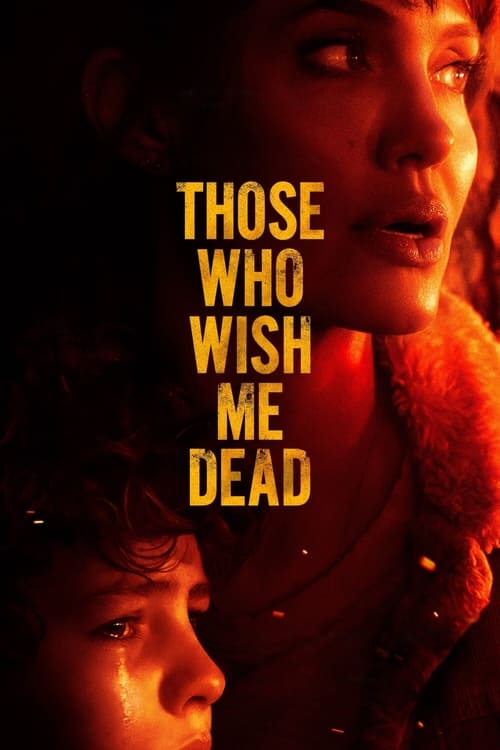
Those Who Wish Me Dead
A young boy finds himself pursued by two assassins in the Montana wilderness, with a survival expert determined to protect him, and a forest fire threatening to consume them all.
Working with a mid-range budget of $20.0M, the film achieved a modest success with $23.4M in global revenue (+17% profit margin).


Plot Structure
Story beats plotted across runtime


Narrative Arc
Emotional journey through the story's key moments
Story Circle
Blueprint 15-beat structure
Arcplot Score Breakdown
Weighted: Precision (70%) + Arc (15%) + Theme (15%)
Those Who Wish Me Dead (2021) demonstrates meticulously timed story structure, characteristic of Taylor Sheridan's storytelling approach. This structural analysis examines how the film's 15-point plot structure maps to proven narrative frameworks across 1 hour and 40 minutes. With an Arcplot score of 6.9, the film balances conventional beats with creative variation.
Characters
Cast & narrative archetypes

Hannah Faber
Connor Casserly
Ethan Sawyer
Allison Sawyer
Jack Blackwell
Patrick Blackwell
Main Cast & Characters
Hannah Faber
Played by Angelina Jolie
A smokejumper haunted by guilt who must protect a boy from assassins while battling a Montana wildfire
Connor Casserly
Played by Finn Little
A young boy on the run after witnessing his father's murder, carrying evidence that could expose a conspiracy
Ethan Sawyer
Played by Jon Bernthal
A local sheriff and survival expert who helps his pregnant wife defend their home against killers
Allison Sawyer
Played by Medina Senghore
Ethan's pregnant wife who proves resourceful and fierce when protecting her home and family
Jack Blackwell
Played by Aidan Gillen
A methodical assassin posing as a forensic accountant, hunting Connor with cold precision
Patrick Blackwell
Played by Nicholas Hoult
Jack's brother and partner, an aggressive killer who relies on brute force and violence
Structural Analysis
The Status Quo at 1 minutes (1% through the runtime) establishes Hannah Faber, a smoke jumper haunted by guilt, stands alone in the Montana wilderness, struggling with PTSD from a fire that killed three young boys under her watch.. Structural examination shows that this early placement immediately immerses viewers in the story world.
The inciting incident occurs at 13 minutes when The Blackwell brothers murder Owen's family and burn their house. Owen escapes with his 12-year-old son Connor, setting them on a desperate flight through Montana toward protective custody.. At 13% through the film, this Disruption is delayed, allowing extended setup of the story world. This beat shifts the emotional landscape, launching the protagonist into the central conflict.
The First Threshold at 25 minutes marks the transition into Act II, occurring at 25% of the runtime. This reveals the protagonist's commitment to The Blackwells ambush Owen and Connor on a remote road. Owen is killed, but Connor escapes into the vast Montana forest, alone and hunted, carrying the evidence that could expose the conspiracy., moving from reaction to action.
At 51 minutes, the Midpoint arrives at 51% of the runtime—precisely centered, creating perfect narrative symmetry. Of particular interest, this crucial beat The Blackwells start a massive forest fire to smoke out Connor and Hannah, raising the stakes to survival against both human killers and nature itself. Hannah's worst nightmare—being responsible for a child in a deadly fire—becomes reality., fundamentally raising what's at risk. The emotional intensity shifts, dividing the narrative into clear before-and-after phases.
The Collapse moment at 75 minutes (75% through) represents the emotional nadir. Here, The firestorm overtakes Hannah and Connor. Hannah deploys her emergency shelter, but it appears inadequate against the inferno. Connor seems certain to die just like the boys before, and Hannah believes she has failed again—the "whiff of death" moment., shows the protagonist at their lowest point. This beat's placement in the final quarter sets up the climactic reversal.
The Second Threshold at 80 minutes initiates the final act resolution at 80% of the runtime. Hannah and Connor survive the firestorm. Hannah realizes that survival isn't about perfection—it's about refusing to quit. She integrates her smoke jumper skills with her newfound maternal protectiveness, ready for the final confrontation with renewed purpose., demonstrating the transformation achieved throughout the journey.
Emotional Journey
Those Who Wish Me Dead's emotional architecture traces a deliberate progression across 15 carefully calibrated beats.
Narrative Framework
This structural analysis employs structural analysis methodology used to understand storytelling architecture. By mapping Those Who Wish Me Dead against these established plot points, we can identify how Taylor Sheridan utilizes or subverts traditional narrative conventions. The plot point approach reveals not only adherence to structural principles but also creative choices that distinguish Those Who Wish Me Dead within the thriller genre.
Taylor Sheridan's Structural Approach
Among the 2 Taylor Sheridan films analyzed on Arcplot, the average structural score is 6.8, demonstrating varied approaches to story architecture. Those Who Wish Me Dead represents one of the director's most structurally precise works. For comparative analysis, explore the complete Taylor Sheridan filmography.
Comparative Analysis
Additional thriller films include The Warriors, Thunderball and Rustom. For more Taylor Sheridan analyses, see Wind River.
Plot Points by Act
Act I
SetupStatus Quo
Hannah Faber, a smoke jumper haunted by guilt, stands alone in the Montana wilderness, struggling with PTSD from a fire that killed three young boys under her watch.
Theme
A fellow smoke jumper tells Hannah, "You can't save everyone," establishing the film's central theme about redemption and accepting failure while finding the courage to try again.
Worldbuilding
Introduction to three parallel worlds: Hannah's isolated fire tower assignment as punishment/therapy; forensic accountant Owen Casserly discovering evidence of corruption in Florida; and assassins Patrick and Jack Blackwell being hired to eliminate witnesses.
Disruption
The Blackwell brothers murder Owen's family and burn their house. Owen escapes with his 12-year-old son Connor, setting them on a desperate flight through Montana toward protective custody.
Resistance
Owen and Connor flee toward the Montana wilderness while the Blackwells pursue. Hannah prepares for her tower shift. Sheriff Ethan Sawyer and pregnant wife Allison are introduced managing a survival school, unaware of the approaching danger.
Act II
ConfrontationFirst Threshold
The Blackwells ambush Owen and Connor on a remote road. Owen is killed, but Connor escapes into the vast Montana forest, alone and hunted, carrying the evidence that could expose the conspiracy.
Mirror World
Connor, terrified and alone in the wilderness, encounters Hannah at her fire tower. This pairing creates the thematic mirror: a woman who failed to save children meets a child who desperately needs saving.
Premise
Hannah protects Connor while evading the assassins. The Blackwells separately terrorize Ethan and Allison at the survival school. Hannah and Connor navigate the wilderness while a massive lightning storm ignites forest fires, creating a three-way collision course.
Midpoint
The Blackwells start a massive forest fire to smoke out Connor and Hannah, raising the stakes to survival against both human killers and nature itself. Hannah's worst nightmare—being responsible for a child in a deadly fire—becomes reality.
Opposition
Hannah and Connor are trapped between the assassins and the advancing firestorm. Ethan escapes the Blackwells and races to help. Allison, held hostage, fights back. The fire intensifies, forcing everyone into desperate moves as communication systems fail and escape routes vanish.
Collapse
The firestorm overtakes Hannah and Connor. Hannah deploys her emergency shelter, but it appears inadequate against the inferno. Connor seems certain to die just like the boys before, and Hannah believes she has failed again—the "whiff of death" moment.
Crisis
In the fire shelter, Hannah comforts the terrified Connor while confronting her own trauma. She must choose: surrender to guilt and fear, or fight with everything she has. Meanwhile, Allison kills one of the Blackwells, proving that survival requires refusing to give up.
Act III
ResolutionSecond Threshold
Hannah and Connor survive the firestorm. Hannah realizes that survival isn't about perfection—it's about refusing to quit. She integrates her smoke jumper skills with her newfound maternal protectiveness, ready for the final confrontation with renewed purpose.
Synthesis
Hannah actively hunts the remaining Blackwell brother through the scorched forest. Ethan reunites with Allison. The final confrontation brings all survivors together, with Hannah using both her wilderness expertise and her fierce determination to protect Connor, ultimately defeating the assassin.
Transformation
Hannah watches over Connor as he's taken to safety, having saved him where she couldn't save the others. She stands transformed—no longer paralyzed by guilt, but strengthened by proof that courage and perseverance matter, even after failure.