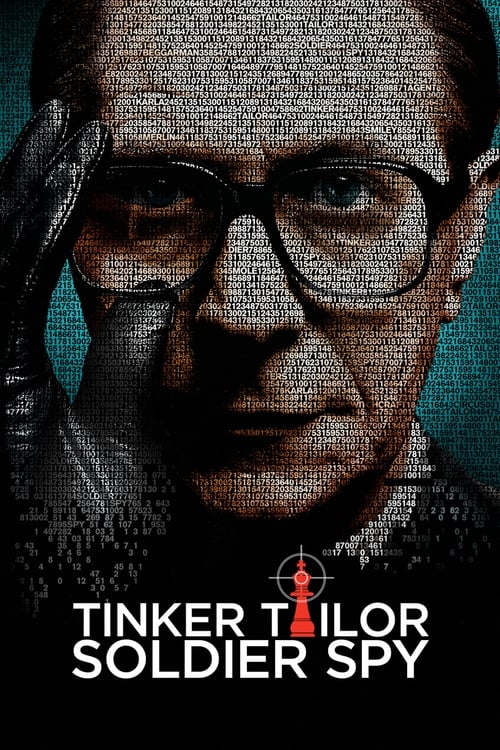
Tinker Tailor Soldier Spy
In the bleak days of the Cold War, espionage veteran George Smiley is forced from semi-retirement to uncover a Soviet mole within his former colleagues at the heart of MI6.
Despite a mid-range budget of $30.0M, Tinker Tailor Soldier Spy became a solid performer, earning $80.6M worldwide—a 169% return.
Nominated for 3 Oscars. 35 wins & 100 nominations


Plot Structure
Story beats plotted across runtime


Narrative Arc
Emotional journey through the story's key moments
Story Circle
Blueprint 15-beat structure
Arcplot Score Breakdown
Weighted: Precision (70%) + Arc (15%) + Theme (15%)
Tinker Tailor Soldier Spy (2011) exhibits precise dramatic framework, characteristic of Tomas Alfredson's storytelling approach. This structural analysis examines how the film's 15-point plot structure maps to proven narrative frameworks across 2 hours and 7 minutes. With an Arcplot score of 7.5, the film showcases strong structural fundamentals.
Characters
Cast & narrative archetypes

George Smiley
Bill Haydon
Jim Prideaux
Peter Guillam
Ricki Tarr
Percy Alleline
Roy Bland
Toby Esterhase
Control
Main Cast & Characters
George Smiley
Played by Gary Oldman
Retired intelligence officer called back to uncover a Soviet mole within MI6. Methodical, observant, and emotionally reserved.
Bill Haydon
Played by Colin Firth
Charismatic MI6 officer and close friend of Jim Prideaux. Smooth, cultured, and harboring dangerous secrets.
Jim Prideaux
Played by Mark Strong
Field agent betrayed in Budapest whose shooting sets the investigation in motion. Loyal, haunted, and damaged by betrayal.
Peter Guillam
Played by Benedict Cumberbatch
Smiley's trusted right-hand man who assists in the mole hunt. Loyal, conflicted, and forced to make personal sacrifices.
Ricki Tarr
Played by Tom Hardy
Field agent who discovers evidence of the mole while on assignment. Impulsive, passionate, and driven by love and duty.
Percy Alleline
Played by Toby Jones
Current Control of MI6, ambitious and protective of Operation Witchcraft. Politically savvy, status-conscious, and potentially compromised.
Roy Bland
Played by Ciarán Hinds
Senior MI6 officer and mole suspect. Pragmatic, working-class background, and Moscow specialist.
Toby Esterhase
Played by David Dencik
Head of MI6 surveillance operations and mole suspect. Survivor, cautious, and adaptable with Eastern European roots.
Control
Played by John Hurt
Former head of MI6 who suspected the mole before his forced retirement. Paranoid, strategic, and tragically vindicated.
Structural Analysis
The Status Quo at 1 minutes (1% through the runtime) establishes The Circus (MI6 headquarters) in its routine operations. Control and Smiley run British intelligence during the Cold War, a world of smoke-filled rooms, coded messages, and bureaucratic hierarchy.. Significantly, this early placement immediately immerses viewers in the story world.
The inciting incident occurs at 16 minutes when Ricki Tarr approaches Oliver Lacon with evidence of a Soviet mole at the highest level of MI6. Smiley, now retired and teaching, is pulled back into the world he left behind.. At 12% through the film, this Disruption aligns precisely with traditional story structure. This beat shifts the emotional landscape, launching the protagonist into the central conflict.
The First Threshold at 31 minutes marks the transition into Act II, occurring at 25% of the runtime. This indicates the protagonist's commitment to Smiley actively chooses to begin the investigation in earnest. He sets up the safe house and commits to uncovering the mole, fully entering the dangerous world of counterintelligence despite being pushed out., moving from reaction to action.
At 64 minutes, the Midpoint arrives at 50% of the runtime—precisely centered, creating perfect narrative symmetry. Significantly, this crucial beat False defeat: Smiley learns the full scope of the Witchcraft intelligence operation and realizes how deeply the mole is embedded. The investigation shifts from "who" to understanding the complete betrayal. Percy Alleline and the others seem untouchable., fundamentally raising what's at risk. The emotional intensity shifts, dividing the narrative into clear before-and-after phases.
The Collapse moment at 95 minutes (75% through) represents the emotional nadir. Here, Smiley realizes the deepest betrayal: Bill Haydon, his wife Ann's lover and his colleague, is the mole. The personal and professional betrayals merge. Everything Smiley believed about loyalty, friendship, and his marriage collapses. Metaphorical death of trust., illustrates the protagonist at their lowest point. This beat's placement in the final quarter sets up the climactic reversal.
The Second Threshold at 102 minutes initiates the final act resolution at 80% of the runtime. Smiley synthesizes everything: uses the Witchcraft meeting to set a trap for Haydon. He combines Control's initial suspicion, his own investigation, and Tarr's evidence to spring the trap. Clarity and resolve despite personal cost., demonstrating the transformation achieved throughout the journey.
Emotional Journey
Tinker Tailor Soldier Spy's emotional architecture traces a deliberate progression across 15 carefully calibrated beats.
Narrative Framework
This structural analysis employs a 15-point narrative structure framework that maps key story moments. By mapping Tinker Tailor Soldier Spy against these established plot points, we can identify how Tomas Alfredson utilizes or subverts traditional narrative conventions. The plot point approach reveals not only adherence to structural principles but also creative choices that distinguish Tinker Tailor Soldier Spy within the drama genre.
Tomas Alfredson's Structural Approach
Among the 3 Tomas Alfredson films analyzed on Arcplot, the average structural score is 7.4, reflecting strong command of classical structure. Tinker Tailor Soldier Spy represents one of the director's most structurally precise works. For comparative analysis, explore the complete Tomas Alfredson filmography.
Comparative Analysis
Additional drama films include After Thomas, South Pacific and Dirty Dancing: Havana Nights. For more Tomas Alfredson analyses, see The Snowman, Let the Right One In.
Plot Points by Act
Act I
SetupStatus Quo
The Circus (MI6 headquarters) in its routine operations. Control and Smiley run British intelligence during the Cold War, a world of smoke-filled rooms, coded messages, and bureaucratic hierarchy.
Theme
Control tells Smiley: "The mole has been there for years... right at the top of the Circus." Theme stated: trust is impossible in a world of professional liars; the greatest betrayals come from within.
Worldbuilding
Establishment of the Circus hierarchy, the five suspects (Tinker, Tailor, Soldier, Poorman, Beggarman), the Budapest operation, and Jim Prideaux being shot. Control and Smiley are forced out after the operation fails.
Disruption
Ricki Tarr approaches Oliver Lacon with evidence of a Soviet mole at the highest level of MI6. Smiley, now retired and teaching, is pulled back into the world he left behind.
Resistance
Smiley is briefed by Lacon and meets Peter Guillam. He debates whether to take the investigation, processes Control's death, and accepts the mission. He begins assembling information and recruiting Guillam as his inside man.
Act II
ConfrontationFirst Threshold
Smiley actively chooses to begin the investigation in earnest. He sets up the safe house and commits to uncovering the mole, fully entering the dangerous world of counterintelligence despite being pushed out.
Mirror World
Introduction of Jim Prideaux's storyline teaching at the school, carrying physical and emotional scars. His relationship with Bill Haydon (shown in flashbacks) represents the personal cost of betrayal - the thematic mirror to Smiley's investigation.
Premise
The promise of the premise: Smiley methodically investigates each of the five suspects. Interviews with Connie Sachs, Jerry Westerby, and others. Guillam extracts files from the Circus. Flashbacks reveal the Witchcraft operation and relationships between suspects.
Midpoint
False defeat: Smiley learns the full scope of the Witchcraft intelligence operation and realizes how deeply the mole is embedded. The investigation shifts from "who" to understanding the complete betrayal. Percy Alleline and the others seem untouchable.
Opposition
Pressure mounts as Smiley gets closer to the truth. Ricki Tarr's full story with Irina is revealed. The mole becomes aware of the investigation. Guillam is at risk inside the Circus. Smiley pieces together Control's Testify operation and the Christmas party where everything crystallized.
Collapse
Smiley realizes the deepest betrayal: Bill Haydon, his wife Ann's lover and his colleague, is the mole. The personal and professional betrayals merge. Everything Smiley believed about loyalty, friendship, and his marriage collapses. Metaphorical death of trust.
Crisis
Smiley sits in darkness processing the magnitude of Haydon's betrayal. The personal wound (Ann) and professional wound (the Circus) are one. He must decide whether to proceed with exposing his friend and wife's lover.
Act III
ResolutionSecond Threshold
Smiley synthesizes everything: uses the Witchcraft meeting to set a trap for Haydon. He combines Control's initial suspicion, his own investigation, and Tarr's evidence to spring the trap. Clarity and resolve despite personal cost.
Synthesis
The finale: Smiley executes the trap at the safe house. Haydon is caught red-handed receiving orders from Karla. Interrogation reveals the full extent of the betrayal. Jim Prideaux executes Haydon. Smiley returns to the Circus as the new Control.
Transformation
Smiley sits alone in Control's old office at the Circus, now in command. Unlike the opening, he is isolated, victorious but hollowed out. He has won professionally but lost personally. The cost of uncovering truth in a world without trust.