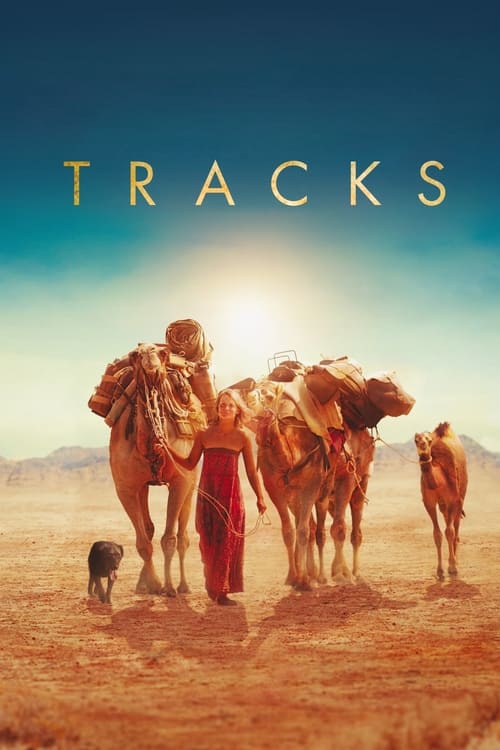
Tracks
Accompanied only by her faithful dog and four camels, an Australian satisfies her craving for solitude by embarking on a solo trip across the desert from Alice Springs to the Indian Ocean.
The film earned $4.9M at the global box office.
2 wins & 19 nominations


Plot Structure
Story beats plotted across runtime


Narrative Arc
Emotional journey through the story's key moments
Story Circle
Blueprint 15-beat structure
Arcplot Score Breakdown
Weighted: Precision (70%) + Arc (15%) + Theme (15%)
Tracks (2013) showcases meticulously timed dramatic framework, characteristic of John Curran's storytelling approach. This structural analysis examines how the film's 15-point plot structure maps to proven narrative frameworks across 1 hour and 52 minutes. With an Arcplot score of 7.6, the film showcases strong structural fundamentals.
Characters
Cast & narrative archetypes

Robyn Davidson
Rick Smolan
Eddie
Gladdy
Diggity
Main Cast & Characters
Robyn Davidson
Played by Mia Wasikowska
A determined young woman who undertakes a 1,700-mile solo trek across the Australian desert with four camels and a dog.
Rick Smolan
Played by Adam Driver
A National Geographic photographer who documents Robyn's journey and develops a complex relationship with her.
Eddie
Played by Rainer Bock
An experienced bushman who teaches Robyn essential desert survival skills and camel handling.
Gladdy
Played by Rolley Mintuma
A kind-hearted Aboriginal elder who becomes Robyn's guide through sacred tribal lands.
Diggity
Played by Diggity (dog)
Robyn's loyal black dog who accompanies her throughout the desert trek.
Structural Analysis
The Status Quo at 1 minutes (1% through the runtime) establishes Robyn Davidson arrives in Alice Springs, a solitary young woman with a vision to cross 1,700 miles of Australian desert with camels. She is isolated, determined, and disconnected from society.. Of particular interest, this early placement immediately immerses viewers in the story world.
The inciting incident occurs at 13 minutes when Robyn's camel mentor Kurt unexpectedly dies, leaving her without guidance and facing the harsh reality that she cannot accomplish her dream alone. She is devastated and her plan seems impossible.. At 12% through the film, this Disruption aligns precisely with traditional story structure. This beat shifts the emotional landscape, launching the protagonist into the central conflict.
The First Threshold at 27 minutes marks the transition into Act II, occurring at 24% of the runtime. This demonstrates the protagonist's commitment to Robyn makes the active choice to begin her journey, walking out of Alice Springs with her four camels and Diggity. She crosses into the unknown, leaving civilization behind despite her fears., moving from reaction to action.
At 56 minutes, the Midpoint arrives at 50% of the runtime—precisely centered, creating perfect narrative symmetry. Structural examination shows that this crucial beat Robyn reaches Uluru and meets an Aboriginal elder, Mr. Eddie, who offers to guide her through sacred land. False victory: she feels she's succeeding on her own terms, but the stakes raise as she must now navigate cultural protocols and accept indigenous guidance., fundamentally raising what's at risk. The emotional intensity shifts, dividing the narrative into clear before-and-after phases.
The Collapse moment at 83 minutes (74% through) represents the emotional nadir. Here, Diggity, Robyn's beloved dog and only constant companion, dies from poisoned bait. Robyn is utterly shattered. The literal death of her closest relationship forces her to confront her emotional isolation., reveals the protagonist at their lowest point. This beat's placement in the final quarter sets up the climactic reversal.
The Second Threshold at 90 minutes initiates the final act resolution at 81% of the runtime. Rick arrives and Robyn finally allows herself to be vulnerable with him, accepting comfort and connection. She realizes she doesn't have to choose between independence and human connection—she can be strong AND open to others., demonstrating the transformation achieved throughout the journey.
Emotional Journey
Tracks's emotional architecture traces a deliberate progression across 15 carefully calibrated beats.
Narrative Framework
This structural analysis employs structural analysis methodology used to understand storytelling architecture. By mapping Tracks against these established plot points, we can identify how John Curran utilizes or subverts traditional narrative conventions. The plot point approach reveals not only adherence to structural principles but also creative choices that distinguish Tracks within the adventure genre.
John Curran's Structural Approach
Among the 4 John Curran films analyzed on Arcplot, the average structural score is 7.1, reflecting strong command of classical structure. Tracks represents one of the director's most structurally precise works. For comparative analysis, explore the complete John Curran filmography.
Comparative Analysis
Additional adventure films include The Black Stallion, The Bad Guys and Puss in Boots. For more John Curran analyses, see Chappaquiddick, Stone and The Painted Veil.
Plot Points by Act
Act I
SetupStatus Quo
Robyn Davidson arrives in Alice Springs, a solitary young woman with a vision to cross 1,700 miles of Australian desert with camels. She is isolated, determined, and disconnected from society.
Theme
A local tells Robyn, "You can't do it alone out here." The film's central theme: the tension between fierce independence and the unavoidable need for human connection.
Worldbuilding
Robyn works grueling jobs to earn money for camels, enduring harassment and sexism in the outback. She trains with wild camels, learning their ways. We see her isolation, her stubbornness, and her fraught relationship with Rick Smolan, the National Geographic photographer.
Disruption
Robyn's camel mentor Kurt unexpectedly dies, leaving her without guidance and facing the harsh reality that she cannot accomplish her dream alone. She is devastated and her plan seems impossible.
Resistance
Desperate for funding, Robyn reluctantly agrees to let National Geographic sponsor her journey in exchange for Rick photographing her trek. She debates whether accepting help compromises her independence. She acquires her camels and dog Diggity, preparing for departure.
Act II
ConfrontationFirst Threshold
Robyn makes the active choice to begin her journey, walking out of Alice Springs with her four camels and Diggity. She crosses into the unknown, leaving civilization behind despite her fears.
Mirror World
Rick arrives to photograph Robyn for the first time on the trek. Their relationship represents the thematic conflict: he offers connection and support, but she resists, wanting to prove she can do this alone.
Premise
Robyn experiences the promise of the premise: the beauty and brutality of the desert. She finds rhythm with her camels, encounters wild landscapes, faces dangerous bulls, and navigates the terrain. Rick periodically appears to photograph her, creating tension between her desire for solitude and growing connection.
Midpoint
Robyn reaches Uluru and meets an Aboriginal elder, Mr. Eddie, who offers to guide her through sacred land. False victory: she feels she's succeeding on her own terms, but the stakes raise as she must now navigate cultural protocols and accept indigenous guidance.
Opposition
The desert becomes harsher. Robyn travels with Mr. Eddie through sacred Aboriginal lands, learning to surrender control. Tourists and press intrude, destroying her solitude. Her camels become difficult. Rick's visits feel more invasive. Her isolation becomes loneliness.
Collapse
Diggity, Robyn's beloved dog and only constant companion, dies from poisoned bait. Robyn is utterly shattered. The literal death of her closest relationship forces her to confront her emotional isolation.
Crisis
Robyn buries Diggity and spirals into grief and despair. She questions why she's doing this, whether her quest for independence is worth the pain. She sits alone in the dark night of her soul, processing the cost of her journey.
Act III
ResolutionSecond Threshold
Rick arrives and Robyn finally allows herself to be vulnerable with him, accepting comfort and connection. She realizes she doesn't have to choose between independence and human connection—she can be strong AND open to others.
Synthesis
Robyn completes her journey to the Indian Ocean with renewed purpose. She synthesizes her fierce independence with newfound openness, maintaining her strength while honoring the connections that helped her. She walks the final miles with grace and clarity.
Transformation
Robyn reaches the ocean and walks into the water with her camels. Unlike the isolated woman at the start, she is now complete—having proven her capability while learning that accepting help and connection doesn't diminish her strength.