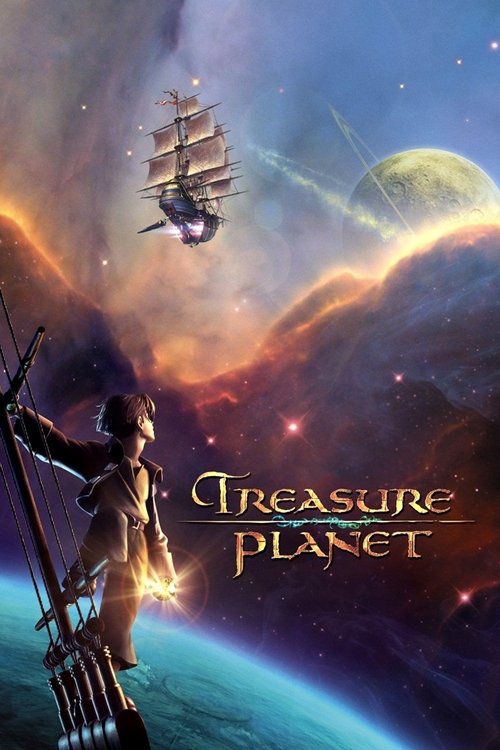
Treasure Planet
When space galleon cabin boy Jim Hawkins discovers a map to an intergalactic "loot of a thousand worlds," a cyborg cook named John Silver teaches him to battle supernovas and space storms on their journey to find treasure.
The film disappointed at the box office against its substantial budget of $140.0M, earning $109.6M globally (-22% loss).
Nominated for 1 Oscar. 1 win & 14 nominations


Plot Structure
Story beats plotted across runtime


Narrative Arc
Emotional journey through the story's key moments
Story Circle
Blueprint 15-beat structure
Arcplot Score Breakdown
Weighted: Precision (70%) + Arc (15%) + Theme (15%)
Treasure Planet (2002) exhibits meticulously timed narrative design, characteristic of Ron Clements's storytelling approach. This structural analysis examines how the film's 15-point plot structure maps to proven narrative frameworks across 1 hour and 36 minutes. With an Arcplot score of 7.0, the film balances conventional beats with creative variation.
Characters
Cast & narrative archetypes

Jim Hawkins
John Silver
Captain Amelia
Dr. Doppler
Sarah Hawkins
B.E.N.
Scroop
Main Cast & Characters
Jim Hawkins
Played by Joseph Gordon-Levitt
A rebellious teenage boy who dreams of adventure and finds purpose through a journey to Treasure Planet.
John Silver
Played by Brian Murray
A charismatic cyborg cook who becomes Jim's mentor and father figure while hiding his true identity as a pirate.
Captain Amelia
Played by Emma Thompson
A competent and confident feline captain who commands respect through skill and professionalism.
Dr. Doppler
Played by David Hyde Pierce
An eccentric astrophysicist and family friend who finances and joins the expedition to Treasure Planet.
Sarah Hawkins
Played by Laurie Metcalf
Jim's hardworking single mother who runs the Benbow Inn and supports her son despite their struggles.
B.E.N.
Played by Martin Short
A damaged robot with memory loss who provides comic relief and unexpected help on Treasure Planet.
Scroop
Played by Michael Wincott
A ruthless spider-like alien and Silver's crewmate who serves as a deadly antagonist.
Structural Analysis
The Status Quo at 1 minutes (1% through the runtime) establishes Young Jim Hawkins listens to stories of Captain Flint and Treasure Planet, dreaming of adventure. His mother runs the Benbow Inn while his father has abandoned them, establishing Jim as a restless, fatherless teen seeking purpose.. Of particular interest, this early placement immediately immerses viewers in the story world.
The inciting incident occurs at 12 minutes when Billy Bones crashes near the inn and dies, but not before giving Jim the legendary map to Treasure Planet. Pirates led by a cyborg attack and burn down the Benbow Inn, forcing Jim and his mother to flee, destroying their livelihood.. At 13% through the film, this Disruption is delayed, allowing extended setup of the story world. This beat shifts the emotional landscape, launching the protagonist into the central conflict.
The First Threshold at 24 minutes marks the transition into Act II, occurring at 25% of the runtime. This illustrates the protagonist's commitment to Jim actively chooses to board the RLS Legacy and sail for Treasure Planet, leaving behind his old life and stepping into the adventure. He commits to the journey despite his fears and the danger ahead., moving from reaction to action.
At 49 minutes, the Midpoint arrives at 51% of the runtime—precisely centered, creating perfect narrative symmetry. Structural examination shows that this crucial beat Jim overhears Silver and the pirates planning mutiny. His father figure is revealed to be the villain. This false defeat shatters Jim's trust and raises the stakes—he must now navigate both the external treasure hunt and his broken heart., fundamentally raising what's at risk. The emotional intensity shifts, dividing the narrative into clear before-and-after phases.
The Collapse moment at 73 minutes (76% through) represents the emotional nadir. Here, Captain Amelia is critically injured, appearing near death. The heroes are trapped, captured, or cornered by Silver's forces. Jim has lost his mentor figure to betrayal and now faces losing another authority figure to death—complete collapse of support., reveals the protagonist at their lowest point. This beat's placement in the final quarter sets up the climactic reversal.
The Second Threshold at 77 minutes initiates the final act resolution at 80% of the runtime. Jim realizes that despite Silver's betrayal, the lessons Silver taught him about self-reliance and believing in himself were real. He chooses to use those skills to save everyone, synthesizing what he learned from Silver with his own courage and ingenuity., demonstrating the transformation achieved throughout the journey.
Emotional Journey
Treasure Planet's emotional architecture traces a deliberate progression across 15 carefully calibrated beats.
Narrative Framework
This structural analysis employs structural analysis methodology used to understand storytelling architecture. By mapping Treasure Planet against these established plot points, we can identify how Ron Clements utilizes or subverts traditional narrative conventions. The plot point approach reveals not only adherence to structural principles but also creative choices that distinguish Treasure Planet within the science fiction genre.
Ron Clements's Structural Approach
Among the 6 Ron Clements films analyzed on Arcplot, the average structural score is 7.2, reflecting strong command of classical structure. Treasure Planet takes a more unconventional approach compared to the director's typical style. For comparative analysis, explore the complete Ron Clements filmography.
Comparative Analysis
Additional science fiction films include The Postman, Mad Max 2 and AVP: Alien vs. Predator. For more Ron Clements analyses, see Aladdin, The Princess and the Frog and Hercules.
Plot Points by Act
Act I
SetupStatus Quo
Young Jim Hawkins listens to stories of Captain Flint and Treasure Planet, dreaming of adventure. His mother runs the Benbow Inn while his father has abandoned them, establishing Jim as a restless, fatherless teen seeking purpose.
Theme
Dr. Doppler tells Sarah Hawkins, "You've got to give him a chance to discover himself," establishing the film's theme about finding one's path and the importance of mentorship versus control in a young person's journey to adulthood.
Worldbuilding
Jim is now a troubled teenager getting into scrapes with the law via solar surfing. His mother struggles with the inn and worries about his future. The world of flying ships and alien species is established, showing Jim's talent but lack of direction.
Disruption
Billy Bones crashes near the inn and dies, but not before giving Jim the legendary map to Treasure Planet. Pirates led by a cyborg attack and burn down the Benbow Inn, forcing Jim and his mother to flee, destroying their livelihood.
Resistance
Dr. Doppler proposes funding an expedition to Treasure Planet to help Sarah rebuild the inn. Jim debates whether to go, torn between responsibility and adventure. Preparations are made, the ship RLS Legacy is introduced, and the crew is assembled.
Act II
ConfrontationFirst Threshold
Jim actively chooses to board the RLS Legacy and sail for Treasure Planet, leaving behind his old life and stepping into the adventure. He commits to the journey despite his fears and the danger ahead.
Mirror World
Jim begins working with John Silver in the galley. Silver becomes a father figure, teaching Jim discipline and skills while showing genuine care. This relationship will carry the film's theme of mentorship, trust, and finding one's path.
Premise
Jim learns to sail, bonds with Silver, and proves himself as part of the crew. The journey through space, encounters with cosmic phenomena, and the growing friendship between Jim and Silver deliver the promise of a space adventure with heart.
Midpoint
Jim overhears Silver and the pirates planning mutiny. His father figure is revealed to be the villain. This false defeat shatters Jim's trust and raises the stakes—he must now navigate both the external treasure hunt and his broken heart.
Opposition
The mutiny begins. Jim, Doppler, and Captain Amelia fight the pirates while dealing with betrayal. They reach Treasure Planet but must evade Silver's crew. The opposition intensifies as Jim's world becomes increasingly dangerous and his emotional wounds deepen.
Collapse
Captain Amelia is critically injured, appearing near death. The heroes are trapped, captured, or cornered by Silver's forces. Jim has lost his mentor figure to betrayal and now faces losing another authority figure to death—complete collapse of support.
Crisis
Jim faces his dark night, processing the betrayal and loss. Silver forces him to use the map to open Treasure Planet's portal. Jim must confront his feelings about trust, father figures, and his own worth in this emotionally devastating period.
Act III
ResolutionSecond Threshold
Jim realizes that despite Silver's betrayal, the lessons Silver taught him about self-reliance and believing in himself were real. He chooses to use those skills to save everyone, synthesizing what he learned from Silver with his own courage and ingenuity.
Synthesis
Jim rescues his friends from the planet's destruction using his solar surfing skills and quick thinking. He confronts Silver in a climactic moment where both choose their paths—Jim chooses heroism, Silver chooses freedom. The treasure is lost but Jim gains something greater.
Transformation
Jim returns home transformed, now a confident young man enrolled in the Royal Interstellar Academy. The rebuilt Benbow Inn thrives. He looks to the stars with purpose rather than aimless longing, having found his path through the journey and completed his coming-of-age arc.