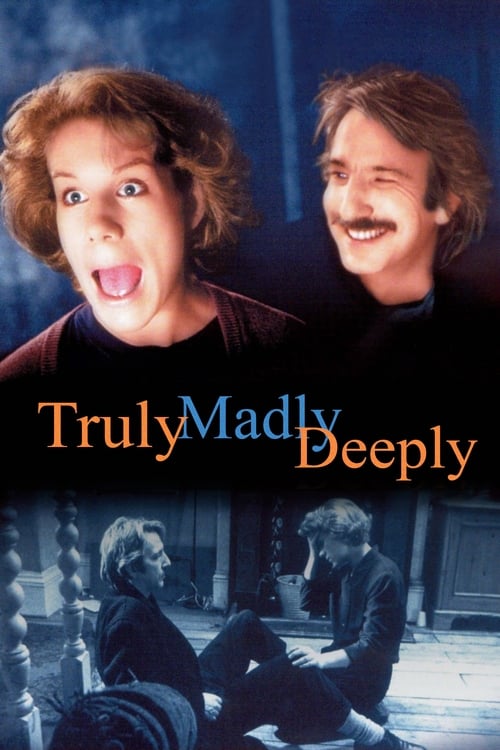
Truly Madly Deeply
Nina is totally heartbroken at the death of her boyfriend Jamie, but is even more unprepared for his return as a ghost. At first it's almost as good as it used to be – hey, even the rats that infested her house have disappeared. But Jamie starts bringing ghostly friends home and behaving more and more oddly.
1 BAFTA Award17 wins & 8 nominations

Plot Structure
Story beats plotted across runtime


Narrative Arc
Emotional journey through the story's key moments
Story Circle
Blueprint 15-beat structure
Arcplot Score Breakdown
Weighted: Precision (70%) + Arc (15%) + Theme (15%)
Truly Madly Deeply (1991) exhibits deliberately positioned dramatic framework, characteristic of Anthony Minghella's storytelling approach. This structural analysis examines how the film's 15-point plot structure maps to proven narrative frameworks across 1 hour and 46 minutes. With an Arcplot score of 7.4, the film balances conventional beats with creative variation.
Characters
Cast & narrative archetypes

Nina
Jamie
Mark
Sandy
Maura
Main Cast & Characters
Nina
Played by Juliet Stevenson
A translator struggling with profound grief after the death of her lover Jamie, unable to move forward with her life.
Jamie
Played by Alan Rickman
Nina's deceased lover who returns as a ghost to help her heal and eventually let go of their relationship.
Mark
Played by Michael Maloney
A kind psychologist who develops romantic feelings for Nina and offers her a possibility of new love.
Sandy
Played by Jenny Howe
Nina's supportive sister who tries to help her navigate grief and move forward with practical advice.
Maura
Played by Carolyn Choa
Nina's close friend who provides emotional support and encouragement during her grieving process.
Structural Analysis
The Status Quo at 1 minutes (1% through the runtime) establishes Nina is paralyzed by grief, unable to work as a translator, crying in her cold flat, completely consumed by the death of her partner Jamie. Her world is defined by absence and mourning.. Notably, this early placement immediately immerses viewers in the story world.
The inciting incident occurs at 13 minutes when Jamie's ghost appears in Nina's flat, returned from the dead. He's real, tangible, can be touched. The impossible has happened, and Nina's wish for his return has been granted.. At 12% through the film, this Disruption aligns precisely with traditional story structure. This beat shifts the emotional landscape, launching the protagonist into the central conflict.
The First Threshold at 26 minutes marks the transition into Act II, occurring at 25% of the runtime. This illustrates the protagonist's commitment to Nina actively chooses to fully embrace life with Jamie's ghost, accepting this supernatural relationship as her new reality. She commits to this impossible romance rather than moving forward with her grief., moving from reaction to action.
At 53 minutes, the Midpoint arrives at 50% of the runtime—precisely centered, creating perfect narrative symmetry. Significantly, this crucial beat False defeat: Jamie's ghostly presence becomes oppressive rather than comforting. He and his ghost friends take over the flat, watching videos endlessly, invading her space. What seemed like a gift is revealed as a trap keeping Nina from life., fundamentally raising what's at risk. The emotional intensity shifts, dividing the narrative into clear before-and-after phases.
The Collapse moment at 79 minutes (74% through) represents the emotional nadir. Here, Nina realizes Jamie hasn't returned to love her—he's returned to help her let go. The beautiful lie collapses: their reunion was never meant to be permanent. She must face the death of her fantasy and the true finality of loss., shows the protagonist at their lowest point. This beat's placement in the final quarter sets up the climactic reversal.
The Second Threshold at 84 minutes initiates the final act resolution at 80% of the runtime. Nina understands that loving Jamie means letting him go, and that she can honor his memory while opening herself to new love. She synthesizes grief with hope, past with future, and chooses life., demonstrating the transformation achieved throughout the journey.
Emotional Journey
Truly Madly Deeply's emotional architecture traces a deliberate progression across 15 carefully calibrated beats.
Narrative Framework
This structural analysis employs a 15-point narrative structure framework that maps key story moments. By mapping Truly Madly Deeply against these established plot points, we can identify how Anthony Minghella utilizes or subverts traditional narrative conventions. The plot point approach reveals not only adherence to structural principles but also creative choices that distinguish Truly Madly Deeply within the fantasy genre.
Anthony Minghella's Structural Approach
Among the 4 Anthony Minghella films analyzed on Arcplot, the average structural score is 7.0, reflecting strong command of classical structure. Truly Madly Deeply represents one of the director's most structurally precise works. For comparative analysis, explore the complete Anthony Minghella filmography.
Comparative Analysis
Additional fantasy films include Thinner, Ella Enchanted and Conan the Barbarian. For more Anthony Minghella analyses, see Cold Mountain, The English Patient and Breaking and Entering.
Plot Points by Act
Act I
SetupStatus Quo
Nina is paralyzed by grief, unable to work as a translator, crying in her cold flat, completely consumed by the death of her partner Jamie. Her world is defined by absence and mourning.
Theme
Nina's therapist suggests "You have to let him go," establishing the film's central theme: the necessity of releasing the past to embrace life and new love.
Worldbuilding
Nina's grief-stricken world is established: her work translating, concerned friends, therapy sessions, memories of Jamie, the cold flat with broken heating. We see how completely her mourning has consumed her life.
Disruption
Jamie's ghost appears in Nina's flat, returned from the dead. He's real, tangible, can be touched. The impossible has happened, and Nina's wish for his return has been granted.
Resistance
Nina must adjust to Jamie's ghostly presence. She debates whether this is real or madness, navigates keeping him secret, and begins to settle into a new normal with her dead lover returned.
Act II
ConfrontationFirst Threshold
Nina actively chooses to fully embrace life with Jamie's ghost, accepting this supernatural relationship as her new reality. She commits to this impossible romance rather than moving forward with her grief.
Mirror World
Mark, a new love interest, enters Nina's life through her work. He represents the possibility of real, living love and moving forward—the thematic counterpoint to her relationship with a ghost.
Premise
The "fun" of living with a ghost: Jamie and Nina recapture their romance, play cello together, share intimacy. But cracks appear—he brings ghost friends, becomes demanding, invasive. Meanwhile, Mark's pursuit continues.
Midpoint
False defeat: Jamie's ghostly presence becomes oppressive rather than comforting. He and his ghost friends take over the flat, watching videos endlessly, invading her space. What seemed like a gift is revealed as a trap keeping Nina from life.
Opposition
Nina is torn between two worlds: the safe, familiar past with Jamie's ghost and the frightening possibility of new love with Mark. Jamie becomes increasingly difficult, while Mark offers genuine connection. The tension builds as Nina must choose.
Collapse
Nina realizes Jamie hasn't returned to love her—he's returned to help her let go. The beautiful lie collapses: their reunion was never meant to be permanent. She must face the death of her fantasy and the true finality of loss.
Crisis
Nina processes the devastating truth that she must release Jamie. The emotional darkness of truly letting go, facing the permanence of death, and accepting that holding onto the past prevents her from living.
Act III
ResolutionSecond Threshold
Nina understands that loving Jamie means letting him go, and that she can honor his memory while opening herself to new love. She synthesizes grief with hope, past with future, and chooses life.
Synthesis
Nina releases Jamie's ghost and opens herself to Mark and to life. She reclaims her flat, her work, her future. The finale resolves her journey from paralyzed grief to renewed capacity for love.
Transformation
Nina, now warm and alive in her restored flat, connects with Mark, ready for new love. The transformation from the grief-paralyzed woman at the start is complete—she has learned to live again while honoring what was lost.