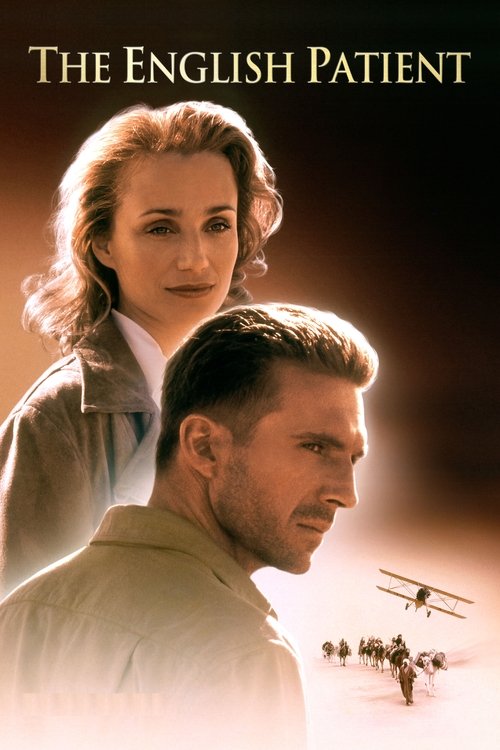
The English Patient
In the 1930s, Count Almásy is a Hungarian map maker employed by the Royal Geographical Society to chart the vast expanses of the Sahara Desert along with several other prominent explorers. As World War II unfolds, Almásy enters into a world of love, betrayal, and politics.
Despite a moderate budget of $27.0M, The English Patient became a runaway success, earning $232.0M worldwide—a remarkable 759% return.
9 Oscars. 62 wins & 78 nominations


Plot Structure
Story beats plotted across runtime


Narrative Arc
Emotional journey through the story's key moments
Story Circle
Blueprint 15-beat structure
Arcplot Score Breakdown
Weighted: Precision (70%) + Arc (15%) + Theme (15%)
The English Patient (1996) showcases meticulously timed narrative design, characteristic of Anthony Minghella's storytelling approach. This structural analysis examines how the film's 15-point plot structure maps to proven narrative frameworks across 2 hours and 42 minutes. With an Arcplot score of 6.7, the film balances conventional beats with creative variation.
Structural Analysis
The Status Quo at 2 minutes (1% through the runtime) establishes A mysterious hand paints swimming figures on cave walls as a biplane soars over endless golden dunes. A woman sleeps peacefully in the open cockpit. This dreamlike sequence establishes a world of beauty, ancient art, and doomed love before the plane is shot down in flames.. The analysis reveals that this early placement immediately immerses viewers in the story world.
The inciting incident occurs at 19 minutes when Hana makes the radical decision to stay behind with her dying patient as the Allied convoy moves north. She chooses isolation in the ruined Italian monastery, separating herself from the war and her unit. This disruption launches both the frame narrative and allows the patient's memories to unfold.. At 12% through the film, this Disruption aligns precisely with traditional story structure. This beat shifts the emotional landscape, launching the protagonist into the central conflict.
The First Threshold at 41 minutes marks the transition into Act II, occurring at 25% of the runtime. This indicates the protagonist's commitment to At the Christmas celebration in Cairo, Katharine recites the tale of Candaules and Gyges from Herodotus—a story about a king who showed his wife naked to another man, leading to murder. This literary seduction marks the point of no return. Almásy chooses to pursue Katharine despite her marriage, crossing the threshold into forbidden territory., moving from reaction to action.
At 81 minutes, the Midpoint arrives at 50% of the runtime—precisely centered, creating perfect narrative symmetry. The analysis reveals that this crucial beat Katharine ends the affair with Almásy. "This is a different world is what I tell myself. A different life. And here I am a different wife." She cannot continue the deception. This false defeat changes everything—Almásy's obsession intensifies rather than fades, setting the stage for tragedy. The stakes shift from passion to possession., fundamentally raising what's at risk. The emotional intensity shifts, dividing the narrative into clear before-and-after phases.
The Collapse moment at 122 minutes (75% through) represents the emotional nadir. Here, Almásy finally reaches the cave with the German plane, but Katharine has died alone in the darkness, wrapped in parachute silk. Her final letter to him lies beside her body: "We are the real countries... I know you'll come carry me out into the palace of winds." He carries her dead body to the plane. This is the absolute low point—his desperate journey was for nothing., shows the protagonist at their lowest point. This beat's placement in the final quarter sets up the climactic reversal.
The Second Threshold at 130 minutes initiates the final act resolution at 80% of the runtime. Almásy asks Hana to give him a lethal overdose of morphine. He has told his story, made his confession, and is ready to die. Hana's acceptance of this request—helping him cross over peacefully—represents her own healing. She can now love without fear of causing death; she grants death as mercy., demonstrating the transformation achieved throughout the journey.
Emotional Journey
The English Patient's emotional architecture traces a deliberate progression across 15 carefully calibrated beats.
Narrative Framework
This structural analysis employs a 15-point narrative structure framework that maps key story moments. By mapping The English Patient against these established plot points, we can identify how Anthony Minghella utilizes or subverts traditional narrative conventions. The plot point approach reveals not only adherence to structural principles but also creative choices that distinguish The English Patient within the drama genre.
Anthony Minghella's Structural Approach
Among the 4 Anthony Minghella films analyzed on Arcplot, the average structural score is 7.0, reflecting strong command of classical structure. The English Patient takes a more unconventional approach compared to the director's typical style. For comparative analysis, explore the complete Anthony Minghella filmography.
Comparative Analysis
Additional drama films include After Thomas, South Pacific and Dirty Dancing: Havana Nights. For more Anthony Minghella analyses, see Cold Mountain, Truly Madly Deeply and Breaking and Entering.
Plot Points by Act
Act I
SetupStatus Quo
A mysterious hand paints swimming figures on cave walls as a biplane soars over endless golden dunes. A woman sleeps peacefully in the open cockpit. This dreamlike sequence establishes a world of beauty, ancient art, and doomed love before the plane is shot down in flames.
Theme
Hana tells Caravaggio about her patient: "He's dying. But he's in love with ghosts." The theme of transcendent love beyond death, borders, and possession is established—love that persists even when everything else has been burned away.
Worldbuilding
The dual timeline is established: 1944 Italy where Hana tends to the burned patient in a bombed monastery, and 1930s North Africa where we glimpse the cartographers' expedition. Hana's trauma from the war is shown through her superstition about causing death to those she loves. The patient's Herodotus book filled with mementos hints at his buried past.
Disruption
Hana makes the radical decision to stay behind with her dying patient as the Allied convoy moves north. She chooses isolation in the ruined Italian monastery, separating herself from the war and her unit. This disruption launches both the frame narrative and allows the patient's memories to unfold.
Resistance
In flashback, we see Almásy's first meeting with Katharine and Geoffrey Clifton in Cairo. The expedition to map the desert brings them together. Almásy is drawn to Katharine despite himself. In the present, Hana creates a sanctuary in the monastery, and the mysterious Caravaggio arrives, seeking the patient's true identity. The debate period shows resistance to the inevitable.
Act II
ConfrontationFirst Threshold
At the Christmas celebration in Cairo, Katharine recites the tale of Candaules and Gyges from Herodotus—a story about a king who showed his wife naked to another man, leading to murder. This literary seduction marks the point of no return. Almásy chooses to pursue Katharine despite her marriage, crossing the threshold into forbidden territory.
Mirror World
Kip, the Sikh bomb disposal expert, arrives at the monastery. His careful, methodical work defusing bombs mirrors the delicate emotional terrain Hana navigates. The growing attraction between Hana and Kip provides a present-day parallel to the Almásy-Katharine affair, offering hope that love can exist without destruction.
Premise
The passionate affair between Almásy and Katharine unfolds in the desert. They meet secretly, argue fiercely, make love desperately. "I want to be undone by you," Katharine writes. Meanwhile, in the present, Hana and Kip's tentative romance blossoms. She plays hopscotch; he hoists her on ropes to see frescoes by flare light. The premise delivers on its promise: epic, doomed romance across two timelines.
Midpoint
Katharine ends the affair with Almásy. "This is a different world is what I tell myself. A different life. And here I am a different wife." She cannot continue the deception. This false defeat changes everything—Almásy's obsession intensifies rather than fades, setting the stage for tragedy. The stakes shift from passion to possession.
Opposition
Geoffrey Clifton discovers the affair and attempts a murder-suicide, crashing his plane with Katharine aboard. Katharine survives but is gravely injured. Almásy carries her to the Cave of Swimmers, promising to return. Caravaggio reveals he knows Almásy traded maps to the Germans for a plane—making him a traitor. The opposition closes in as past sins demand accounting.
Collapse
Almásy finally reaches the cave with the German plane, but Katharine has died alone in the darkness, wrapped in parachute silk. Her final letter to him lies beside her body: "We are the real countries... I know you'll come carry me out into the palace of winds." He carries her dead body to the plane. This is the absolute low point—his desperate journey was for nothing.
Crisis
The full weight of tragedy settles. Almásy flew Katharine's body over the desert until shot down, becoming the burned man. In the present, Caravaggio confronts him about the betrayal that cost Caravaggio his thumbs. Almásy accepts his guilt but reveals his only motive was love. Kip receives word that the war in Europe has ended, but news of Hiroshima fills him with rage at Western violence.
Act III
ResolutionSecond Threshold
Almásy asks Hana to give him a lethal overdose of morphine. He has told his story, made his confession, and is ready to die. Hana's acceptance of this request—helping him cross over peacefully—represents her own healing. She can now love without fear of causing death; she grants death as mercy.
Synthesis
Hana reads Katharine's final words aloud as Almásy drifts toward death. Kip leaves for his next assignment but shares a tender goodbye with Hana—their love will persist despite separation. Caravaggio finds peace. The morphine takes effect as Hana reads: "We die containing a richness of lovers and tribes, tastes we have swallowed, bodies we've entered and swum up like rivers."
Transformation
As Almásy dies peacefully, we see him finally flying Katharine's body home—but now in a vision of release rather than tragedy. Hana leaves the monastery, transformed from a woman afraid of love into one who has learned to hold and release. The final image: the biplane soaring free over the desert, borders dissolved, love transcendent beyond death.