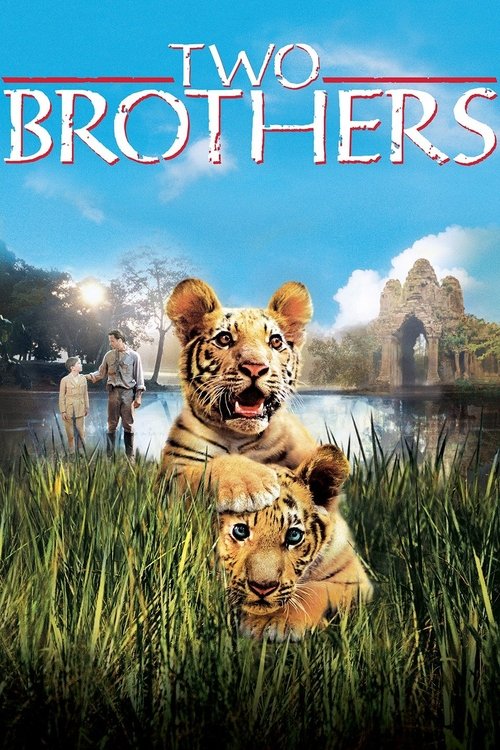
Two Brothers
Two tigers are separated as cubs and taken into captivity, only to be reunited years later as enemies by an explorer (Pearce) who inadvertently forces them to fight each other.
The film disappointed at the box office against its respectable budget of $74.5M, earning $62.2M globally (-17% loss).
2 wins & 2 nominations


Plot Structure
Story beats plotted across runtime


Narrative Arc
Emotional journey through the story's key moments
Story Circle
Blueprint 15-beat structure
Arcplot Score Breakdown
Weighted: Precision (70%) + Arc (15%) + Theme (15%)
Two Brothers (2004) reveals strategically placed narrative architecture, characteristic of Jean-Jacques Annaud's storytelling approach. This structural analysis examines how the film's 15-point plot structure maps to proven narrative frameworks across 1 hour and 49 minutes. With an Arcplot score of 7.6, the film showcases strong structural fundamentals.
Characters
Cast & narrative archetypes

Kumal
Sangha
Aidan McRory
Mathieu Normandin
Raoul Normandin
Main Cast & Characters
Kumal
Played by Animal Performance
The bold and adventurous tiger cub who becomes a circus performer, separated from his brother and later reunited.
Sangha
Played by Animal Performance
The cautious and gentle tiger cub who becomes the governor's pet, eventually trained as a fighter.
Aidan McRory
Played by Guy Pearce
An adventurous hunter and treasure seeker who captures the tiger cubs and later tries to save them.
Mathieu Normandin
Played by Jean-Claude Dreyfus
The ambitious French colonial administrator who owns Sangha as a pet and hosts tiger fights.
Raoul Normandin
Played by Freddie Highmore
The sensitive young son of the administrator who befriends Sangha and forms a deep bond with the tiger.
Structural Analysis
The Status Quo at 2 minutes (2% through the runtime) establishes Two tiger cubs, Kumal and Sangha, play together in ancient Cambodian temple ruins with their parents. Their idyllic jungle life shows the bond between brothers in their natural habitat.. Structural examination shows that this early placement immediately immerses viewers in the story world.
The inciting incident occurs at 14 minutes when McRory's expedition disturbs the temple where the tigers den. The father tiger is shot defending his family, and Kumal is captured while Sangha escapes into the jungle alone.. At 13% through the film, this Disruption is delayed, allowing extended setup of the story world. This beat shifts the emotional landscape, launching the protagonist into the central conflict.
The First Threshold at 26 minutes marks the transition into Act II, occurring at 24% of the runtime. This reveals the protagonist's commitment to Time jump: the cubs grow into young adult tigers in their separate captive worlds. Kumal becomes a performing circus tiger, while Sangha lives as Raoul's pampered but caged companion., moving from reaction to action.
At 52 minutes, the Midpoint arrives at 48% of the runtime—precisely centered, creating perfect narrative symmetry. Of particular interest, this crucial beat Sangha attacks a servant and is condemned. The administrator orders him sent to the arena for fighting. Meanwhile, Kumal is also sold to the arena. Both brothers are now destined for the same brutal fate., fundamentally raising what's at risk. The emotional intensity shifts, dividing the narrative into clear before-and-after phases.
The Collapse moment at 80 minutes (73% through) represents the emotional nadir. Here, The brothers are placed in the arena together to fight to the death before a crowd of colonial spectators. They are forced into combat, unaware they are siblings, representing the ultimate corruption of their bond., shows the protagonist at their lowest point. This beat's placement in the final quarter sets up the climactic reversal.
The Second Threshold at 87 minutes initiates the final act resolution at 80% of the runtime. The brothers fully recognize each other and refuse to fight. McRory and Raoul realize what is happening and intervene to stop the execution. The decision is made to return the tigers to the wild together., demonstrating the transformation achieved throughout the journey.
Emotional Journey
Two Brothers's emotional architecture traces a deliberate progression across 15 carefully calibrated beats.
Narrative Framework
This structural analysis employs a 15-point narrative structure framework that maps key story moments. By mapping Two Brothers against these established plot points, we can identify how Jean-Jacques Annaud utilizes or subverts traditional narrative conventions. The plot point approach reveals not only adherence to structural principles but also creative choices that distinguish Two Brothers within the adventure genre.
Jean-Jacques Annaud's Structural Approach
Among the 8 Jean-Jacques Annaud films analyzed on Arcplot, the average structural score is 6.9, demonstrating varied approaches to story architecture. Two Brothers represents one of the director's most structurally precise works. For comparative analysis, explore the complete Jean-Jacques Annaud filmography.
Comparative Analysis
Additional adventure films include The Black Stallion, The Bad Guys and Puss in Boots. For more Jean-Jacques Annaud analyses, see The Name of the Rose, The Bear and Enemy at the Gates.
Plot Points by Act
Act I
SetupStatus Quo
Two tiger cubs, Kumal and Sangha, play together in ancient Cambodian temple ruins with their parents. Their idyllic jungle life shows the bond between brothers in their natural habitat.
Theme
Hunter Aidan McRory discusses with his guide how "some things are meant to stay together" when observing the tiger family, foreshadowing the separation and ultimate reunion of the brothers.
Worldbuilding
Establishment of 1920s French colonial Cambodia. Introduction of the tiger family's daily life, McRory's treasure hunting operation, and the encroaching human presence threatening the jungle.
Disruption
McRory's expedition disturbs the temple where the tigers den. The father tiger is shot defending his family, and Kumal is captured while Sangha escapes into the jungle alone.
Resistance
Kumal is sold to a circus where he struggles to adapt. Sangha survives alone until captured by the French administrator's son, Raoul, who adopts him as a pet. Both cubs adjust to captivity in different ways.
Act II
ConfrontationFirst Threshold
Time jump: the cubs grow into young adult tigers in their separate captive worlds. Kumal becomes a performing circus tiger, while Sangha lives as Raoul's pampered but caged companion.
Mirror World
McRory develops a relationship with the French administrator's wife, while Raoul bonds with Sangha. These human relationships mirror the broken bond between the tiger brothers and explore themes of connection and separation.
Premise
Parallel lives: Kumal endures harsh circus training and performs for crowds. Sangha lives in luxury but becomes aggressive after an incident, leading to his imprisonment. Both tigers remember their freedom.
Midpoint
Sangha attacks a servant and is condemned. The administrator orders him sent to the arena for fighting. Meanwhile, Kumal is also sold to the arena. Both brothers are now destined for the same brutal fate.
Opposition
The brothers are trained as fighting tigers in preparation for a gladiatorial spectacle. Kumal is timid and must be forced to fight. Sangha becomes fierce. The arena master prepares them to kill each other.
Collapse
The brothers are placed in the arena together to fight to the death before a crowd of colonial spectators. They are forced into combat, unaware they are siblings, representing the ultimate corruption of their bond.
Crisis
The fight begins violently, but both tigers hesitate. Through scent and behavior, they begin to recognize each other. The crowd demands blood, but the brothers refuse to kill. Their bond proves stronger than conditioning.
Act III
ResolutionSecond Threshold
The brothers fully recognize each other and refuse to fight. McRory and Raoul realize what is happening and intervene to stop the execution. The decision is made to return the tigers to the wild together.
Synthesis
McRory and Raoul transport the brothers back to their original jungle temple home. The tigers are released and must readjust to the wild. They work together to hunt and survive, reclaiming their natural instincts and freedom.
Transformation
Kumal and Sangha stand together at the same temple ruins where they were born, now fully grown and free. The brothers are reunited in the wild, their bond restored, mirroring the opening but showing their transformation from innocence through suffering to earned freedom.