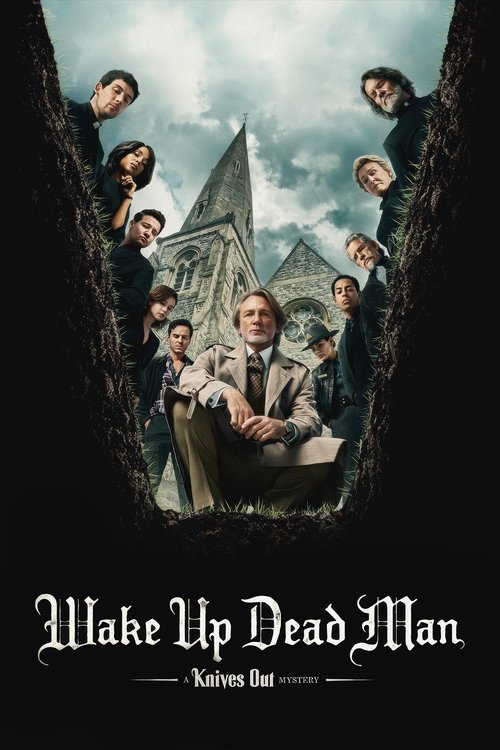
Wake Up Dead Man: A Knives Out Mystery
When young priest Jud Duplenticy is sent to assist charismatic firebrand Monsignor Jefferson Wicks, it’s clear that all is not well in the pews. After a sudden and seemingly impossible murder rocks the town, the lack of an obvious suspect prompts local police chief Geraldine Scott to join forces with renowned detective Benoit Blanc to unravel a mystery that defies all logic.
The film commercial failure against its blockbuster budget of $210.0M, earning $4.0M globally (-98% loss). While initial box office returns were modest, the film has gained appreciation for its unique voice within the thriller genre.


Plot Structure
Story beats plotted across runtime


Narrative Arc
Emotional journey through the story's key moments
Story Circle
Blueprint 15-beat structure
Arcplot Score Breakdown
Weighted: Precision (70%) + Arc (15%) + Theme (15%)
Wake Up Dead Man: A Knives Out Mystery (2025) exhibits precise narrative architecture, characteristic of Rian Johnson's storytelling approach. This structural analysis examines how the film's 15-point plot structure maps to proven narrative frameworks across 2 hours and 25 minutes. With an Arcplot score of 6.8, the film balances conventional beats with creative variation.
Structural Analysis
The Status Quo at 1 minutes (1% through the runtime) establishes Benoit Blanc receives a mysterious invitation to attend a spiritual retreat on a remote private island owned by tech billionaire Crispin Aldrich, establishing his world as a renowned detective between cases.. Notably, this early placement immediately immerses viewers in the story world.
The inciting incident occurs at 17 minutes when Crispin Aldrich is found dead under mysterious circumstances in his private chapel, the murder staged to appear like divine judgment. The retreat becomes a crime scene and no one can leave the island.. At 12% through the film, this Disruption aligns precisely with traditional story structure. This beat shifts the emotional landscape, launching the protagonist into the central conflict.
The First Threshold at 36 minutes marks the transition into Act II, occurring at 25% of the runtime. This reveals the protagonist's commitment to Blanc commits fully to the investigation after discovering evidence that the murder was elaborately premeditated, not a crime of passion. He announces he will solve this before anyone leaves the island., moving from reaction to action.
At 73 minutes, the Midpoint arrives at 50% of the runtime—precisely centered, creating perfect narrative symmetry. Structural examination shows that this crucial beat A second death occurs—a key witness is murdered before they can reveal crucial information to Blanc. The false victory of seemingly narrowing the suspects is shattered as Blanc realizes the killer is actively working against him., fundamentally raising what's at risk. The emotional intensity shifts, dividing the narrative into clear before-and-after phases.
The Collapse moment at 109 minutes (75% through) represents the emotional nadir. Here, Blanc's theory collapses when his prime suspect has an ironclad alibi. Andi is arrested by arriving authorities, and Blanc faces his darkest moment—the killer has outmaneuvered him and an innocent person will pay., demonstrates the protagonist at their lowest point. This beat's placement in the final quarter sets up the climactic reversal.
The Second Threshold at 116 minutes initiates the final act resolution at 80% of the runtime. Blanc has a revelation: a seemingly insignificant detail from his conversations with Andi illuminates the truth. He realizes the killer's identity and their elaborate scheme to use faith and trust as weapons., demonstrating the transformation achieved throughout the journey.
Emotional Journey
Wake Up Dead Man: A Knives Out Mystery's emotional architecture traces a deliberate progression across 15 carefully calibrated beats.
Narrative Framework
This structural analysis employs proven narrative structure principles that track dramatic progression. By mapping Wake Up Dead Man: A Knives Out Mystery against these established plot points, we can identify how Rian Johnson utilizes or subverts traditional narrative conventions. The plot point approach reveals not only adherence to structural principles but also creative choices that distinguish Wake Up Dead Man: A Knives Out Mystery within the thriller genre.
Rian Johnson's Structural Approach
Among the 6 Rian Johnson films analyzed on Arcplot, the average structural score is 6.7, demonstrating varied approaches to story architecture. Wake Up Dead Man: A Knives Out Mystery represents one of the director's most structurally precise works. For comparative analysis, explore the complete Rian Johnson filmography.
Comparative Analysis
Additional thriller films include The Warriors, Thunderball and Rustom. For more Rian Johnson analyses, see Star Wars: The Last Jedi, Glass Onion: A Knives Out Mystery and Looper.
Plot Points by Act
Act I
SetupStatus Quo
Benoit Blanc receives a mysterious invitation to attend a spiritual retreat on a remote private island owned by tech billionaire Crispin Aldrich, establishing his world as a renowned detective between cases.
Theme
A character remarks on the nature of faith and truth, questioning whether people can ever truly know another person's soul—foreshadowing the film's exploration of deception, belief, and hidden identities.
Worldbuilding
The eccentric guests arrive on Aldrich's island for the retreat: religious leaders, wealthy donors, spiritual seekers, and skeptics. The isolated location, opulent estate, and tension between faith and wealth are established as Blanc observes the dynamics.
Disruption
Crispin Aldrich is found dead under mysterious circumstances in his private chapel, the murder staged to appear like divine judgment. The retreat becomes a crime scene and no one can leave the island.
Resistance
Blanc begins preliminary interviews with the guests, each with apparent motive and opportunity. He debates whether to wait for authorities or proceed alone, while suspects attempt to control the narrative and point fingers at each other.
Act II
ConfrontationFirst Threshold
Blanc commits fully to the investigation after discovering evidence that the murder was elaborately premeditated, not a crime of passion. He announces he will solve this before anyone leaves the island.
Mirror World
Blanc forms an alliance with Andi, a sharp-witted assistant who was overlooked by everyone else. She represents the theme of seeing truth in unexpected places and provides crucial insight into the household dynamics.
Premise
The investigation unfolds as Blanc interviews each suspect with theatrical flair, uncovering layers of secrets: affairs, financial crimes, religious hypocrisy, and family betrayals. Each revelation complicates the case while showcasing Blanc's deductive brilliance.
Midpoint
A second death occurs—a key witness is murdered before they can reveal crucial information to Blanc. The false victory of seemingly narrowing the suspects is shattered as Blanc realizes the killer is actively working against him.
Opposition
The investigation becomes increasingly dangerous as Blanc gets closer to the truth. Suspects turn on each other, alliances shift, evidence is destroyed, and someone attempts to frame Blanc's ally Andi for the crimes.
Collapse
Blanc's theory collapses when his prime suspect has an ironclad alibi. Andi is arrested by arriving authorities, and Blanc faces his darkest moment—the killer has outmaneuvered him and an innocent person will pay.
Crisis
Blanc retreats to process his failure, replaying conversations and evidence in his mind. He questions his methods and whether his theatrical approach blinded him to the obvious truth hiding in plain sight.
Act III
ResolutionSecond Threshold
Blanc has a revelation: a seemingly insignificant detail from his conversations with Andi illuminates the truth. He realizes the killer's identity and their elaborate scheme to use faith and trust as weapons.
Synthesis
Blanc orchestrates a dramatic gathering of all suspects for the classic denouement. He systematically dismantles the killer's alibi and reveals how they exploited everyone's faith in appearances. The killer is exposed and justice is served.
Transformation
Blanc departs the island, reflecting on how truth requires looking beyond what people present to the world. Andi is vindicated and the case closed—Blanc remains the detective who sees through all deceptions.