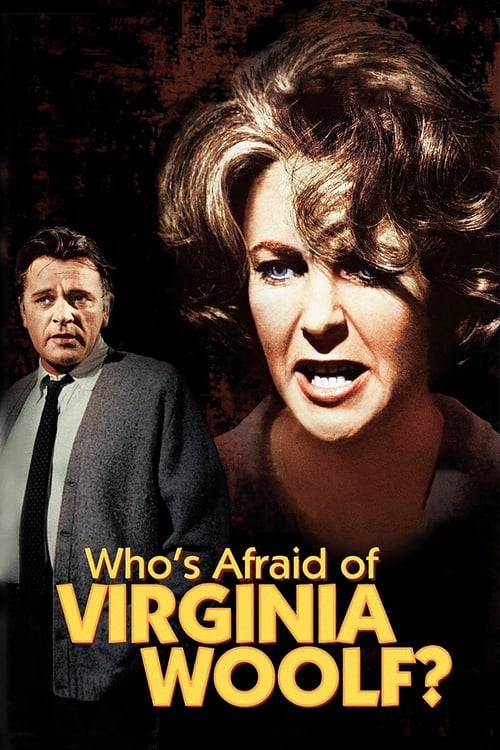
Who's Afraid of Virginia Woolf?
A history professor and his wife entertain a young couple who are new to the university's faculty. As the drinks flow, secrets come to light, and the middle-aged couple unload onto their guests the full force of the bitterness, dysfunction, and animosity that defines their marriage.
Despite its limited budget of $7.5M, Who's Afraid of Virginia Woolf? became a commercial success, earning $33.7M worldwide—a 350% return. The film's unique voice engaged audiences, demonstrating that strong storytelling can transcend budget limitations.
5 Oscars. 22 wins & 26 nominations


Plot Structure
Story beats plotted across runtime


Narrative Arc
Emotional journey through the story's key moments
Story Circle
Blueprint 15-beat structure
Arcplot Score Breakdown
Weighted: Precision (70%) + Arc (15%) + Theme (15%)
Who's Afraid of Virginia Woolf? (1966) reveals carefully calibrated dramatic framework, characteristic of Mike Nichols's storytelling approach. This structural analysis examines how the film's 15-point plot structure maps to proven narrative frameworks across 2 hours and 11 minutes. With an Arcplot score of 7.2, the film balances conventional beats with creative variation.
Structural Analysis
The Status Quo at 2 minutes (2% through the runtime) establishes George and Martha return home late at night, drunk and bickering. Their toxic marriage is established immediately as Martha mocks George and announces guests are coming over despite the late hour.. The analysis reveals that this early placement immediately immerses viewers in the story world.
The inciting incident occurs at 15 minutes when Nick and Honey arrive. The young couple's presence disrupts George and Martha's private hell, forcing their psychological warfare into a performative space with witnesses who will become participants.. At 12% through the film, this Disruption aligns precisely with traditional story structure. This beat shifts the emotional landscape, launching the protagonist into the central conflict.
The First Threshold at 32 minutes marks the transition into Act II, occurring at 24% of the runtime. This indicates the protagonist's commitment to Martha breaks the ultimate rule by publicly telling the story of George's novel about the boy who accidentally killed his parents. George explodes in rage. The gloves are off—no more pretense of civility, and the psychological warfare escalates to total war., moving from reaction to action.
At 66 minutes, the Midpoint arrives at 50% of the runtime—precisely centered, creating perfect narrative symmetry. Of particular interest, this crucial beat Martha takes Nick upstairs to have sex with him, the ultimate betrayal and humiliation of George in front of guests. George declares "total war" and announces he will bring up "the kid"—their son—as a weapon. The stakes raise; there's no going back., fundamentally raising what's at risk. The emotional intensity shifts, dividing the narrative into clear before-and-after phases.
The Collapse moment at 97 minutes (74% through) represents the emotional nadir. Here, George announces that their son is dead—killed in a car accident. This "whiff of death" is the murder of their shared illusion, the fantasy child they created to fill the void of their barren marriage. Martha is devastated; their last illusion is destroyed., reveals the protagonist at their lowest point. This beat's placement in the final quarter sets up the climactic reversal.
The Second Threshold at 106 minutes initiates the final act resolution at 81% of the runtime. Martha accepts that the son-illusion is dead and cannot be resurrected. She admits "I don't know" when asked if she could have borne children. George and Martha choose to face reality together rather than continue living in fantasy., demonstrating the transformation achieved throughout the journey.
Emotional Journey
Who's Afraid of Virginia Woolf?'s emotional architecture traces a deliberate progression across 15 carefully calibrated beats.
Narrative Framework
This structural analysis employs proven narrative structure principles that track dramatic progression. By mapping Who's Afraid of Virginia Woolf? against these established plot points, we can identify how Mike Nichols utilizes or subverts traditional narrative conventions. The plot point approach reveals not only adherence to structural principles but also creative choices that distinguish Who's Afraid of Virginia Woolf? within the drama genre.
Mike Nichols's Structural Approach
Among the 16 Mike Nichols films analyzed on Arcplot, the average structural score is 7.0, demonstrating varied approaches to story architecture. Who's Afraid of Virginia Woolf? represents one of the director's most structurally precise works. For comparative analysis, explore the complete Mike Nichols filmography.
Comparative Analysis
Additional drama films include After Thomas, South Pacific and Dirty Dancing: Havana Nights. For more Mike Nichols analyses, see Closer, Primary Colors and Charlie Wilson's War.
Plot Points by Act
Act I
SetupStatus Quo
George and Martha return home late at night, drunk and bickering. Their toxic marriage is established immediately as Martha mocks George and announces guests are coming over despite the late hour.
Theme
Martha delivers the thematic statement: "Truth and illusion, George. You don't know the difference." This sets up the central exploration of facades versus reality in relationships.
Worldbuilding
The power dynamics of George and Martha's marriage are established. George is a failed history professor; Martha is the college president's daughter. Their cruel verbal games, alcohol dependency, and references to their son create the world of illusions they inhabit.
Disruption
Nick and Honey arrive. The young couple's presence disrupts George and Martha's private hell, forcing their psychological warfare into a performative space with witnesses who will become participants.
Resistance
The "Fun and Games" drinking session begins. George and Martha perform their dysfunction for their guests while sussing out Nick and Honey's vulnerabilities. Martha flirts with Nick, George hints at dark secrets, establishing the rules of engagement for the night's games.
Act II
ConfrontationFirst Threshold
Martha breaks the ultimate rule by publicly telling the story of George's novel about the boy who accidentally killed his parents. George explodes in rage. The gloves are off—no more pretense of civility, and the psychological warfare escalates to total war.
Mirror World
Nick and Honey represent the younger version of George and Martha—a marriage also built on illusions (Honey's hysterical pregnancy, Nick marrying for money). They mirror what George and Martha once were and what they might become.
Premise
The promise of the premise: watching two toxic marriages destroy each other through cruel party games. Martha seduces Nick while humiliating George. George retaliates by exposing Nick's secrets. Honey gets progressively drunker. The verbal and psychological brutality escalates through "Humiliate the Host" and other games.
Midpoint
Martha takes Nick upstairs to have sex with him, the ultimate betrayal and humiliation of George in front of guests. George declares "total war" and announces he will bring up "the kid"—their son—as a weapon. The stakes raise; there's no going back.
Opposition
Act II "Walpurgisnacht" (Witches' Sabbath). George comforts the sick Honey while plotting revenge. Nick fails to perform sexually with Martha. George and Martha's cruelty intensifies as they weaponize their imaginary son, each telling competing stories about him to wound the other.
Collapse
George announces that their son is dead—killed in a car accident. This "whiff of death" is the murder of their shared illusion, the fantasy child they created to fill the void of their barren marriage. Martha is devastated; their last illusion is destroyed.
Crisis
Act III "The Exorcism" begins. Martha crumbles emotionally. Nick finally understands the son never existed. George and Martha face the darkness of their empty marriage without the protective fiction. The pain of truth without illusion to buffer it.
Act III
ResolutionSecond Threshold
Martha accepts that the son-illusion is dead and cannot be resurrected. She admits "I don't know" when asked if she could have borne children. George and Martha choose to face reality together rather than continue living in fantasy.
Synthesis
Nick and Honey leave, shaken and educated. George and Martha are left alone as dawn breaks. They sit together in exhausted silence, stripped of illusions. George gently sings "Who's Afraid of Virginia Woolf?" and Martha responds "I am, George. I am."
Transformation
George and Martha sit together in vulnerable silence as dawn light fills the room. Without their illusions, they face each other honestly for the first time. The transformation is ambiguous—not happy, but real. They are afraid, but together in their fear.