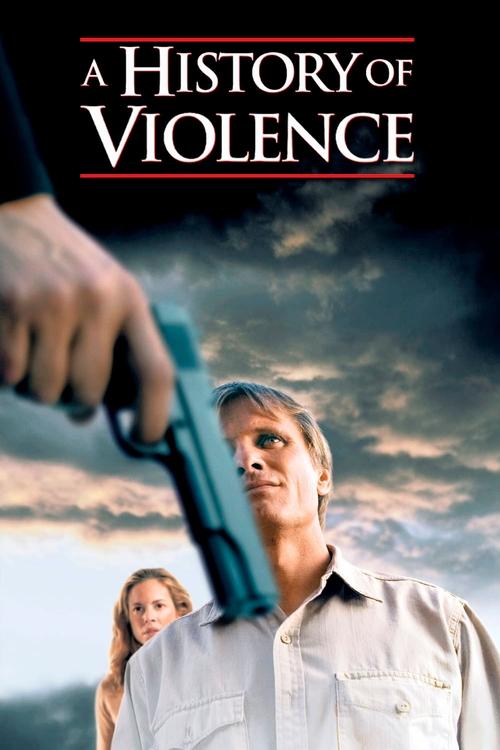
A History of Violence
An average family is thrust into the spotlight after the father commits a seemingly self-defense murder at his diner.
Working with a mid-range budget of $32.0M, the film achieved a steady performer with $61.5M in global revenue (+92% profit margin).
Nominated for 2 Oscars. 37 wins & 84 nominations


Plot Structure
Story beats plotted across runtime


Narrative Arc
Emotional journey through the story's key moments
Story Circle
Blueprint 15-beat structure
Arcplot Score Breakdown
Weighted: Precision (70%) + Arc (15%) + Theme (15%)
A History of Violence (2005) showcases meticulously timed narrative design, characteristic of David Cronenberg's storytelling approach. This structural analysis examines how the film's 15-point plot structure maps to proven narrative frameworks across 1 hour and 36 minutes. With an Arcplot score of 7.6, the film showcases strong structural fundamentals.
Characters
Cast & narrative archetypes

Tom Stall
Edie Stall
Carl Fogarty
Richie Cusack
Jack Stall
Main Cast & Characters
Tom Stall
Played by Viggo Mortensen
A mild-mannered small-town diner owner whose past violently resurfaces when he becomes a local hero after thwarting a robbery.
Edie Stall
Played by Maria Bello
Tom's wife and a respected attorney who struggles to reconcile her husband's violent capabilities with the man she thought she knew.
Carl Fogarty
Played by Ed Harris
A scarred mobster from Philadelphia who claims to recognize Tom as a violent enforcer from his past named Joey Cusack.
Richie Cusack
Played by William Hurt
A powerful Philadelphia crime boss who turns out to be Tom's estranged brother, representing the life Tom fled.
Jack Stall
Played by Ashton Holmes
Tom and Edie's teenage son who struggles with violence and his father's hidden identity while facing his own bullying crisis.
Structural Analysis
The Status Quo at 1 minutes (1% through the runtime) establishes Tom Stall shares a peaceful breakfast with his loving family in their small Indiana town. He kisses his wife Edie goodbye, embodying small-town American tranquility and normalcy.. Significantly, this early placement immediately immerses viewers in the story world.
The inciting incident occurs at 11 minutes when Two vicious killers enter Tom's diner intending to murder everyone inside. Tom kills both men with shocking efficiency and precision, saving his customers and employees.. At 12% through the film, this Disruption aligns precisely with traditional story structure. This beat shifts the emotional landscape, launching the protagonist into the central conflict.
The First Threshold at 24 minutes marks the transition into Act II, occurring at 25% of the runtime. This reveals the protagonist's commitment to Tom chooses to actively maintain his denial when confronted by Fogarty in public, telling his family the mobster is a dangerous lunatic with the wrong man, committing fully to the Tom Stall identity., moving from reaction to action.
At 46 minutes, the Midpoint arrives at 48% of the runtime—precisely centered, creating perfect narrative symmetry. Structural examination shows that this crucial beat Fogarty's men attack Tom's home. Tom kills all three with brutal efficiency, revealing expert fighting skills. The mask is off - Edie and Jack witness undeniable proof that Tom is Joey Cusack., fundamentally raising what's at risk. The emotional intensity shifts, dividing the narrative into clear before-and-after phases.
The Collapse moment at 71 minutes (74% through) represents the emotional nadir. Here, Edie attacks Tom with emotional fury, then they have violent sex on the stairs - a destructive union showing the death of their innocent marriage and her complicity in his violence., shows the protagonist at their lowest point. This beat's placement in the final quarter sets up the climactic reversal.
The Second Threshold at 76 minutes initiates the final act resolution at 80% of the runtime. Tom tells Jack "I have to go back" to Philadelphia, accepting his Joey identity for the first time. He will face Richie not as Tom hiding, but as Joey taking responsibility., demonstrating the transformation achieved throughout the journey.
Emotional Journey
A History of Violence's emotional architecture traces a deliberate progression across 15 carefully calibrated beats.
Narrative Framework
This structural analysis employs structural analysis methodology used to understand storytelling architecture. By mapping A History of Violence against these established plot points, we can identify how David Cronenberg utilizes or subverts traditional narrative conventions. The plot point approach reveals not only adherence to structural principles but also creative choices that distinguish A History of Violence within the drama genre.
David Cronenberg's Structural Approach
Among the 12 David Cronenberg films analyzed on Arcplot, the average structural score is 7.1, reflecting strong command of classical structure. A History of Violence represents one of the director's most structurally precise works. For comparative analysis, explore the complete David Cronenberg filmography.
Comparative Analysis
Additional drama films include After Thomas, South Pacific and Dirty Dancing: Havana Nights. For more David Cronenberg analyses, see The Brood, The Dead Zone and Eastern Promises.
Plot Points by Act
Act I
SetupStatus Quo
Tom Stall shares a peaceful breakfast with his loving family in their small Indiana town. He kisses his wife Edie goodbye, embodying small-town American tranquility and normalcy.
Theme
Jack Stall discusses bullying at school, stating "You don't have to use violence" - establishing the film's central question about whether violence is ever justified or if it reveals one's true nature.
Worldbuilding
Tom runs a small diner in Millbrook, Indiana. His marriage to Edie is passionate and playful. Son Jack faces bullying, daughter Sarah has nightmares. The Stalls represent an idyllic American family.
Disruption
Two vicious killers enter Tom's diner intending to murder everyone inside. Tom kills both men with shocking efficiency and precision, saving his customers and employees.
Resistance
Tom becomes a local hero, featured on national news. He resists the attention, wanting to return to normalcy. Scarred mobster Carl Fogarty arrives, insisting Tom is really Joey Cusack from Philadelphia.
Act II
ConfrontationFirst Threshold
Tom chooses to actively maintain his denial when confronted by Fogarty in public, telling his family the mobster is a dangerous lunatic with the wrong man, committing fully to the Tom Stall identity.
Mirror World
Edie expresses doubt and fear about Tom's past, their intimate relationship becoming strained. She represents truth and authenticity - the moral mirror forcing Tom to confront who he really is.
Premise
Tom tries maintaining his peaceful life while Fogarty escalates harassment. Jack uses violence against his bully. The family fractures under pressure as Tom's capacity for violence becomes undeniable.
Midpoint
Fogarty's men attack Tom's home. Tom kills all three with brutal efficiency, revealing expert fighting skills. The mask is off - Edie and Jack witness undeniable proof that Tom is Joey Cusack.
Opposition
Tom confesses his Joey Cusack past to Edie. Their marriage collapses - she feels violated by the deception. Jack is traumatized. The family that loved Tom now recoils from Joey. The mob closes in.
Collapse
Edie attacks Tom with emotional fury, then they have violent sex on the stairs - a destructive union showing the death of their innocent marriage and her complicity in his violence.
Crisis
Tom receives a call from his mob brother Richie demanding he come to Philadelphia. The family sits in cold silence. Tom must choose: run forever or confront his past completely.
Act III
ResolutionSecond Threshold
Tom tells Jack "I have to go back" to Philadelphia, accepting his Joey identity for the first time. He will face Richie not as Tom hiding, but as Joey taking responsibility.
Synthesis
Joey confronts brother Richie, who ordered the hits. Joey kills Richie and his guards. He returns to Millbrook covered in blood, the violent past finally extinguished by violence itself.
Transformation
Tom sits at the dinner table with his family in silence. Sarah wordlessly sets a place for him. The family accepts him back - neither fully Tom nor Joey, but their damaged father/husband. Forgiveness without words.