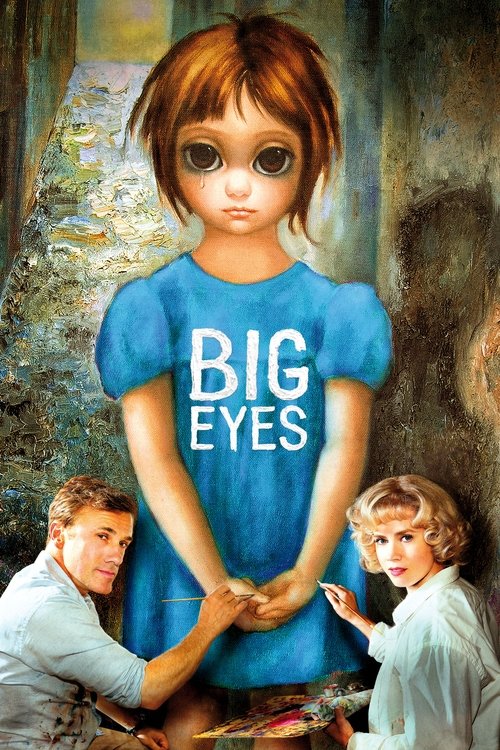
Big Eyes
In the late 1950s and early '60s, artist Walter Keane achieves unbelievable fame and success with portraits of saucer-eyed waifs. However, no one realizes that his wife, Margaret, is the real painter behind the brush. Although Margaret is horrified to learn that Walter is passing off her work as his own, she is too meek to protest too loudly. It isn't until the Keanes' marriage comes to an end and a lawsuit follows that the truth finally comes to light.
Despite its small-scale budget of $10.0M, Big Eyes became a box office success, earning $28.9M worldwide—a 189% return.
Nominated for 2 BAFTA 3 wins & 18 nominations


Plot Structure
Story beats plotted across runtime


Narrative Arc
Emotional journey through the story's key moments
Story Circle
Blueprint 15-beat structure
Arcplot Score Breakdown
Weighted: Precision (70%) + Arc (15%) + Theme (15%)
Big Eyes (2014) showcases carefully calibrated dramatic framework, characteristic of Tim Burton's storytelling approach. This structural analysis examines how the film's 15-point plot structure maps to proven narrative frameworks across 1 hour and 46 minutes. With an Arcplot score of 6.8, the film balances conventional beats with creative variation.
Characters
Cast & narrative archetypes

Margaret Keane
Walter Keane
Jane Ulbrich
Ruben
DeeAnn
Main Cast & Characters
Margaret Keane
Played by Amy Adams
A shy artist whose paintings of waif-like children with enormous eyes become wildly popular, but her husband takes credit for her work.
Walter Keane
Played by Christoph Waltz
A charismatic con artist and Margaret's manipulative husband who claims authorship of her paintings and builds an empire on the lie.
Jane Ulbrich
Played by Delaney Raye
Margaret's daughter who witnesses her mother's artistic talent and the deception perpetrated by her stepfather.
Ruben
Played by Danny Huston
A kind Hawaiian real estate agent who befriends Margaret and later becomes her supportive husband after she leaves Walter.
DeeAnn
Played by Krysten Ritter
Margaret's best friend and confidante who supports her through her troubled marriage and encourages her independence.
Structural Analysis
The Status Quo at 1 minutes (1% through the runtime) establishes Margaret paints portraits at an outdoor art fair in San Francisco, a single mother struggling to support herself and her daughter Jane through her art while living in fear of her ex-husband taking custody.. Structural examination shows that this early placement immediately immerses viewers in the story world.
The inciting incident occurs at 12 minutes when Walter proposes marriage to Margaret, offering her protection from her ex-husband's custody threats and promising a partnership where they can both pursue their art together, presenting an escape from her precarious situation.. At 12% through the film, this Disruption aligns precisely with traditional story structure. This beat shifts the emotional landscape, launching the protagonist into the central conflict.
The First Threshold at 26 minutes marks the transition into Act II, occurring at 24% of the runtime. This indicates the protagonist's commitment to Margaret agrees to let Walter take credit for her paintings when he argues it's the only way they'll sell, claiming "People don't buy lady art." Margaret makes the active choice to participate in the deception, entering a world of lies., moving from reaction to action.
At 53 minutes, the Midpoint arrives at 50% of the runtime—precisely centered, creating perfect narrative symmetry. Notably, this crucial beat Margaret attempts to tell a reporter the truth about who really paints the Big Eyes, but Walter intercepts and violently threatens her, revealing the dangerous control he has over her. The false victory of wealth and success is exposed as a prison., fundamentally raising what's at risk. The emotional intensity shifts, dividing the narrative into clear before-and-after phases.
The Collapse moment at 79 minutes (74% through) represents the emotional nadir. Here, Margaret suffers a complete breakdown, unable to paint anymore, lying in bed in darkness. Her spirit and sense of self have died under the weight of the lie. Jane finds her mother in this devastated state, witnessing her complete collapse., illustrates the protagonist at their lowest point. This beat's placement in the final quarter sets up the climactic reversal.
The Second Threshold at 84 minutes initiates the final act resolution at 79% of the runtime. Margaret finds faith and inner strength at a Jehovah's Witness Kingdom Hall in Hawaii. She realizes she must tell the truth publicly, no matter the cost. She calls a radio station and announces to the world that she, not Walter, painted the Big Eyes., demonstrating the transformation achieved throughout the journey.
Emotional Journey
Big Eyes's emotional architecture traces a deliberate progression across 15 carefully calibrated beats.
Narrative Framework
This structural analysis employs a 15-point narrative structure framework that maps key story moments. By mapping Big Eyes against these established plot points, we can identify how Tim Burton utilizes or subverts traditional narrative conventions. The plot point approach reveals not only adherence to structural principles but also creative choices that distinguish Big Eyes within the drama genre.
Tim Burton's Structural Approach
Among the 19 Tim Burton films analyzed on Arcplot, the average structural score is 6.9, demonstrating varied approaches to story architecture. Big Eyes takes a more unconventional approach compared to the director's typical style. For comparative analysis, explore the complete Tim Burton filmography.
Comparative Analysis
Additional drama films include After Thomas, South Pacific and Dirty Dancing: Havana Nights. For more Tim Burton analyses, see Beetlejuice, Dark Shadows and Pee-wee's Big Adventure.
Plot Points by Act
Act I
SetupStatus Quo
Margaret paints portraits at an outdoor art fair in San Francisco, a single mother struggling to support herself and her daughter Jane through her art while living in fear of her ex-husband taking custody.
Theme
Walter Keane tells Margaret, "Nobody wants to buy a lady's painting," foreshadowing the central deception and gender inequality that will define their relationship and the story's exploration of authenticity versus commercial success.
Worldbuilding
Margaret meets Walter Keane at the art fair, and he charms her with his apparent understanding of art and business. They bond over their shared love of painting, and Walter presents himself as a successful artist. Margaret's ex-husband threatens custody of Jane, creating urgency.
Disruption
Walter proposes marriage to Margaret, offering her protection from her ex-husband's custody threats and promising a partnership where they can both pursue their art together, presenting an escape from her precarious situation.
Resistance
Margaret quickly marries Walter and they move in together. Walter struggles to sell his Parisian street scenes while Margaret's big-eyed waif paintings attract attention. Walter begins displaying both their works together, and a club owner mistakes Margaret's painting for Walter's work.
Act II
ConfrontationFirst Threshold
Margaret agrees to let Walter take credit for her paintings when he argues it's the only way they'll sell, claiming "People don't buy lady art." Margaret makes the active choice to participate in the deception, entering a world of lies.
Mirror World
Margaret's relationship with her daughter Jane becomes strained as she must keep the secret even from her own child. Jane represents innocence and truth, serving as Margaret's moral compass and the person whose respect she most needs.
Premise
The Big Eyes paintings become a massive commercial success. Walter promotes himself relentlessly, becoming a celebrity while Margaret paints in secret, locked away. The paintings sell as prints, posters, and mass-market products, making them wealthy but artistically scorned.
Midpoint
Margaret attempts to tell a reporter the truth about who really paints the Big Eyes, but Walter intercepts and violently threatens her, revealing the dangerous control he has over her. The false victory of wealth and success is exposed as a prison.
Opposition
Margaret becomes increasingly isolated and miserable, painting compulsively in a locked studio while Walter's ego and drinking spiral. Art critic John Canaday savages the Big Eyes paintings publicly. Margaret's conscience tortures her, but Walter's control tightens through intimidation and gaslighting.
Collapse
Margaret suffers a complete breakdown, unable to paint anymore, lying in bed in darkness. Her spirit and sense of self have died under the weight of the lie. Jane finds her mother in this devastated state, witnessing her complete collapse.
Crisis
In her darkest moment, Margaret makes the painful decision to leave Walter and flee with Jane to Hawaii. She processes the loss of her marriage, her wealth, and ten years of her life lived as a lie, struggling with whether she can ever reclaim her truth.
Act III
ResolutionSecond Threshold
Margaret finds faith and inner strength at a Jehovah's Witness Kingdom Hall in Hawaii. She realizes she must tell the truth publicly, no matter the cost. She calls a radio station and announces to the world that she, not Walter, painted the Big Eyes.
Synthesis
Walter sues Margaret for defamation, and she countersues. The case goes to trial where Margaret must prove she painted the Big Eyes. In court, she paints one of her signature works in under an hour while Walter refuses to paint, making excuses. The jury unanimously sides with Margaret.
Transformation
Margaret stands in a gallery showing her new paintings under her own name, her daughter Jane beside her, finally free and painting subjects with genuine joy rather than sorrow. She has reclaimed her identity, her art, and her truth.