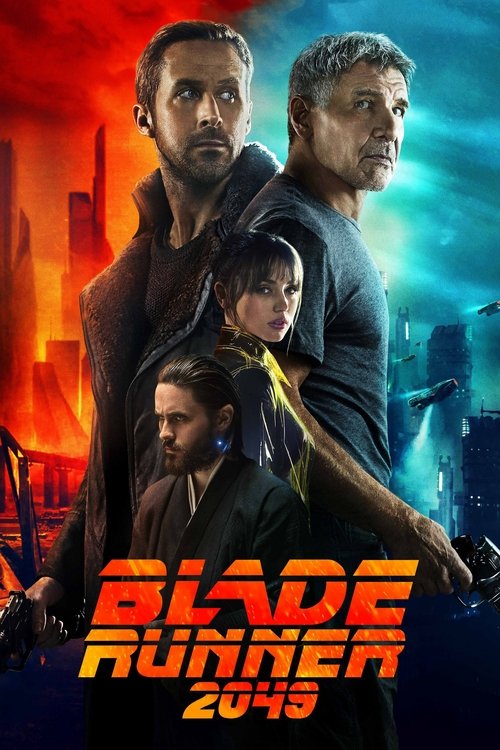
Blade Runner 2049
Thirty years after the events of the first film, a new blade runner, LAPD Officer K, unearths a long-buried secret that has the potential to plunge what's left of society into chaos. K's discovery leads him on a quest to find Rick Deckard, a former LAPD blade runner who has been missing for 30 years.
Working with a massive budget of $150.0M, the film achieved a modest success with $259.2M in global revenue (+73% profit margin).
2 Oscars. 100 wins & 164 nominations


Plot Structure
Story beats plotted across runtime


Narrative Arc
Emotional journey through the story's key moments
Story Circle
Blueprint 15-beat structure
Arcplot Score Breakdown
Weighted: Precision (70%) + Arc (15%) + Theme (15%)
Blade Runner 2049 (2017) demonstrates precise narrative design, characteristic of Denis Villeneuve's storytelling approach. This structural analysis examines how the film's 15-point plot structure maps to proven narrative frameworks across 2 hours and 44 minutes. With an Arcplot score of 6.1, the film takes an unconventional approach to traditional narrative frameworks.
Characters
Cast & narrative archetypes

K / Joe

Rick Deckard

Joi
Niander Wallace

Luv

Lieutenant Joshi

Mariette

Freysa

Dr. Ana Stelline
Main Cast & Characters
K / Joe
Played by Ryan Gosling
A blade runner who discovers a truth that could unravel society while questioning his own existence and purpose.
Rick Deckard
Played by Harrison Ford
The former blade runner living in isolation, holding secrets about the past and the key to the future.
Joi
Played by Ana de Armas
K's holographic AI companion who yearns to be real and expresses unwavering devotion to him.
Niander Wallace
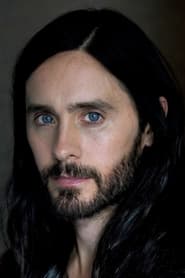
Played by Jared Leto
A blind tech industrialist and creator of new replicants who seeks the secret to replicant reproduction.
Luv
Played by Sylvia Hoeks
Wallace's ruthless replicant enforcer who pursues K with deadly efficiency and unwavering loyalty to her creator.
Lieutenant Joshi
Played by Robin Wright
K's superior officer at the LAPD who maintains order and makes difficult decisions to protect society.
Mariette
Played by Mackenzie Davis
A replicant freedom fighter posing as a pleasure model who aids the resistance movement.
Freysa
Played by Hiam Abbass
The leader of the replicant resistance movement who guards the truth about the replicant child.
Dr. Ana Stelline
Played by Carla Juri
A memory designer who creates implanted memories for replicants while living in a sterile isolation chamber.
Structural Analysis
The Status Quo at 2 minutes (1% through the runtime) establishes K arrives at Sapper Morton's protein farm under gray skies. A lone tree stands dead in the barren landscape. K is a blade runner who hunts his own kind—a replicant designed to retire other replicants. He exists as a tool, compliant and emotionless.. Of particular interest, this early placement immediately immerses viewers in the story world.
The inciting incident occurs at 20 minutes when K discovers a buried box beneath the dead tree at Morton's farm. Inside are the remains of a female replicant who died during childbirth—an impossibility. The serial number reveals she was Rachael, a Nexus-7 from Tyrell Corporation. A replicant gave birth. Everything K understands about his kind is shattered.. At 12% through the film, this Disruption aligns precisely with traditional story structure. This beat shifts the emotional landscape, launching the protagonist into the central conflict.
The First Threshold at 41 minutes marks the transition into Act II, occurring at 25% of the runtime. This reveals the protagonist's commitment to K returns to Morton's farm and finds the date 6-10-21 carved into the tree—matching a childhood memory he possesses. He realizes he may be the miracle child. K makes the choice to pursue the truth of his origins rather than simply complete his mission, stepping into a personal quest for identity., moving from reaction to action.
At 83 minutes, the Midpoint arrives at 50% of the runtime—precisely centered, creating perfect narrative symmetry. Significantly, this crucial beat Ana Stelline weeps when viewing K's memory, confirming it is real—not implanted. K now believes with certainty that he is the child, born not manufactured. This is a false victory: K feels special, chosen, finally real. But the truth is more complex than he understands. His entire sense of identity is built on a misinterpretation., fundamentally raising what's at risk. The emotional intensity shifts, dividing the narrative into clear before-and-after phases.
The Collapse moment at 123 minutes (75% through) represents the emotional nadir. Here, K lies wounded in the snow as Freysa reveals the truth: the child is female—Ana Stelline, the memory maker. K's memories were implanted; he was never special. He is just another replicant, one of millions who share the same false memory. His entire identity collapses. Joi's death and this revelation strip away everything he believed made him real., reveals the protagonist at their lowest point. This beat's placement in the final quarter sets up the climactic reversal.
The Second Threshold at 132 minutes initiates the final act resolution at 81% of the runtime. K chooses to act. Though he is not the miracle child, he can still do something meaningful. He decides to rescue Deckard and reunite him with his daughter Ana—not because he was born to, but because he chooses to. K synthesizes his journey: being human isn't about origins but about the choices we make. He becomes human through choice., demonstrating the transformation achieved throughout the journey.
Emotional Journey
Blade Runner 2049's emotional architecture traces a deliberate progression across 15 carefully calibrated beats.
Narrative Framework
This structural analysis employs structural analysis methodology used to understand storytelling architecture. By mapping Blade Runner 2049 against these established plot points, we can identify how Denis Villeneuve utilizes or subverts traditional narrative conventions. The plot point approach reveals not only adherence to structural principles but also creative choices that distinguish Blade Runner 2049 within the science fiction genre.
Denis Villeneuve's Structural Approach
Among the 7 Denis Villeneuve films analyzed on Arcplot, the average structural score is 5.9, showcasing experimental approaches to narrative form. Blade Runner 2049 represents one of the director's most structurally precise works. For comparative analysis, explore the complete Denis Villeneuve filmography.
Comparative Analysis
Additional science fiction films include The Postman, Mad Max 2 and AVP: Alien vs. Predator. For more Denis Villeneuve analyses, see Sicario, Incendies and Arrival.
Plot Points by Act
Act I
SetupStatus Quo
K arrives at Sapper Morton's protein farm under gray skies. A lone tree stands dead in the barren landscape. K is a blade runner who hunts his own kind—a replicant designed to retire other replicants. He exists as a tool, compliant and emotionless.
Theme
Sapper Morton tells K: "You new models are happy scraping the shit because you've never seen a miracle." The theme is stated—K has never witnessed something that transcends programming, something that would make him question what he is and what he could become.
Worldbuilding
We see K's sterile existence: his baseline tests confirming obedience, his empty apartment, his holographic girlfriend Joi who provides simulated intimacy. Los Angeles is a decayed megalopolis. K is despised by humans and replicants alike—a pariah who belongs nowhere.
Disruption
K discovers a buried box beneath the dead tree at Morton's farm. Inside are the remains of a female replicant who died during childbirth—an impossibility. The serial number reveals she was Rachael, a Nexus-7 from Tyrell Corporation. A replicant gave birth. Everything K understands about his kind is shattered.
Resistance
Lieutenant Joshi orders K to find and kill the child to prevent a war between humans and replicants. K investigates Tyrell Corporation records, discovering the child was born in 2021. Wallace Corporation's Luv shadows his investigation. K visits the Wallace Corporation where Niander Wallace reveals his obsession with replicant reproduction.
Act II
ConfrontationFirst Threshold
K returns to Morton's farm and finds the date 6-10-21 carved into the tree—matching a childhood memory he possesses. He realizes he may be the miracle child. K makes the choice to pursue the truth of his origins rather than simply complete his mission, stepping into a personal quest for identity.
Mirror World
K gives Joi an emanator device, freeing her from the apartment. She can now accompany him anywhere. Their relationship deepens as she chooses a "real" name for him: Joe. Joi represents the question of artificial love—is her devotion programmed or genuine? She mirrors K's journey toward authentic selfhood.
Premise
K investigates his possible origins. He visits the San Diego orphanage from his memory and finds the records destroyed—but locates the exact spot from his childhood memory. He traces the wooden horse to Dr. Ana Stelline, a memory designer who confirms his memory is real. K begins to believe he is the miracle child, born of Rachael and Deckard.
Midpoint
Ana Stelline weeps when viewing K's memory, confirming it is real—not implanted. K now believes with certainty that he is the child, born not manufactured. This is a false victory: K feels special, chosen, finally real. But the truth is more complex than he understands. His entire sense of identity is built on a misinterpretation.
Opposition
K fails his baseline test and is given 48 hours before retirement. Luv kills Joshi and tracks K. He travels to Las Vegas to find Deckard, discovering the former blade runner living in isolation. Wallace's forces attack. Luv captures Deckard and destroys Joi. K is left for dead. The replicant freedom movement reveals that K is not the child—it was a girl, hidden in plain sight.
Collapse
K lies wounded in the snow as Freysa reveals the truth: the child is female—Ana Stelline, the memory maker. K's memories were implanted; he was never special. He is just another replicant, one of millions who share the same false memory. His entire identity collapses. Joi's death and this revelation strip away everything he believed made him real.
Crisis
K wanders through the city, broken. He encounters a giant holographic Joi advertisement that calls him "Joe"—the same name his Joi gave him. He realizes her love may have been as programmed as his memories. K faces existential despair: if he is not the child, if Joi's love was code, what meaning does his existence hold?
Act III
ResolutionSecond Threshold
K chooses to act. Though he is not the miracle child, he can still do something meaningful. He decides to rescue Deckard and reunite him with his daughter Ana—not because he was born to, but because he chooses to. K synthesizes his journey: being human isn't about origins but about the choices we make. He becomes human through choice.
Synthesis
K intercepts Wallace's convoy as Deckard is being transported off-world. He crashes the vehicles into the sea and battles Luv in brutal underwater combat, killing her. K saves Deckard and takes him to Ana Stelline's facility. For the first time, a father will meet his daughter—a miracle K makes possible through sacrifice, not birthright.
Transformation
K lies on the steps outside Ana's facility, snow falling on his wounded body as Deckard enters to meet his daughter. K chose death to give others life. The opening showed K as a tool executing commands under gray skies; the closing shows him dying by choice under falling snow—transformed from programmed instrument to self-sacrificing individual. He became human.