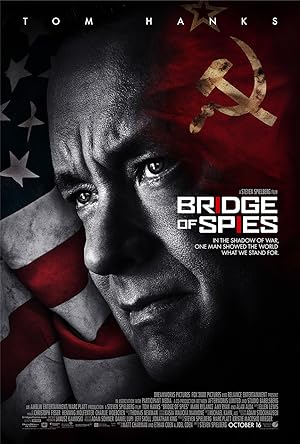
Bridge of Spies
In the cold war, a lawyer, James B. Donovan is recruited by the CIA and involved in an intense negotiation mission to release and exchange a CIA U-2 spy-plane pilot, Francis G. Powers. The pilot was arrested alive after his plane was shot down by the Soviet Union during a mission and stays in the company of a KGB intelligence officer, Rudolf Abel, who was arrested for espionage in the US.
Despite a mid-range budget of $40.0M, Bridge of Spies became a solid performer, earning $165.5M worldwide—a 314% return.
1 Oscar. 30 wins & 105 nominations

Plot Structure
Story beats plotted across runtime


Narrative Arc
Emotional journey through the story's key moments
Story Circle
Blueprint 15-beat structure
Arcplot Score Breakdown
Weighted: Precision (70%) + Arc (15%) + Theme (15%)
Bridge of Spies (2015) exemplifies strategically placed narrative architecture, characteristic of Steven Spielberg's storytelling approach. This structural analysis examines how the film's 15-point plot structure maps to proven narrative frameworks across 2 hours and 22 minutes. With an Arcplot score of 5.1, the film takes an unconventional approach to traditional narrative frameworks.
Characters
Cast & narrative archetypes

James B. Donovan
Rudolf Abel
Mary Donovan
Francis Gary Powers
Thomas Watters Jr.
Hoffman
Main Cast & Characters
James B. Donovan
Played by Tom Hanks
An insurance lawyer who defends Soviet spy Rudolf Abel and negotiates prisoner exchanges during the Cold War
Rudolf Abel
Played by Mark Rylance
A Soviet KGB spy arrested in Brooklyn, defended by Donovan with dignity and respect
Mary Donovan
Played by Amy Ryan
James Donovan's supportive wife who worries about the family's safety during the Abel case
Francis Gary Powers
Played by Austin Stowell
American U-2 pilot shot down over Soviet airspace and held prisoner
Thomas Watters Jr.
Played by Scott Shepherd
CIA operative who recruits Donovan to negotiate the prisoner exchange in Berlin
Hoffman
Played by Sebastian Koch
CIA agent who works with Donovan during negotiations and provides intelligence support
Structural Analysis
The Status Quo at 1 minutes (1% through the runtime) establishes James Donovan, insurance lawyer, practices his oral argument in the mirror at home. He's successful, comfortable, living the American Dream in Brooklyn with his family.. Notably, this early placement immediately immerses viewers in the story world.
The inciting incident occurs at 15 minutes when Donovan's senior partner asks him to defend Rudolf Abel, the Soviet spy, to show the world American justice works. Donovan is reluctant but accepts, disrupting his comfortable existence.. At 11% through the film, this Disruption aligns precisely with traditional story structure. This beat shifts the emotional landscape, launching the protagonist into the central conflict.
The First Threshold at 32 minutes marks the transition into Act II, occurring at 22% of the runtime. This illustrates the protagonist's commitment to Donovan makes the active choice to truly defend Abel with everything he has, despite public hatred. He decides to appeal the case and argues Abel should not receive the death penalty, as he might be valuable for a prisoner exchange., moving from reaction to action.
At 64 minutes, the Midpoint arrives at 45% of the runtime—arriving early, accelerating into Act IIb complications. Of particular interest, this crucial beat False defeat: The CIA approaches Donovan to negotiate a prisoner exchange in Berlin - Abel for Powers. Stakes raise dramatically. Donovan must enter the dangerous world of East Berlin during the Wall's construction. Everything becomes more dangerous and complex., fundamentally raising what's at risk. The emotional intensity shifts, dividing the narrative into clear before-and-after phases.
The Collapse moment at 95 minutes (67% through) represents the emotional nadir. Here, All is lost: The exchange deadline arrives but East Germans refuse to release Pryor. The CIA orders Donovan to complete the trade without the student. Donovan must choose between following orders and his principles. He faces losing everything - the deal, his reputation, possibly his life., reveals the protagonist at their lowest point. This beat's placement in the final quarter sets up the climactic reversal.
The Second Threshold at 103 minutes initiates the final act resolution at 72% of the runtime. Breakthrough: Donovan applies everything he's learned - Abel's stoic principles and his own legal cunning. He refuses to complete the exchange without Pryor, calling their bluff. He synthesizes lawyerly negotiation with principled stance, betting his read of the situation is correct., demonstrating the transformation achieved throughout the journey.
Emotional Journey
Bridge of Spies's emotional architecture traces a deliberate progression across 15 carefully calibrated beats.
Narrative Framework
This structural analysis employs a 15-point narrative structure framework that maps key story moments. By mapping Bridge of Spies against these established plot points, we can identify how Steven Spielberg utilizes or subverts traditional narrative conventions. The plot point approach reveals not only adherence to structural principles but also creative choices that distinguish Bridge of Spies within the drama genre.
Steven Spielberg's Structural Approach
Among the 33 Steven Spielberg films analyzed on Arcplot, the average structural score is 5.8, showcasing experimental approaches to narrative form. Bridge of Spies takes a more unconventional approach compared to the director's typical style. For comparative analysis, explore the complete Steven Spielberg filmography.
Comparative Analysis
Additional drama films include After Thomas, South Pacific and Dirty Dancing: Havana Nights. For more Steven Spielberg analyses, see The Adventures of Tintin, Close Encounters of the Third Kind and War Horse.
Plot Points by Act
Act I
SetupStatus Quo
James Donovan, insurance lawyer, practices his oral argument in the mirror at home. He's successful, comfortable, living the American Dream in Brooklyn with his family.
Theme
Donovan's colleague asks if he ever worries about defending the wrong side. Donovan responds about the rules mattering - doing things the right way. Theme: standing on principle regardless of popularity.
Worldbuilding
Establishing 1957 Cold War America. Rudolf Abel, a Soviet spy, is arrested by the FBI. Donovan's ordinary world as insurance lawyer, his family life, the pervasive fear of communism, and the escalating tensions between US and USSR.
Disruption
Donovan's senior partner asks him to defend Rudolf Abel, the Soviet spy, to show the world American justice works. Donovan is reluctant but accepts, disrupting his comfortable existence.
Resistance
Donovan debates whether to truly defend Abel or provide token representation. He meets Abel, begins to respect him. His family, neighbors, and even the judge pressure him to go through the motions. Donovan struggles with doing what's right vs. what's expected.
Act II
ConfrontationFirst Threshold
Donovan makes the active choice to truly defend Abel with everything he has, despite public hatred. He decides to appeal the case and argues Abel should not receive the death penalty, as he might be valuable for a prisoner exchange.
Mirror World
Donovan's relationship with Rudolf Abel deepens. Abel becomes the mirror character who embodies dignity and principle under pressure - "Would it help?" Abel's stoicism teaches Donovan about standing firm regardless of outcome.
Premise
The promise of the premise: a lawyer standing on principle in Cold War America. Donovan faces public scorn, his house is shot at, he argues before the Supreme Court. Abel is convicted but spared execution. Then Francis Gary Powers' U-2 spy plane is shot down over Soviet territory.
Midpoint
False defeat: The CIA approaches Donovan to negotiate a prisoner exchange in Berlin - Abel for Powers. Stakes raise dramatically. Donovan must enter the dangerous world of East Berlin during the Wall's construction. Everything becomes more dangerous and complex.
Opposition
Donovan arrives in freezing Berlin during the Wall's construction. He faces opposition from both sides: CIA wants only Powers, Soviets play games, East Germans want to trade student Frederic Pryor separately. Donovan refuses to leave Pryor behind, complicating everything. Negotiations deteriorate.
Collapse
All is lost: The exchange deadline arrives but East Germans refuse to release Pryor. The CIA orders Donovan to complete the trade without the student. Donovan must choose between following orders and his principles. He faces losing everything - the deal, his reputation, possibly his life.
Crisis
Dark night of the soul. Donovan processes the impossible position. He stands alone at the bridge between East and West, literally and figuratively. The weight of the decision: abandon the student or risk the entire exchange.
Act III
ResolutionSecond Threshold
Breakthrough: Donovan applies everything he's learned - Abel's stoic principles and his own legal cunning. He refuses to complete the exchange without Pryor, calling their bluff. He synthesizes lawyerly negotiation with principled stance, betting his read of the situation is correct.
Synthesis
Finale: The gambit works. East Germans release Pryor. The exchange happens on the Glienicke Bridge - Abel for Powers and Pryor. Donovan succeeds by standing firm on principle. He returns home, where the CIA asks for his help again (Cuban Missile Crisis prisoners). He accepts.
Transformation
Final image mirrors opening: Donovan on the train, exhausted but transformed. Kids playing leap over fences, echoing Berlin Wall scenes. He watches them with new understanding. He's still the same man but has proven his principles on the world stage, no longer just an insurance lawyer.