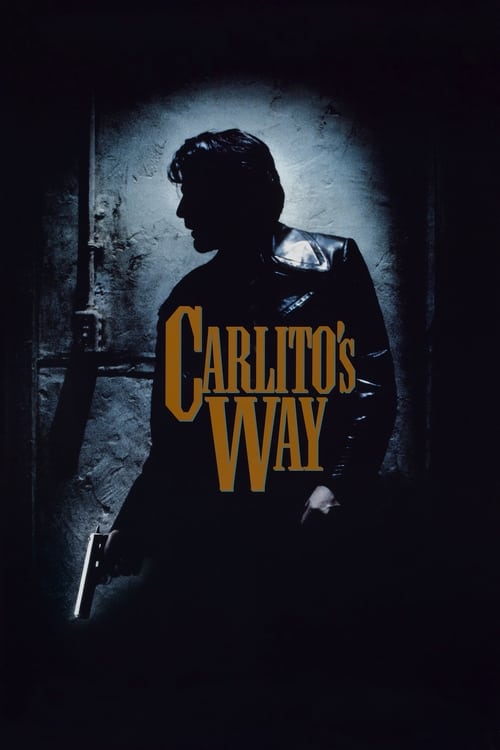
Carlito's Way
Free after years in prison, Carlito Brigante intends to give up his criminal ways, but it's not long before the ex-con is sucked back into the New York City underworld. Reconnecting with his dancer girlfriend, Carlito gets entangled in the shady dealings of his friend Dave Kleinfeld, who also serves as his lawyer. An encounter with shifty gangster Benny Blanco sets the duo on a dangerous path.
Despite a mid-range budget of $30.0M, Carlito's Way became a box office success, earning $63.8M worldwide—a 113% return.
2 wins & 9 nominations


Plot Structure
Story beats plotted across runtime


Narrative Arc
Emotional journey through the story's key moments
Story Circle
Blueprint 15-beat structure
Arcplot Score Breakdown
Weighted: Precision (70%) + Arc (15%) + Theme (15%)
Carlito's Way (1993) exemplifies carefully calibrated dramatic framework, characteristic of Brian De Palma's storytelling approach. This structural analysis examines how the film's 15-point plot structure maps to proven narrative frameworks across 2 hours and 24 minutes. With an Arcplot score of 6.5, the film balances conventional beats with creative variation.
Characters
Cast & narrative archetypes

Carlito Brigante
David Kleinfeld
Gail
Benny Blanco
Pachanga
Main Cast & Characters
Carlito Brigante
Played by Al Pacino
Puerto Rican ex-convict trying to go straight after prison, haunted by his criminal past and former associates who won't let him leave the life.
David Kleinfeld
Played by Sean Penn
Carlito's cocaine-addicted lawyer who helped get him released early, increasingly reckless and pulls Carlito back into criminal schemes.
Gail
Played by Penelope Ann Miller
Carlito's former girlfriend, now a ballet dancer, represents his hope for a legitimate future and escape from New York.
Benny Blanco
Played by John Leguizamo
Young ambitious Puerto Rican street punk who idolizes Carlito but is repeatedly dismissed, becomes dangerous when his respect is rejected.
Pachanga
Played by Luis Guzmán
Carlito's loyal cousin who runs a nightclub and tries to help him stay clean while navigating the criminal underworld.
Structural Analysis
The Status Quo at 1 minutes (1% through the runtime) establishes Carlito is shot at Grand Central Station, collapsing on an escalator in a pool of blood, establishing the tragic endpoint from which the story is told in flashback.. Of particular interest, this early placement immediately immerses viewers in the story world.
The inciting incident occurs at 17 minutes when Carlito's cousin asks him to supervise a drug deal as a favor, pulling him back into the criminal world he promised to leave behind.. At 12% through the film, this Disruption aligns precisely with traditional story structure. This beat shifts the emotional landscape, launching the protagonist into the central conflict.
The First Threshold at 35 minutes marks the transition into Act II, occurring at 24% of the runtime. This demonstrates the protagonist's commitment to Carlito makes the active choice to pursue a legitimate life by running the nightclub and committing to his relationship with Gail, definitively rejecting offers to return to drug dealing., moving from reaction to action.
At 72 minutes, the Midpoint arrives at 50% of the runtime—precisely centered, creating perfect narrative symmetry. Of particular interest, this crucial beat Dave Kleinfeld reveals he's in deep trouble with the mob, owing money and facing death, pulling Carlito into a dangerous scheme. The stakes raise as Carlito's loyalty to his lawyer conflicts with his escape plan., fundamentally raising what's at risk. The emotional intensity shifts, dividing the narrative into clear before-and-after phases.
The Collapse moment at 108 minutes (75% through) represents the emotional nadir. Here, Carlito discovers that Dave has betrayed him, planning to have him killed. His closest ally becomes his executioner, and all paths to escape appear cut off. The dream dies., illustrates the protagonist at their lowest point. This beat's placement in the final quarter sets up the climactic reversal.
The Second Threshold at 115 minutes initiates the final act resolution at 80% of the runtime. Carlito chooses to meet Gail at Grand Central Station to escape to the Caribbean, synthesizing his street wisdom with his genuine desire for redemption, ready to leave everything behind for love and survival., demonstrating the transformation achieved throughout the journey.
Emotional Journey
Carlito's Way's emotional architecture traces a deliberate progression across 15 carefully calibrated beats.
Narrative Framework
This structural analysis employs proven narrative structure principles that track dramatic progression. By mapping Carlito's Way against these established plot points, we can identify how Brian De Palma utilizes or subverts traditional narrative conventions. The plot point approach reveals not only adherence to structural principles but also creative choices that distinguish Carlito's Way within the crime genre.
Brian De Palma's Structural Approach
Among the 18 Brian De Palma films analyzed on Arcplot, the average structural score is 6.7, demonstrating varied approaches to story architecture. Carlito's Way takes a more unconventional approach compared to the director's typical style. For comparative analysis, explore the complete Brian De Palma filmography.
Comparative Analysis
Additional crime films include The Bad Guys, Rustom and The Whole Ten Yards. For more Brian De Palma analyses, see Obsession, Carrie and The Black Dahlia.
Plot Points by Act
Act I
SetupStatus Quo
Carlito is shot at Grand Central Station, collapsing on an escalator in a pool of blood, establishing the tragic endpoint from which the story is told in flashback.
Theme
The DA tells Carlito in court that he'll be back in prison within a year, stating the theme: can a man truly escape his past and change his nature?
Worldbuilding
Carlito is released from prison after his lawyer Dave Kleinfeld gets his sentence overturned. We see his reunion with old associates, his world of criminals, and his determination to go straight and earn $75,000 to retire to the Caribbean.
Disruption
Carlito's cousin asks him to supervise a drug deal as a favor, pulling him back into the criminal world he promised to leave behind.
Resistance
Carlito reluctantly oversees the drug deal which goes violently wrong. He takes the money and uses it to buy into a nightclub. He reunites with Gail, his former girlfriend, and debates whether he can truly leave his past behind.
Act II
ConfrontationFirst Threshold
Carlito makes the active choice to pursue a legitimate life by running the nightclub and committing to his relationship with Gail, definitively rejecting offers to return to drug dealing.
Mirror World
Carlito and Gail reconnect romantically, with Gail representing the possibility of redemption, legitimate life, and escape. She embodies the life Carlito says he wants.
Premise
Carlito runs the nightclub, navigates his criminal world while trying to stay clean, manages conflicts with young gangster Benny Blanco, and deepens his relationship with Gail. The promise of the premise: watching a criminal try to go straight in a world that won't let him.
Midpoint
Dave Kleinfeld reveals he's in deep trouble with the mob, owing money and facing death, pulling Carlito into a dangerous scheme. The stakes raise as Carlito's loyalty to his lawyer conflicts with his escape plan.
Opposition
Carlito is forced to help Dave steal money from a mob boss to save his life. Pressure from all sides intensifies: Benny Blanco seeks revenge, the mob closes in, and Carlito's dream of escape becomes increasingly desperate as he's dragged deeper into violence.
Collapse
Carlito discovers that Dave has betrayed him, planning to have him killed. His closest ally becomes his executioner, and all paths to escape appear cut off. The dream dies.
Crisis
Carlito processes the devastating betrayal and realizes he must flee immediately with Gail. He confronts the reality that his past has finally caught up with him and survival is now the only goal.
Act III
ResolutionSecond Threshold
Carlito chooses to meet Gail at Grand Central Station to escape to the Caribbean, synthesizing his street wisdom with his genuine desire for redemption, ready to leave everything behind for love and survival.
Synthesis
The finale chase through Grand Central Station. Carlito uses all his skills to evade Benny Blanco and survive. He makes it to the train platform, within sight of freedom, before being shot by Benny in a final confrontation.
Transformation
Carlito dies on the escalator where we first saw him, dreaming of the Caribbean paradise he'll never reach. The transformation is complete but tragic: he changed, he loved, he tried to escape, but his past killed him anyway.