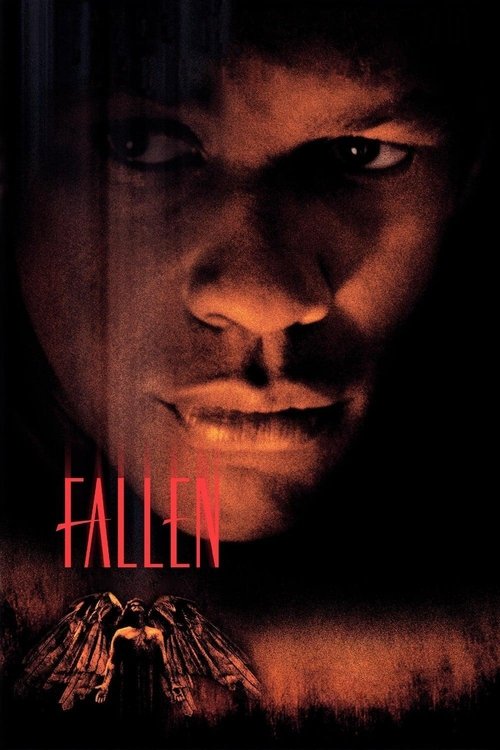
Fallen
Homicide detective John Hobbes witnesses the execution of serial killer Edgar Reese. Soon after the execution the killings start again, and they are very similar to Reese's style.
The film struggled financially against its moderate budget of $46.0M, earning $25.2M globally (-45% loss). While initial box office returns were modest, the film has gained appreciation for its distinctive approach within the crime genre.


Plot Structure
Story beats plotted across runtime


Narrative Arc
Emotional journey through the story's key moments
Story Circle
Blueprint 15-beat structure
Arcplot Score Breakdown
Weighted: Precision (70%) + Arc (15%) + Theme (15%)
Fallen (1998) exemplifies deliberately positioned plot construction, characteristic of Gregory Hoblit's storytelling approach. This structural analysis examines how the film's 15-point plot structure maps to proven narrative frameworks across 2 hours and 4 minutes. With an Arcplot score of 6.8, the film balances conventional beats with creative variation.
Characters
Cast & narrative archetypes

John Hobbes
Azazel
Gretta Milano
Jonesy
Edgar Reese
Lt. Stanton
Main Cast & Characters
John Hobbes
Played by Denzel Washington
A principled Philadelphia homicide detective who investigates a series of murders connected to demonic possession.
Azazel
Played by Various (Voice)
An ancient, malevolent demon that transfers between human hosts through touch, taunting Hobbes with supernatural killings.
Gretta Milano
Played by Embeth Davidtz
The daughter of a deceased detective who provides crucial information about the demon's history and methods.
Jonesy
Played by John Goodman
Hobbes' loyal partner and best friend who stands by him as the investigation becomes increasingly bizarre.
Edgar Reese
Played by Elias Koteas
A sadistic serial killer executed at the film's opening, whose connection to Azazel sets the story in motion.
Lt. Stanton
Played by Donald Sutherland
Hobbes' commanding officer who becomes increasingly skeptical of Hobbes' supernatural theories.
Structural Analysis
The Status Quo at 1 minutes (1% through the runtime) establishes Detective John Hobbes witnesses the execution of serial killer Edgar Reese, whom he captured. Hobbes is at the peak of his career, a celebrated cop with a strong moral compass and loving family.. Notably, this early placement immediately immerses viewers in the story world.
The inciting incident occurs at 15 minutes when A new murder occurs with Reese's exact MO despite his execution. The killer leaves clues specifically for Hobbes, including the song "Time Is On My Side." The impossible has happened.. At 12% through the film, this Disruption aligns precisely with traditional story structure. This beat shifts the emotional landscape, launching the protagonist into the central conflict.
The First Threshold at 31 minutes marks the transition into Act II, occurring at 25% of the runtime. This shows the protagonist's commitment to Hobbes chooses to visit Gretta Milano despite being warned away. He actively pursues the supernatural explanation, crossing from his world of rational police work into the realm of demonic possession., moving from reaction to action.
At 62 minutes, the Midpoint arrives at 50% of the runtime—precisely centered, creating perfect narrative symmetry. Of particular interest, this crucial beat Azazel confronts Hobbes directly, revealing his true power and that he has been toying with him. The demon makes clear his intentions to destroy everything Hobbes loves. This is a false defeat as Hobbes realizes the scope of what he faces., fundamentally raising what's at risk. The emotional intensity shifts, dividing the narrative into clear before-and-after phases.
The Collapse moment at 93 minutes (75% through) represents the emotional nadir. Here, Jonesy is killed by Azazel, and Hobbes' brother and nephew are directly threatened. His career is destroyed, he's wanted for murder, and everyone he trusted has turned against him or been eliminated., demonstrates the protagonist at their lowest point. This beat's placement in the final quarter sets up the climactic reversal.
The Second Threshold at 99 minutes initiates the final act resolution at 80% of the runtime. Hobbes devises a desperate plan: lure Azazel to an isolated location far from any other hosts, then poison himself while possessed, killing the demon when it cannot escape to a new body., demonstrating the transformation achieved throughout the journey.
Emotional Journey
Fallen's emotional architecture traces a deliberate progression across 15 carefully calibrated beats.
Narrative Framework
This structural analysis employs proven narrative structure principles that track dramatic progression. By mapping Fallen against these established plot points, we can identify how Gregory Hoblit utilizes or subverts traditional narrative conventions. The plot point approach reveals not only adherence to structural principles but also creative choices that distinguish Fallen within the crime genre.
Gregory Hoblit's Structural Approach
Among the 6 Gregory Hoblit films analyzed on Arcplot, the average structural score is 7.1, reflecting strong command of classical structure. Fallen takes a more unconventional approach compared to the director's typical style. For comparative analysis, explore the complete Gregory Hoblit filmography.
Comparative Analysis
Additional crime films include The Bad Guys, Rustom and The Whole Ten Yards. For more Gregory Hoblit analyses, see Hart's War, Untraceable and Fracture.
Plot Points by Act
Act I
SetupStatus Quo
Detective John Hobbes witnesses the execution of serial killer Edgar Reese, whom he captured. Hobbes is at the peak of his career, a celebrated cop with a strong moral compass and loving family.
Theme
Reese speaks in tongues before his execution and grabs Hobbes' hand, whispering a riddle about how this isn't the end. The theme emerges: evil is not easily destroyed and can outlive any single vessel.
Worldbuilding
We see Hobbes' world: his partnership with Jonesy, his relationship with his brother Art and nephew Sam, his standing in the department. He is a good man in a corrupt world, dedicated to justice.
Disruption
A new murder occurs with Reese's exact MO despite his execution. The killer leaves clues specifically for Hobbes, including the song "Time Is On My Side." The impossible has happened.
Resistance
Hobbes investigates the copycat killings and discovers a connection to a disgraced detective named Milano who died under mysterious circumstances. He debates between rational explanations and increasingly supernatural evidence.
Act II
ConfrontationFirst Threshold
Hobbes chooses to visit Gretta Milano despite being warned away. He actively pursues the supernatural explanation, crossing from his world of rational police work into the realm of demonic possession.
Mirror World
Gretta Milano becomes Hobbes' guide to understanding Azazel. She represents the thematic counterpoint: someone who has lived with knowledge of this evil and survived, showing that faith and isolation can be defenses.
Premise
Hobbes investigates Azazel's nature and history. He learns the demon jumps between hosts through touch, witnesses Azazel taunting him by hopping between bodies in a crowd, and discovers the demon's centuries of evil.
Midpoint
Azazel confronts Hobbes directly, revealing his true power and that he has been toying with him. The demon makes clear his intentions to destroy everything Hobbes loves. This is a false defeat as Hobbes realizes the scope of what he faces.
Opposition
Azazel systematically destroys Hobbes' life. The demon frames him for murder, corrupts evidence, turns colleagues against him, and threatens his family. Hobbes becomes increasingly isolated and desperate.
Collapse
Jonesy is killed by Azazel, and Hobbes' brother and nephew are directly threatened. His career is destroyed, he's wanted for murder, and everyone he trusted has turned against him or been eliminated.
Crisis
Hobbes processes his losses and the impossibility of defeating an immortal demon through conventional means. He must accept that normal justice cannot apply to this supernatural evil.
Act III
ResolutionSecond Threshold
Hobbes devises a desperate plan: lure Azazel to an isolated location far from any other hosts, then poison himself while possessed, killing the demon when it cannot escape to a new body.
Synthesis
Hobbes executes his plan at a remote cabin. He poisons himself and allows Azazel to possess him. The demon realizes too late there are no other hosts within reach. Hobbes dies, seemingly taking Azazel with him.
Transformation
The final twist reveals Azazel survived by possessing a cat that wandered nearby. Hobbes' sacrifice was in vain. The film ends where it began, with Hobbes' narration revealing he was telling us how he almost died—it was Azazel speaking all along.