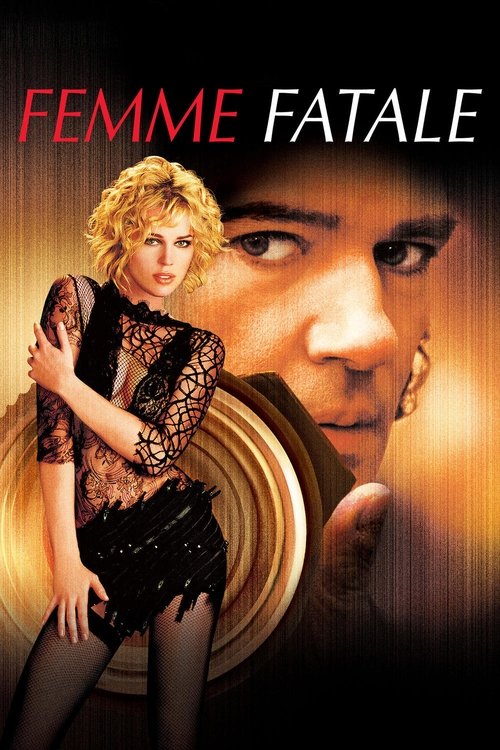
Femme Fatale
A $10-million diamond rip-off, a stolen identity, a new life married to a diplomat. Laure Ash has risked big, won big. But then a tabloid shutterbug snaps her picture in Paris, and suddenly, enemies from Laure's secret past know who and where she is. And they all want their share of the diamond heist. Or her life. Or both.
The film financial setback against its mid-range budget of $35.0M, earning $16.8M globally (-52% loss). While initial box office returns were modest, the film has gained appreciation for its fresh perspective within the mystery genre.
2 wins & 4 nominations

Plot Structure
Story beats plotted across runtime


Narrative Arc
Emotional journey through the story's key moments
Story Circle
Blueprint 15-beat structure
Arcplot Score Breakdown
Weighted: Precision (70%) + Arc (15%) + Theme (15%)
Femme Fatale (2002) demonstrates strategically placed narrative design, characteristic of Brian De Palma's storytelling approach. This structural analysis examines how the film's 15-point plot structure maps to proven narrative frameworks across 1 hour and 54 minutes. With an Arcplot score of 6.5, the film balances conventional beats with creative variation.
Characters
Cast & narrative archetypes

Laure Ash / Lily
Nicolas Bardo
Bruce Watts
Black Tie
Racine
Veronica
Main Cast & Characters
Laure Ash / Lily
Played by Rebecca Romijn
A cunning femme fatale who orchestrates an elaborate diamond heist and subsequently assumes a new identity to escape her past.
Nicolas Bardo
Played by Antonio Banderas
A paparazzi photographer who becomes entangled with Lily and drawn into her dangerous world of deception.
Bruce Watts
Played by Peter Coyote
A relentless investigator pursuing Laure for the diamond heist and determined to expose her true identity.
Black Tie
Played by Eriq Ebouaney
Laure's dangerous accomplice in the heist who becomes a deadly threat when she double-crosses the crew.
Racine
Played by Édouard Montoute
One of Laure's partners in the diamond heist who is betrayed during the operation.
Veronica
Played by Rie Rasmussen
A woman whose identity Laure assumes after a fateful encounter, allowing her to reinvent herself.
Structural Analysis
The Status Quo at 1 minutes (1% through the runtime) establishes Laure Ash prepares for the elaborate jewelry heist at the Cannes Film Festival, establishing her as a skilled, seductive thief operating in a world of glamour and crime.. Of particular interest, this early placement immediately immerses viewers in the story world.
The inciting incident occurs at 14 minutes when Laure double-crosses her partners, stealing the diamonds for herself. This betrayal sets her on the run and transforms her from thief to fugitive.. At 12% through the film, this Disruption aligns precisely with traditional story structure. This beat shifts the emotional landscape, launching the protagonist into the central conflict.
The First Threshold at 29 minutes marks the transition into Act II, occurring at 25% of the runtime. This indicates the protagonist's commitment to Laure actively chooses to become Lily, marrying the American ambassador and entering a new life of respectability and wealth, leaving her criminal past behind., moving from reaction to action.
At 57 minutes, the Midpoint arrives at 50% of the runtime—precisely centered, creating perfect narrative symmetry. Significantly, this crucial beat Nicolas's photograph of Laure is published, making her visible to her former criminal partners who now know she's alive and want revenge and their diamonds back., fundamentally raising what's at risk. The emotional intensity shifts, dividing the narrative into clear before-and-after phases.
The Collapse moment at 86 minutes (75% through) represents the emotional nadir. Here, Laure is kidnapped and faces death at the hands of her former partners. Nicolas attempts a rescue but the situation spirals into tragedy—he falls to his death., reveals the protagonist at their lowest point. This beat's placement in the final quarter sets up the climactic reversal.
The Second Threshold at 91 minutes initiates the final act resolution at 80% of the runtime. The film's reality twist is revealed—it was all a dream. Laure awakens in the bath after the heist with a chance to make different choices and rewrite her fate., demonstrating the transformation achieved throughout the journey.
Emotional Journey
Femme Fatale's emotional architecture traces a deliberate progression across 15 carefully calibrated beats.
Narrative Framework
This structural analysis employs structural analysis methodology used to understand storytelling architecture. By mapping Femme Fatale against these established plot points, we can identify how Brian De Palma utilizes or subverts traditional narrative conventions. The plot point approach reveals not only adherence to structural principles but also creative choices that distinguish Femme Fatale within the mystery genre.
Brian De Palma's Structural Approach
Among the 18 Brian De Palma films analyzed on Arcplot, the average structural score is 6.7, demonstrating varied approaches to story architecture. Femme Fatale takes a more unconventional approach compared to the director's typical style. For comparative analysis, explore the complete Brian De Palma filmography.
Comparative Analysis
Additional mystery films include Lone Star, The Wicker Man and A Soldier's Story. For more Brian De Palma analyses, see Obsession, Carrie and The Black Dahlia.
Plot Points by Act
Act I
SetupStatus Quo
Laure Ash prepares for the elaborate jewelry heist at the Cannes Film Festival, establishing her as a skilled, seductive thief operating in a world of glamour and crime.
Theme
During the heist setup, the theme of identity and deception is introduced—the idea that who you appear to be can become your prison or your salvation.
Worldbuilding
The opening Cannes heist sequence establishes the world of high-stakes crime, Laure's criminal associates, her cunning and sexuality as tools, and the dangerous game she plays.
Disruption
Laure double-crosses her partners, stealing the diamonds for herself. This betrayal sets her on the run and transforms her from thief to fugitive.
Resistance
Laure hides, assumes the identity of a dead woman (Lily), and debates how to escape her past. She discovers Lily's passport and sees an opportunity for total reinvention.
Act II
ConfrontationFirst Threshold
Laure actively chooses to become Lily, marrying the American ambassador and entering a new life of respectability and wealth, leaving her criminal past behind.
Mirror World
Seven years later in Paris, Laure (as Lily) encounters photographer Nicolas Bardo, who becomes the relationship that will reflect her true self and force her to confront her deception.
Premise
Laure enjoys her new life as the ambassador's wife while Nicolas photographs her, but her past begins to close in as people from her former life recognize her.
Midpoint
Nicolas's photograph of Laure is published, making her visible to her former criminal partners who now know she's alive and want revenge and their diamonds back.
Opposition
The criminals close in on Laure, threatening her new identity and life. Nicolas is drawn deeper into her web. The pressure mounts as both her past and present collide.
Collapse
Laure is kidnapped and faces death at the hands of her former partners. Nicolas attempts a rescue but the situation spirals into tragedy—he falls to his death.
Crisis
In the devastating aftermath, Laure processes the cost of her deceptions. The death of Nicolas forces her to confront the consequences of living a lie.
Act III
ResolutionSecond Threshold
The film's reality twist is revealed—it was all a dream. Laure awakens in the bath after the heist with a chance to make different choices and rewrite her fate.
Synthesis
Armed with foreknowledge from her "dream," Laure makes different choices, saves Nicolas, prevents the tragedy, and synthesizes her cunning nature with redemptive action.
Transformation
Laure and Nicolas walk away together, transformed. She has escaped her fate through choice rather than deception, finding authentic connection instead of stolen identity.