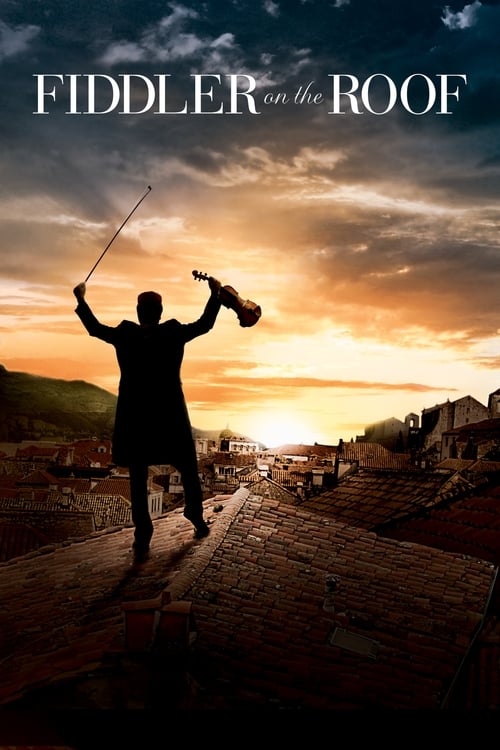
Fiddler on the Roof
In a pre-revolutionary Russia, a poor Jewish milkman struggles with the challenges of a changing world as his daughters fall in love and antisemitism grows.
Despite its small-scale budget of $9.0M, Fiddler on the Roof became a massive hit, earning $83.3M worldwide—a remarkable 826% return. The film's distinctive approach engaged audiences, proving that strong storytelling can transcend budget limitations.
3 Oscars. 10 wins & 14 nominations


Plot Structure
Story beats plotted across runtime


Narrative Arc
Emotional journey through the story's key moments
Story Circle
Blueprint 15-beat structure
Arcplot Score Breakdown
Weighted: Precision (70%) + Arc (15%) + Theme (15%)
Fiddler on the Roof (1971) exhibits precise narrative architecture, characteristic of Norman Jewison's storytelling approach. This structural analysis examines how the film's 15-point plot structure maps to proven narrative frameworks across 3 hours and 1 minutes. With an Arcplot score of 6.9, the film balances conventional beats with creative variation.
Structural Analysis
The Status Quo at 1 minutes (1% through the runtime) establishes Tevye introduces himself and Anatevka, a poor Jewish shtetl where tradition defines every aspect of life. "Because of our traditions, everyone knows who he is and what God expects him to do.".. Of particular interest, this early placement immediately immerses viewers in the story world.
The inciting incident occurs at 20 minutes when Tzeitel tearfully begs her father not to marry her to the wealthy butcher Lazar Wolf, revealing she loves the poor tailor Motel. Tevye's traditional world - where fathers arrange marriages - is challenged by his daughter's plea for love.. At 11% through the film, this Disruption aligns precisely with traditional story structure. This beat shifts the emotional landscape, launching the protagonist into the central conflict.
The First Threshold at 46 minutes marks the transition into Act II, occurring at 25% of the runtime. This illustrates the protagonist's commitment to Tevye gives his blessing to Tzeitel and Motel's marriage, breaking tradition by allowing his daughter to marry for love instead of accepting the arranged match. "Very well, children... You have my blessing and my permission."., moving from reaction to action.
At 92 minutes, the Midpoint arrives at 51% of the runtime—precisely centered, creating perfect narrative symmetry. Significantly, this crucial beat Hodel announces she is engaged to Perchik - without asking permission, only seeking Tevye's blessing. A false victory becomes defeat: Tevye accepted one daughter's choice, but now faces a greater challenge as Perchik leaves for the revolution and traditions crumble further., fundamentally raising what's at risk. The emotional intensity shifts, dividing the narrative into clear before-and-after phases.
The Collapse moment at 135 minutes (75% through) represents the emotional nadir. Here, The Constable announces the Edict of Expulsion: all Jews must leave Anatevka within three days. Tevye's world dies - his home, his community, his traditions, everything that gave his life meaning and structure is destroyed. "We'll all be leaving Anatevka."., shows the protagonist at their lowest point. This beat's placement in the final quarter sets up the climactic reversal.
The Second Threshold at 144 minutes initiates the final act resolution at 80% of the runtime. As Chava departs, Tevye quietly tells Tzeitel: "God be with you." His indirect blessing to Chava through Tzeitel represents his synthesis - tradition matters, but so does love and family. He can honor both by finding a new way forward., demonstrating the transformation achieved throughout the journey.
Emotional Journey
Fiddler on the Roof's emotional architecture traces a deliberate progression across 15 carefully calibrated beats.
Narrative Framework
This structural analysis employs systematic plot point analysis that identifies crucial turning points. By mapping Fiddler on the Roof against these established plot points, we can identify how Norman Jewison utilizes or subverts traditional narrative conventions. The plot point approach reveals not only adherence to structural principles but also creative choices that distinguish Fiddler on the Roof within the drama genre.
Norman Jewison's Structural Approach
Among the 13 Norman Jewison films analyzed on Arcplot, the average structural score is 7.2, reflecting strong command of classical structure. Fiddler on the Roof takes a more unconventional approach compared to the director's typical style. For comparative analysis, explore the complete Norman Jewison filmography.
Comparative Analysis
Additional drama films include After Thomas, South Pacific and Dirty Dancing: Havana Nights. For more Norman Jewison analyses, see A Soldier's Story, ...And Justice for All and F.I.S.T..
Plot Points by Act
Act I
SetupStatus Quo
Tevye introduces himself and Anatevka, a poor Jewish shtetl where tradition defines every aspect of life. "Because of our traditions, everyone knows who he is and what God expects him to do."
Theme
Tevye reflects: "How do we keep our balance? That I can tell you in one word: Tradition!" The theme of tradition versus change is explicitly stated through the opening number.
Worldbuilding
Establishment of Anatevka life: Tevye's poverty, his five daughters, Yente the matchmaker, Golde his wife, the close-knit Jewish community, and the underlying threat of the Gentile Russians. The matchmaker proposes Lazar Wolf for Tzeitel.
Disruption
Tzeitel tearfully begs her father not to marry her to the wealthy butcher Lazar Wolf, revealing she loves the poor tailor Motel. Tevye's traditional world - where fathers arrange marriages - is challenged by his daughter's plea for love.
Resistance
Tevye debates with himself and God about accepting Lazar Wolf versus honoring Tzeitel's love for Motel. He celebrates prematurely at the tavern with Lazar Wolf, then fabricates a dream to convince Golde to accept the match change. Motel timidly asks permission to marry Tzeitel.
Act II
ConfrontationFirst Threshold
Tevye gives his blessing to Tzeitel and Motel's marriage, breaking tradition by allowing his daughter to marry for love instead of accepting the arranged match. "Very well, children... you have my blessing and my permission."
Mirror World
Perchik, the radical student, arrives and challenges traditions while developing feelings for Hodel. He represents the new world of ideas and progressive thinking, carrying the thematic counterpoint to Tevye's traditional worldview.
Premise
Tzeitel and Motel's wedding celebration showcases the joyous traditions of the shtetl. The bottle dance, the rabbi's blessing, the community united. Perchik breaks tradition by dancing with Hodel. The Constable arrives with news of the coming pogrom, but it's contained. The promise: can tradition and change coexist?
Midpoint
Hodel announces she is engaged to Perchik - without asking permission, only seeking Tevye's blessing. A false victory becomes defeat: Tevye accepted one daughter's choice, but now faces a greater challenge as Perchik leaves for the revolution and traditions crumble further.
Opposition
Hodel departs to join Perchik in Siberia. Chava falls in love with Fyedka, a Russian Orthodox Christian - the ultimate betrayal of tradition. Tevye refuses to bless this match, declaring Chava dead to him. External pressure intensifies as Russian antisemitism grows and the threat of expulsion looms.
Collapse
The Constable announces the Edict of Expulsion: all Jews must leave Anatevka within three days. Tevye's world dies - his home, his community, his traditions, everything that gave his life meaning and structure is destroyed. "We'll all be leaving Anatevka."
Crisis
The dark night of processing: families pack their belongings, say goodbye to their homes. Tevye sits in devastation, confronting the complete destruction of his way of life. Chava comes to say goodbye, and Tevye cannot bring himself to acknowledge her directly.
Act III
ResolutionSecond Threshold
As Chava departs, Tevye quietly tells Tzeitel: "God be with you." His indirect blessing to Chava through Tzeitel represents his synthesis - tradition matters, but so does love and family. He can honor both by finding a new way forward.
Synthesis
The community leaves Anatevka in a procession of wagons and carts. Tevye explains to God where each family is going - New York, Chicago, Jerusalem. The fiddler follows them on the road. They carry their traditions with them even as the physical world of Anatevka disappears.
Transformation
The fiddler walks alongside Tevye's wagon on the road to America. Where the opening showed tradition as the foundation keeping balance in a fixed place, the closing shows tradition as portable - something carried within, providing balance even in displacement and change.