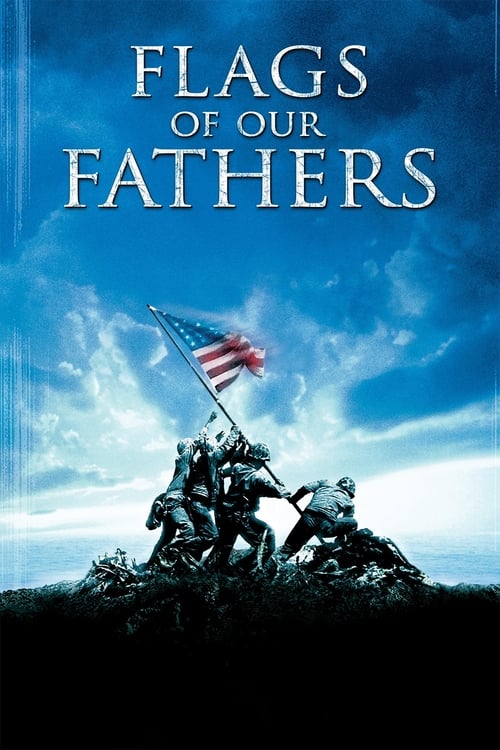
Flags of Our Fathers
There were five Marines and one Navy Corpsman photographed raising the U.S. flag on Mt. Suribachi by Joe Rosenthal on February 23, 1945. This is the story of three of the six surviving servicemen - John 'Doc' Bradley, Pvt. Rene Gagnon and Pvt. Ira Hayes - who fought in the battle to take Iwo Jima from the Japanese.
The film disappointed at the box office against its considerable budget of $90.0M, earning $65.9M globally (-27% loss). While initial box office returns were modest, the film has gained appreciation for its unique voice within the war genre.
Nominated for 2 Oscars. 16 wins & 28 nominations


Plot Structure
Story beats plotted across runtime


Narrative Arc
Emotional journey through the story's key moments
Story Circle
Blueprint 15-beat structure
Arcplot Score Breakdown
Weighted: Precision (70%) + Arc (15%) + Theme (15%)
Flags of Our Fathers (2006) demonstrates deliberately positioned narrative architecture, characteristic of Clint Eastwood's storytelling approach. This structural analysis examines how the film's 15-point plot structure maps to proven narrative frameworks across 2 hours and 15 minutes. With an Arcplot score of 6.9, the film balances conventional beats with creative variation.
Characters
Cast & narrative archetypes

John "Doc" Bradley
Rene Gagnon
Ira Hayes
Mike Strank
Harlon Block
Franklin Sousley
Bud Gerber
Main Cast & Characters
John "Doc" Bradley
Played by Ryan Phillippe
Navy corpsman and flag raiser who struggles with survivor's guilt and the commercialization of heroism.
Rene Gagnon
Played by Jesse Bradford
Marine who embraces fame from the flag raising but struggles with its hollowness and public expectations.
Ira Hayes
Played by Adam Beach
Pima Native American Marine who cannot reconcile his celebrated image with his traumatic war experience.
Mike Strank
Played by Barry Pepper
Sergeant and father figure to his unit who led by example and died before experiencing the fame.
Harlon Block
Played by Benjamin Walker
Marine flag raiser whose identity was initially misidentified in the iconic photograph.
Franklin Sousley
Played by Joseph Cross
Young Marine flag raiser from Kentucky who was killed in action days after the photograph.
Bud Gerber
Played by John Slattery
Treasury Department publicist who orchestrates the bond tour and manages the flag raisers' public image.
Structural Analysis
The Status Quo at 1 minutes (1% through the runtime) establishes Present day: James Bradley begins investigating his late father's past as one of the Iwo Jima flag raisers. Doc Bradley's ordinary life as a funeral home director is established, concealing his wartime trauma.. Structural examination shows that this early placement immediately immerses viewers in the story world.
The inciting incident occurs at 15 minutes when The Marines land on Iwo Jima and are immediately met with devastating Japanese fire. The violence is sudden and brutal, shattering any romantic notions of war. Men die instantly around our protagonists.. At 11% through the film, this Disruption aligns precisely with traditional story structure. This beat shifts the emotional landscape, launching the protagonist into the central conflict.
The First Threshold at 32 minutes marks the transition into Act II, occurring at 23% of the runtime. This shows the protagonist's commitment to The second flag raising photograph is taken - the iconic image. This moment irrevocably pulls Doc, Rene, and Ira from being soldiers into becoming symbols. They don't choose this; the photograph chooses them. They cross into a world of manufactured heroism., moving from reaction to action.
At 68 minutes, the Midpoint arrives at 50% of the runtime—precisely centered, creating perfect narrative symmetry. Structural examination shows that this crucial beat False defeat: During a massive bond rally reenactment at Soldier Field, Ira Hayes breaks down publicly, drunk and raging about the fakery. "I can't take this no more!" The bond tour's facade cracks. Stakes raise: they must continue or the war effort suffers, but the psychological cost is unbearable., fundamentally raising what's at risk. The emotional intensity shifts, dividing the narrative into clear before-and-after phases.
The Collapse moment at 97 minutes (72% through) represents the emotional nadir. Here, Doc Bradley's best friend Mike is killed on Iwo Jima, dying in Doc's arms after Doc desperately tries to save him. This is Doc's "whiff of death" - the loss of innocence and the death of the belief that heroism can save anyone. All the real heroes are dead; only the symbols survive., illustrates the protagonist at their lowest point. This beat's placement in the final quarter sets up the climactic reversal.
The Second Threshold at 105 minutes initiates the final act resolution at 78% of the runtime. The bond tour ends successfully - they raised the money needed. The three men receive their insight: they cannot change the symbol they've become, but they can choose how to carry it. Doc chooses silence and normalcy. Rene chooses to leverage the fame. Ira cannot reconcile it and spirals., demonstrating the transformation achieved throughout the journey.
Emotional Journey
Flags of Our Fathers's emotional architecture traces a deliberate progression across 15 carefully calibrated beats.
Narrative Framework
This structural analysis employs structural analysis methodology used to understand storytelling architecture. By mapping Flags of Our Fathers against these established plot points, we can identify how Clint Eastwood utilizes or subverts traditional narrative conventions. The plot point approach reveals not only adherence to structural principles but also creative choices that distinguish Flags of Our Fathers within the war genre.
Clint Eastwood's Structural Approach
Among the 32 Clint Eastwood films analyzed on Arcplot, the average structural score is 6.5, demonstrating varied approaches to story architecture. Flags of Our Fathers represents one of the director's most structurally precise works. For comparative analysis, explore the complete Clint Eastwood filmography.
Comparative Analysis
Additional war films include Fury, Shenandoah and More American Graffiti. For more Clint Eastwood analyses, see True Crime, Million Dollar Baby and The Gauntlet.
Plot Points by Act
Act I
SetupStatus Quo
Present day: James Bradley begins investigating his late father's past as one of the Iwo Jima flag raisers. Doc Bradley's ordinary life as a funeral home director is established, concealing his wartime trauma.
Theme
Elderly veteran states: "I finally came to the conclusion that he maybe didn't want me to know... some things you just can't understand unless you were there." The theme of unknowable truth and manufactured heroism versus real experience is introduced.
Worldbuilding
Intercut timelines establish the three worlds: the brutal reality of Iwo Jima training and initial landing, the staged spectacle of the bond tour, and the present-day investigation. We meet Doc Bradley, Rene Gagnon, Ira Hayes, and their comrades preparing for invasion.
Disruption
The Marines land on Iwo Jima and are immediately met with devastating Japanese fire. The violence is sudden and brutal, shattering any romantic notions of war. Men die instantly around our protagonists.
Resistance
The Marines struggle through the hellish first days of Iwo Jima. Doc Bradley saves lives under fire. The men debate survival versus duty. Iggy (mentor figure) helps the younger soldiers cope. The first flag raising occurs on Mount Suribachi - the real moment of achievement, unseen by most.
Act II
ConfrontationFirst Threshold
The second flag raising photograph is taken - the iconic image. This moment irrevocably pulls Doc, Rene, and Ira from being soldiers into becoming symbols. They don't choose this; the photograph chooses them. They cross into a world of manufactured heroism.
Mirror World
The three survivors are pulled from combat and brought to Washington. Bud Gerber, the bond tour publicist, represents the thematic counterpoint: the machinery of propaganda versus lived reality. "You're not selling bonds, you're selling the American flag."
Premise
The "promise of the premise" - the bond tour spectacle. Staged reenactments, celebrity parties, and public adulation. The film explores the central irony: these men are celebrated as heroes while their real brothers die on Iwo Jima. Ira Hayes begins drinking heavily, unable to reconcile the lie with reality.
Midpoint
False defeat: During a massive bond rally reenactment at Soldier Field, Ira Hayes breaks down publicly, drunk and raging about the fakery. "I can't take this no more!" The bond tour's facade cracks. Stakes raise: they must continue or the war effort suffers, but the psychological cost is unbearable.
Opposition
Pressure intensifies as the bond tour continues despite their trauma. Flashbacks reveal the worsening battle on Iwo Jima. Iggy is captured and tortured to death. Harlon Block is killed. The gap between the celebrated "heroes" and the dying reality widens. Ira's alcoholism worsens; the men are trapped in the lie.
Collapse
Doc Bradley's best friend Mike is killed on Iwo Jima, dying in Doc's arms after Doc desperately tries to save him. This is Doc's "whiff of death" - the loss of innocence and the death of the belief that heroism can save anyone. All the real heroes are dead; only the symbols survive.
Crisis
The dark night following Mike's death. Doc, Rene, and Ira complete the bond tour in emotional devastation. Ira tells the press the truth about Harlon Block being in the photo (not Hank Hansen), causing a scandal. They process that they survived while better men died, and their survival is being exploited.
Act III
ResolutionSecond Threshold
The bond tour ends successfully - they raised the money needed. The three men receive their insight: they cannot change the symbol they've become, but they can choose how to carry it. Doc chooses silence and normalcy. Rene chooses to leverage the fame. Ira cannot reconcile it and spirals.
Synthesis
The finale interweaves resolution across timelines. The battle of Iwo Jima ends in American victory at enormous cost. Post-war: Ira Hayes dies of alcoholism. Rene lives as a celebrity janitor. Doc returns to Wisconsin, buries his trauma, and never speaks of it. Present day: James Bradley completes his understanding of what his father endured and why he stayed silent.
Transformation
James Bradley reflects on the aged veterans returning to Iwo Jima, understanding finally that his father and the others were not heroes - they were men in service who saw their friends die. The transformation: from seeking heroic mythology to honoring humble, traumatic truth. "The heroes are the guys who didn't come back."