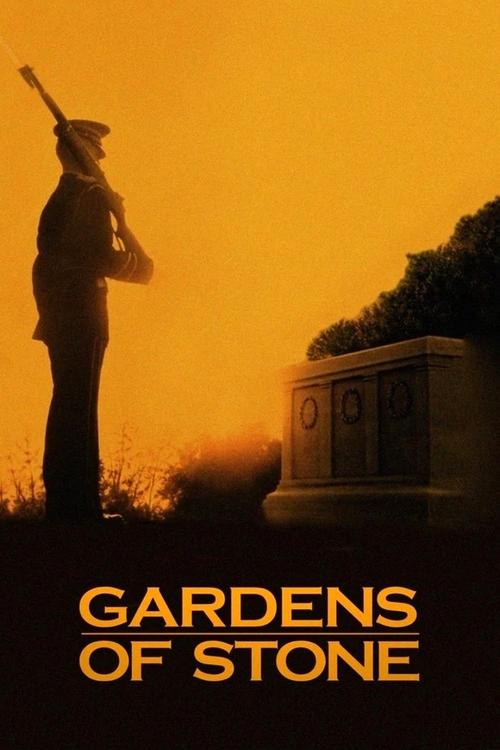
Gardens of Stone
At Arlington National Cemetery during the Vietnam era, veteran sergeant Clell Hazard trains young soldiers while mourning those lost in combat. Unable to return to war himself, he mentors Jackie Willow—the idealistic son of a fallen comrade—hoping to prepare him for the realities of Vietnam and the cost of duty.
The film earned $5.3M at the global box office.


Plot Structure
Story beats plotted across runtime


Narrative Arc
Emotional journey through the story's key moments
Story Circle
Blueprint 15-beat structure
Arcplot Score Breakdown
Weighted: Precision (70%) + Arc (15%) + Theme (15%)
Gardens of Stone (1987) exhibits deliberately positioned dramatic framework, characteristic of Francis Ford Coppola's storytelling approach. This structural analysis examines how the film's 15-point plot structure maps to proven narrative frameworks across 1 hour and 51 minutes. With an Arcplot score of 6.5, the film balances conventional beats with creative variation.
Characters
Cast & narrative archetypes

Clell Hazard
Jackie Willow
Samantha Davis
Goody Nelson
Rachel Feld
Homer Thomas
Donald Brubaker
Main Cast & Characters
Clell Hazard
Played by James Caan
A veteran sergeant in the Old Guard at Arlington who mentors young soldiers while grappling with the futility of the Vietnam War.
Jackie Willow
Played by D.B. Sweeney
An idealistic young soldier eager to prove himself in Vietnam despite Hazard's warnings about the war.
Samantha Davis
Played by Anjelica Huston
A Washington Post reporter who becomes romantically involved with Hazard and shares his cynicism about the war.
Goody Nelson
Played by James Earl Jones
Hazard's loyal friend and fellow sergeant in the Old Guard who shares his disillusionment with military bureaucracy.
Rachel Feld
Played by Mary Stuart Masterson
A young woman who falls in love with Jackie Willow and marries him before his deployment to Vietnam.
Homer Thomas
Played by Dean Stockwell
The by-the-book commanding officer of the Old Guard who clashes with Hazard over protocol and discipline.
Donald Brubaker
Played by Lonnie Elder III
A combat veteran and officer who understands Hazard's frustration but must enforce military regulations.
Structural Analysis
The Status Quo at 1 minutes (1% through the runtime) establishes Sgt. Clell Hazard performs ceremonial burial duties at Arlington National Cemetery as part of the Old Guard, a skilled soldier relegated to what he considers meaningless funeral detail while the Vietnam War rages.. The analysis reveals that this early placement immediately immerses viewers in the story world.
The inciting incident occurs at 13 minutes when Young, idealistic Pvt. Jackie Willow arrives and requests assignment to Clell's platoon, wanting to learn from the best before going to Vietnam. Clell sees in Jackie a younger version of himself—and a young man heading toward certain death.. At 12% through the film, this Disruption aligns precisely with traditional story structure. This beat shifts the emotional landscape, launching the protagonist into the central conflict.
The First Threshold at 29 minutes marks the transition into Act II, occurring at 26% of the runtime. This shows the protagonist's commitment to Clell actively chooses to become Jackie's mentor and advocate, accepting responsibility for the young soldier despite his fears. He also commits to pursuing a relationship with Samantha, opening himself to emotional connection., moving from reaction to action.
At 56 minutes, the Midpoint arrives at 50% of the runtime—precisely centered, creating perfect narrative symmetry. Notably, this crucial beat Jackie receives orders for Vietnam despite Clell's attempts to secure him a safer assignment. The false victory of Jackie's excellence as a soldier becomes a guarantee of his deployment to danger. The stakes become real and deadly., fundamentally raising what's at risk. The emotional intensity shifts, dividing the narrative into clear before-and-after phases.
The Collapse moment at 84 minutes (75% through) represents the emotional nadir. Here, Jackie is killed in Vietnam. Clell receives the news that the young soldier he mentored and tried to protect has died, fulfilling Clell's worst fears. The literal death embodies the collapse of hope and the cost of futile war., shows the protagonist at their lowest point. This beat's placement in the final quarter sets up the climactic reversal.
The Second Threshold at 90 minutes initiates the final act resolution at 81% of the runtime. Clell finds synthesis in the ritual itself. The ceremonial duty he once dismissed as meaningless becomes sacred—the one way he can honor Jackie and all the fallen. He accepts that bearing witness and honoring the dead is its own form of service., demonstrating the transformation achieved throughout the journey.
Emotional Journey
Gardens of Stone's emotional architecture traces a deliberate progression across 15 carefully calibrated beats.
Narrative Framework
This structural analysis employs proven narrative structure principles that track dramatic progression. By mapping Gardens of Stone against these established plot points, we can identify how Francis Ford Coppola utilizes or subverts traditional narrative conventions. The plot point approach reveals not only adherence to structural principles but also creative choices that distinguish Gardens of Stone within the war genre.
Francis Ford Coppola's Structural Approach
Among the 16 Francis Ford Coppola films analyzed on Arcplot, the average structural score is 6.5, demonstrating varied approaches to story architecture. Gardens of Stone exemplifies the director's characteristic narrative technique. For comparative analysis, explore the complete Francis Ford Coppola filmography.
Comparative Analysis
Additional war films include Fury, Shenandoah and More American Graffiti. For more Francis Ford Coppola analyses, see Apocalypse Now, The Conversation and The Godfather Part II.
Plot Points by Act
Act I
SetupStatus Quo
Sgt. Clell Hazard performs ceremonial burial duties at Arlington National Cemetery as part of the Old Guard, a skilled soldier relegated to what he considers meaningless funeral detail while the Vietnam War rages.
Theme
A fellow soldier comments on the futility of sending young men to die in a war the military isn't allowed to win, establishing the film's thematic tension between duty and conscience.
Worldbuilding
Introduction to Clell's world at Fort Myer in 1968: his opposition to the Vietnam War despite being a soldier, his friendship with cynical Sgt. Major "Goody" Nelson, and the ceremonial routine of the Old Guard unit.
Disruption
Young, idealistic Pvt. Jackie Willow arrives and requests assignment to Clell's platoon, wanting to learn from the best before going to Vietnam. Clell sees in Jackie a younger version of himself—and a young man heading toward certain death.
Resistance
Clell debates whether to mentor Jackie or push him away. He begins training Jackie in the Old Guard's precision while trying to dissuade him from seeking combat. Clell also meets Washington Post reporter Samantha Davis at a military event.
Act II
ConfrontationFirst Threshold
Clell actively chooses to become Jackie's mentor and advocate, accepting responsibility for the young soldier despite his fears. He also commits to pursuing a relationship with Samantha, opening himself to emotional connection.
Mirror World
Clell and Samantha's relationship deepens. She represents the anti-war civilian perspective that mirrors Clell's own doubts, while challenging him to reconcile his principles with his duty. She embodies the life and hope beyond military service.
Premise
The promise of the premise: watching Clell train Jackie to military perfection while falling in love with Samantha. Jackie excels and becomes engaged to his girlfriend. Clell and Samantha navigate their differences over the war while building intimacy.
Midpoint
Jackie receives orders for Vietnam despite Clell's attempts to secure him a safer assignment. The false victory of Jackie's excellence as a soldier becomes a guarantee of his deployment to danger. The stakes become real and deadly.
Opposition
Clell struggles with his inability to protect Jackie while maintaining his relationship with Samantha. Jackie marries his girlfriend before deployment. Clell's opposition to the war intensifies even as he must maintain his role as a soldier. The tension between duty and conscience grows unbearable.
Collapse
Jackie is killed in Vietnam. Clell receives the news that the young soldier he mentored and tried to protect has died, fulfilling Clell's worst fears. The literal death embodies the collapse of hope and the cost of futile war.
Crisis
Clell processes his grief and guilt. He must prepare to bury Jackie with the same ceremony he's performed hundreds of times, but now the ritual is devastatingly personal. He confronts the meaning of his service and sacrifice.
Act III
ResolutionSecond Threshold
Clell finds synthesis in the ritual itself. The ceremonial duty he once dismissed as meaningless becomes sacred—the one way he can honor Jackie and all the fallen. He accepts that bearing witness and honoring the dead is its own form of service.
Synthesis
Clell performs Jackie's burial ceremony at Arlington with absolute precision and profound emotion. He fulfills his duty with dignity, supported by Samantha and Goody. The finale synthesizes soldier and conscience, duty and grief, ceremony and meaning.
Transformation
Clell stands at attention in the cemetery, transformed from a cynical soldier going through motions to a man who understands that honoring the dead with dignity is sacred work. The gardens of stone are no longer his prison but his purpose.