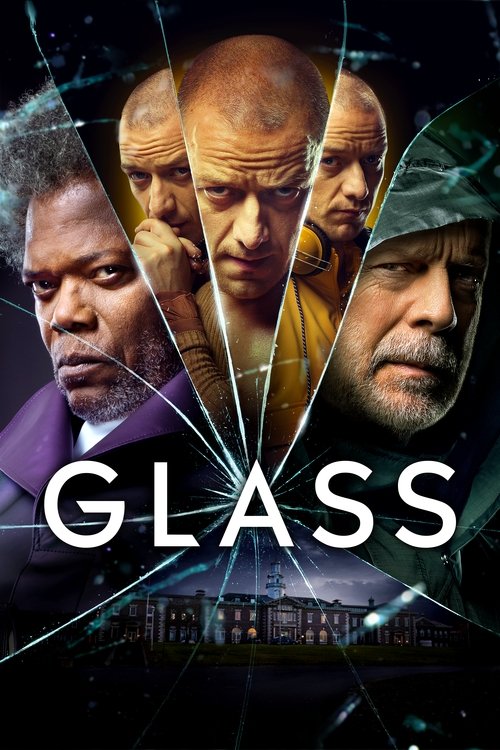
Glass
In a series of escalating encounters, former security guard David Dunn uses his supernatural abilities to track Kevin Wendell Crumb, a disturbed man who has twenty-four personalities. Meanwhile, the shadowy presence of Elijah Price emerges as an orchestrator who holds secrets critical to both men.
Despite a respectable budget of $20.0M, Glass became a commercial juggernaut, earning $247.0M worldwide—a remarkable 1135% return.
2 wins & 15 nominations


Plot Structure
Story beats plotted across runtime


Narrative Arc
Emotional journey through the story's key moments
Story Circle
Blueprint 15-beat structure
Arcplot Score Breakdown
Weighted: Precision (70%) + Arc (15%) + Theme (15%)
Glass (2019) exhibits meticulously timed plot construction, characteristic of M. Night Shyamalan's storytelling approach. This structural analysis examines how the film's 15-point plot structure maps to proven narrative frameworks across 2 hours and 9 minutes. With an Arcplot score of 6.9, the film balances conventional beats with creative variation.
Characters
Cast & narrative archetypes

David Dunn
Kevin Wendell Crumb / The Horde
Elijah Price / Mr. Glass
Dr. Ellie Staple
Casey Cooke
Joseph Dunn
Mrs. Price
Main Cast & Characters
David Dunn
Played by Bruce Willis
A security guard with superhuman strength and durability who can sense criminal acts through touch.
Kevin Wendell Crumb / The Horde
Played by James McAvoy
A man with dissociative identity disorder hosting 24 distinct personalities, including the superhuman Beast.
Elijah Price / Mr. Glass
Played by Samuel L. Jackson
A criminal mastermind with brittle bone disease who orchestrates events to prove superhumans exist.
Dr. Ellie Staple
Played by Sarah Paulson
A psychiatrist specializing in delusions of grandeur who treats the three men in a psychiatric facility.
Casey Cooke
Played by Anya Taylor-Joy
A survivor of Kevin's abduction who maintains a connection with him and believes in his supernatural nature.
Joseph Dunn
Played by Spencer Treat Clark
David Dunn's adult son who assists his father's vigilante activities and believes in his abilities.
Mrs. Price
Played by Charlayne Woodard
Elijah Price's elderly mother who has supported him throughout his difficult life despite his crimes.
Structural Analysis
The Status Quo at 2 minutes (2% through the runtime) establishes David Dunn now operates as a vigilante security guard, using his superhuman abilities to track criminals while running his security store with his son Joseph.. Of particular interest, this early placement immediately immerses viewers in the story world.
The inciting incident occurs at 15 minutes when David confronts The Horde to rescue the cheerleaders, leading to a physical battle that draws the attention of authorities and Dr. Ellie Staple, who captures both of them.. At 12% through the film, this Disruption aligns precisely with traditional story structure. This beat shifts the emotional landscape, launching the protagonist into the central conflict.
The First Threshold at 33 minutes marks the transition into Act II, occurring at 26% of the runtime. This shows the protagonist's commitment to David, Kevin, and Elijah each separately begin to question their own identities under Dr. Staple's psychological manipulation, accepting they will remain institutionalized rather than return to their lives as superhumans., moving from reaction to action.
At 65 minutes, the Midpoint arrives at 50% of the runtime—precisely centered, creating perfect narrative symmetry. Notably, this crucial beat Elijah reveals he has been awake and aware the entire time, manipulating events. He allies with The Beast personality, planning an escape to prove to the world that superhumans exist—a false victory that will lead to tragedy., fundamentally raising what's at risk. The emotional intensity shifts, dividing the narrative into clear before-and-after phases.
The Collapse moment at 97 minutes (75% through) represents the emotional nadir. Here, All three superhumans are killed in the parking lot of the facility—David is drowned in a puddle, Kevin is shot, and Elijah dies from his injuries. The heroes fail, their powers meaningless against coordinated suppression., reveals the protagonist at their lowest point. This beat's placement in the final quarter sets up the climactic reversal.
The Second Threshold at 103 minutes initiates the final act resolution at 80% of the runtime. Joseph, Casey, and Mrs. Price discover that Elijah recorded the entire parking lot confrontation and planned for his death, preparing to release the footage proving superhumans exist to the world., demonstrating the transformation achieved throughout the journey.
Emotional Journey
Glass's emotional architecture traces a deliberate progression across 15 carefully calibrated beats.
Narrative Framework
This structural analysis employs structural analysis methodology used to understand storytelling architecture. By mapping Glass against these established plot points, we can identify how M. Night Shyamalan utilizes or subverts traditional narrative conventions. The plot point approach reveals not only adherence to structural principles but also creative choices that distinguish Glass within the thriller genre.
M. Night Shyamalan's Structural Approach
Among the 14 M. Night Shyamalan films analyzed on Arcplot, the average structural score is 7.0, reflecting strong command of classical structure. Glass takes a more unconventional approach compared to the director's typical style. For comparative analysis, explore the complete M. Night Shyamalan filmography.
Comparative Analysis
Additional thriller films include The Warriors, Thunderball and Rustom. For more M. Night Shyamalan analyses, see Signs, Unbreakable and The Sixth Sense.
Plot Points by Act
Act I
SetupStatus Quo
David Dunn now operates as a vigilante security guard, using his superhuman abilities to track criminals while running his security store with his son Joseph.
Theme
Joseph tells David, "You're a hero," introducing the core thematic question: what defines a superhero, and is belief in the extraordinary dangerous delusion or profound truth?
Worldbuilding
Establishes David's vigilante activities tracking "The Horde" (Kevin Wendell Crumb), the relationship with his son, and the world where superhumans exist in secret. Kevin's multiple personalities are shown holding cheerleaders captive.
Disruption
David confronts The Horde to rescue the cheerleaders, leading to a physical battle that draws the attention of authorities and Dr. Ellie Staple, who captures both of them.
Resistance
David, Kevin, and Elijah Price (Mr. Glass) are confined to a psychiatric facility. Dr. Staple attempts to convince each of them that their superhuman abilities are delusions, presenting rational explanations for their perceived powers.
Act II
ConfrontationFirst Threshold
David, Kevin, and Elijah each separately begin to question their own identities under Dr. Staple's psychological manipulation, accepting they will remain institutionalized rather than return to their lives as superhumans.
Mirror World
Casey Cooke, the sole survivor of The Horde's previous crimes, visits Kevin. Her compassionate connection to Kevin's original personality represents the human element and belief that anchors the thematic exploration of identity.
Premise
The three main characters interact within the facility while Dr. Staple conducts her experiment. Elijah secretly schemes, communicating with Kevin's personalities. The premise explores: what if superhumans were treated as mentally ill?
Midpoint
Elijah reveals he has been awake and aware the entire time, manipulating events. He allies with The Beast personality, planning an escape to prove to the world that superhumans exist—a false victory that will lead to tragedy.
Opposition
Elijah and The Beast execute their escape plan while Dr. Staple reveals she represents a secret organization dedicated to suppressing superhuman emergence. David must decide whether to stop them or embrace his identity.
Collapse
All three superhumans are killed in the parking lot of the facility—David is drowned in a puddle, Kevin is shot, and Elijah dies from his injuries. The heroes fail, their powers meaningless against coordinated suppression.
Crisis
Dr. Staple meets with her organization, believing they have successfully erased evidence of superhumans. The loved ones of the deceased—Joseph, Casey, and Mrs. Price—process their grief and apparent defeat.
Act III
ResolutionSecond Threshold
Joseph, Casey, and Mrs. Price discover that Elijah recorded the entire parking lot confrontation and planned for his death, preparing to release the footage proving superhumans exist to the world.
Synthesis
The trio releases the footage to the world via the internet. Crowds gather at Osaka Tower (referencing Unbreakable) and around the world as people watch the evidence of superhuman abilities, awakening belief in the extraordinary.
Transformation
People worldwide watch the footage on their devices in public spaces, their faces filled with wonder and recognition. The secret is revealed, belief is restored, and Elijah's true masterpiece—not destruction but revelation—is complete.