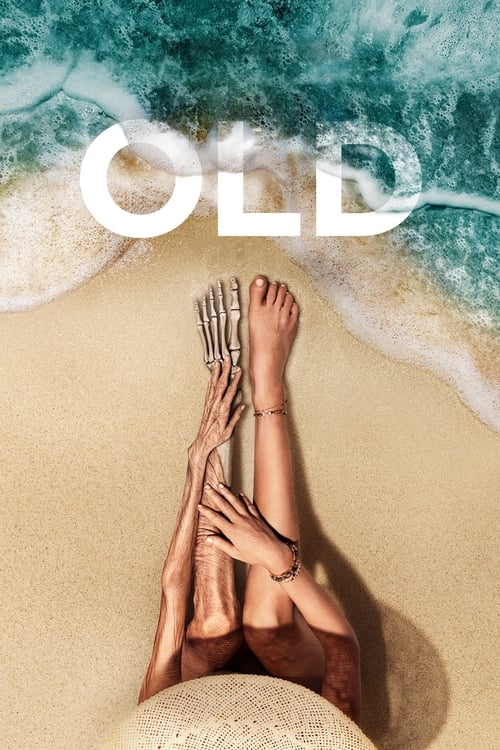
Old
A group of families on a tropical holiday discover that the secluded beach where they are staying is somehow causing them to age rapidly – reducing their entire lives into a single day.
Despite a mid-range budget of $18.0M, Old became a commercial success, earning $90.1M worldwide—a 401% return.
1 win & 7 nominations


Plot Structure
Story beats plotted across runtime


Narrative Arc
Emotional journey through the story's key moments
Story Circle
Blueprint 15-beat structure
Arcplot Score Breakdown
Weighted: Precision (70%) + Arc (15%) + Theme (15%)
Old (2021) exhibits deliberately positioned narrative architecture, characteristic of M. Night Shyamalan's storytelling approach. This structural analysis examines how the film's 15-point plot structure maps to proven narrative frameworks across 1 hour and 48 minutes. With an Arcplot score of 7.2, the film balances conventional beats with creative variation.
Characters
Cast & narrative archetypes

Guy Capa
Prisca Capa
Charles
Chrystal
Jarin Carmichael
Patricia Carmichael
Mid-Sized Sedan
Maddox Capa (Adult)
Trent Capa (Adult)
Kara (Adult)
Main Cast & Characters
Guy Capa
Played by Gael Garcia Bernal
A risk-averse actuary and father whose marriage is falling apart, trapped on a beach where time accelerates rapidly.
Prisca Capa
Played by Vicky Krieps
A museum curator and mother suffering from a tumor who joins her family on a final vacation before separating from her husband.
Charles
Played by Rufus Sewell
A cardiothoracic surgeon with a superiority complex whose mental state rapidly deteriorates on the beach.
Chrystal
Played by Abbey Lee
Charles's image-conscious wife who suffers from hypocalcemia and becomes increasingly unstable as the situation worsens.
Jarin Carmichael
Played by Ken Leung
A nurse and husband to Patricia who tries to maintain calm and help the group survive the mysterious beach.
Patricia Carmichael
Played by Nikki Amuka-Bird
A psychologist married to Jarin who suffers from epilepsy and whose condition worsens dramatically on the beach.
Mid-Sized Sedan
Played by Aaron Pierre
A mysterious rapper found on the beach with a bloody nose who becomes increasingly volatile and dangerous.
Maddox Capa (Adult)
Played by Thomasin McKenzie
Guy and Prisca's daughter who ages from 11 to adulthood on the beach and ultimately helps expose the conspiracy.
Trent Capa (Adult)
Played by Alex Wolff
Guy and Prisca's son who ages from 6 to adulthood on the beach and uses his childhood cipher skills to uncover the truth.
Kara (Adult)
Played by Eliza Scanlen
Charles and Chrystal's daughter who ages rapidly on the beach and becomes pregnant during the ordeal.
Structural Analysis
The Status Quo at 1 minutes (1% through the runtime) establishes Guy and Prisca Cappa arrive at a luxury tropical resort with their children Trent and Maddox. The family appears happy on the surface, but tension simmers beneath—their marriage is strained, and Prisca has a secret medical condition.. Notably, this early placement immediately immerses viewers in the story world.
The inciting incident occurs at 14 minutes when The families are escorted to a remote, secluded beach surrounded by massive rock formations. They find a dead body on the beach, and when they try to leave, they experience violent blackouts whenever they approach the exit. They are trapped.. At 13% through the film, this Disruption is delayed, allowing extended setup of the story world. This beat shifts the emotional landscape, launching the protagonist into the central conflict.
The First Threshold at 27 minutes marks the transition into Act II, occurring at 25% of the runtime. This indicates the protagonist's commitment to The group collectively accepts they cannot leave the beach and must find a way to survive and understand what's happening to them. Guy takes a leadership role in trying to organize the group's efforts to understand the phenomenon., moving from reaction to action.
At 54 minutes, the Midpoint arrives at 50% of the runtime—precisely centered, creating perfect narrative symmetry. Significantly, this crucial beat Trent discovers a notebook revealing coded messages that previous victims tried to leave behind. This is a false victory—they believe they might understand what's happening, but the revelation raises stakes: others have died here before, and no one has escaped., fundamentally raising what's at risk. The emotional intensity shifts, dividing the narrative into clear before-and-after phases.
The Collapse moment at 81 minutes (75% through) represents the emotional nadir. Here, Guy and Prisca, now in their 80s-90s physically, die on the beach holding hands. Their children watch helplessly. This is the literal "whiff of death"—the parents are gone, and Trent and Maddox are now middle-aged adults who have lived their entire lives in a single day., reveals the protagonist at their lowest point. This beat's placement in the final quarter sets up the climactic reversal.
The Second Threshold at 86 minutes initiates the final act resolution at 80% of the runtime. Trent remembers his childhood code-making and deciphers the notebook message: "My uncle doesn't like the coral." He realizes coral doesn't experience the time distortion. They theorize that swimming underwater through the coral reef might allow them to escape the magnetic field causing the rapid aging., demonstrating the transformation achieved throughout the journey.
Emotional Journey
Old's emotional architecture traces a deliberate progression across 15 carefully calibrated beats.
Narrative Framework
This structural analysis employs proven narrative structure principles that track dramatic progression. By mapping Old against these established plot points, we can identify how M. Night Shyamalan utilizes or subverts traditional narrative conventions. The plot point approach reveals not only adherence to structural principles but also creative choices that distinguish Old within the thriller genre.
M. Night Shyamalan's Structural Approach
Among the 14 M. Night Shyamalan films analyzed on Arcplot, the average structural score is 7.0, reflecting strong command of classical structure. Old represents one of the director's most structurally precise works. For comparative analysis, explore the complete M. Night Shyamalan filmography.
Comparative Analysis
Additional thriller films include The Warriors, Thunderball and Rustom. For more M. Night Shyamalan analyses, see Signs, Unbreakable and The Sixth Sense.
Plot Points by Act
Act I
SetupStatus Quo
Guy and Prisca Cappa arrive at a luxury tropical resort with their children Trent and Maddox. The family appears happy on the surface, but tension simmers beneath—their marriage is strained, and Prisca has a secret medical condition.
Theme
The resort manager tells the family, "We want to make every moment of your time here meaningful." This establishes the film's central theme: the value and use of limited time.
Worldbuilding
The family settles into the resort. We learn about their relationships: Guy and Prisca's troubled marriage, Trent's code-making hobby, young Maddox's curiosity. Other guests are introduced: Charles (a surgeon) and his family, rapper Mid-Sized Sedan, Jarin and Patricia. The resort offers a "private beach" experience.
Disruption
The families are escorted to a remote, secluded beach surrounded by massive rock formations. They find a dead body on the beach, and when they try to leave, they experience violent blackouts whenever they approach the exit. They are trapped.
Resistance
The group debates what's happening. They notice the children aging rapidly—Trent and Maddox grow from 6 and 11 to teenagers within hours. Panic sets in as they realize time moves differently on this beach. Mid-Sized Sedan dies of hypocalcemia. Charles' paranoia and aggression increase. They attempt various escape methods.
Act II
ConfrontationFirst Threshold
The group collectively accepts they cannot leave the beach and must find a way to survive and understand what's happening to them. Guy takes a leadership role in trying to organize the group's efforts to understand the phenomenon.
Mirror World
Trent and Maddox (now teenagers) represent the accelerated life cycle that mirrors the adults' wasted time. Their rapid aging forces Guy and Prisca to confront how little time they actually have, both on the beach and in life generally.
Premise
The "premise" of rapid aging plays out: Kara becomes pregnant and gives birth within hours, but the baby dies quickly. Wounds heal in minutes but so do diseases and tumors. The adults continue aging. Charles' mental state deteriorates further, leading to violence. Guy and Prisca's bodies betray them as old age catches up rapidly.
Midpoint
Trent discovers a notebook revealing coded messages that previous victims tried to leave behind. This is a false victory—they believe they might understand what's happening, but the revelation raises stakes: others have died here before, and no one has escaped.
Opposition
The group fractures completely. Charles murders Brendan in paranoid rage. The adults become elderly. Prisca's tumor grows; Guy loses hearing and sight. The now-adult Trent and Maddox try to care for their dying parents while also processing their own accelerated lives. Every escape attempt fails more desperately.
Collapse
Guy and Prisca, now in their 80s-90s physically, die on the beach holding hands. Their children watch helplessly. This is the literal "whiff of death"—the parents are gone, and Trent and Maddox are now middle-aged adults who have lived their entire lives in a single day.
Crisis
Trent and Maddox, now the only survivors, face the emotional devastation of losing everyone. They are middle-aged but have the life experience of only one day. They mourn in the dark night, questioning if there's any point to continuing when death seems inevitable.
Act III
ResolutionSecond Threshold
Trent remembers his childhood code-making and deciphers the notebook message: "My uncle doesn't like the coral." He realizes coral doesn't experience the time distortion. They theorize that swimming underwater through the coral reef might allow them to escape the magnetic field causing the rapid aging.
Synthesis
Trent and Maddox swim through the coral tunnel underwater and successfully escape the beach. They make it back to the resort and discover the truth: the resort has been using the beach to test pharmaceuticals on people with specific conditions, observing their entire lifespans in a day. Trent and Maddox expose the operation to authorities. The corrupt resort is shut down.
Transformation
Trent and Maddox, now elderly but free, sit together having escaped. Unlike the opening image of a family hiding secrets and wasting time, the final image shows two people who lived an entire lifetime in one day, valuing every moment they have left. They survived by remembering what their parents taught them.