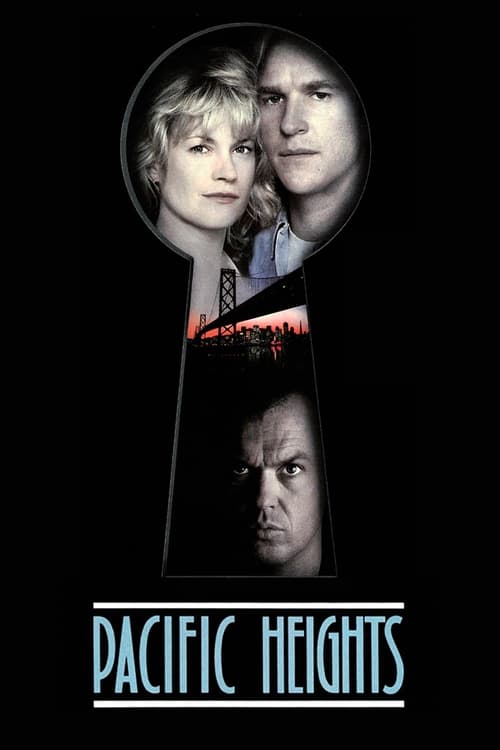
Pacific Heights
A couple works hard to renovate their dream house and become landlords to pay for it. Unfortunately one of their tenants has plans of his own.
Despite a moderate budget of $18.0M, Pacific Heights became a box office success, earning $55.0M worldwide—a 206% return.


Plot Structure
Story beats plotted across runtime


Narrative Arc
Emotional journey through the story's key moments
Story Circle
Blueprint 15-beat structure
Arcplot Score Breakdown
Weighted: Precision (70%) + Arc (15%) + Theme (15%)
Pacific Heights (1990) reveals deliberately positioned narrative design, characteristic of John Schlesinger's storytelling approach. This structural analysis examines how the film's 15-point plot structure maps to proven narrative frameworks across 1 hour and 42 minutes. With an Arcplot score of 7.7, the film showcases strong structural fundamentals.
Characters
Cast & narrative archetypes

Patty Palmer
Carter Hayes
Drake Goodman
Stephanie MacDonald
Ann
Mira Watanabe
Main Cast & Characters
Patty Palmer
Played by Melanie Griffith
A young woman who, along with her boyfriend Drake, purchases a Victorian home in San Francisco's Pacific Heights neighborhood, only to become trapped in a nightmare with a psychopathic tenant.
Carter Hayes
Played by Michael Keaton
A cunning and manipulative con artist who poses as a wealthy businessman to rent an apartment, then systematically terrorizes and exploits his landlords through legal loopholes.
Drake Goodman
Played by Matthew Modine
Patty's boyfriend and co-owner of their Victorian home, a well-meaning but increasingly desperate man who struggles against a tenant from hell within the confines of the law.
Stephanie MacDonald
Played by Beverly D'Angelo
A previous victim of Carter Hayes who helps Patty understand the pattern of his con artistry and provides crucial information about his methods.
Ann
Played by Laurie Metcalf
Patty's supportive friend who provides emotional support during the escalating conflict with their tenant.
Mira Watanabe
Played by Mako
A pleasant Japanese tenant who rents one of the units in Patty and Drake's building, contrasting sharply with the nightmare tenant below.
Structural Analysis
The Status Quo at 1 minutes (1% through the runtime) establishes Patty and Drake, young unmarried couple, view the Victorian house at 1930 Pacific Heights in San Francisco. They're excited, optimistic, planning their future together through real estate investment.. Structural examination shows that this early placement immediately immerses viewers in the story world.
The inciting incident occurs at 12 minutes when Carter Hayes arrives to view the apartment. Impeccably dressed, charming, he presents himself as a wealthy professional. Despite red flags (cash payment, vague references), Drake is eager to accept him as a tenant.. At 12% through the film, this Disruption aligns precisely with traditional story structure. This beat shifts the emotional landscape, launching the protagonist into the central conflict.
The First Threshold at 25 minutes marks the transition into Act II, occurring at 24% of the runtime. This illustrates the protagonist's commitment to Hayes refuses to pay rent and rebuffs their attempts to communicate. Patty and Drake realize they've made a terrible mistake and actively choose to fight back, entering the world of tenant-landlord legal warfare., moving from reaction to action.
At 50 minutes, the Midpoint arrives at 49% of the runtime—precisely centered, creating perfect narrative symmetry. Notably, this crucial beat False defeat: Hayes files counter-suit against them for harassment. The legal system protects him. Drake and Patty realize they can't win through legal means. Stakes raise dramatically—they're now facing financial ruin and potential criminal charges., fundamentally raising what's at risk. The emotional intensity shifts, dividing the narrative into clear before-and-after phases.
The Collapse moment at 75 minutes (74% through) represents the emotional nadir. Here, Drake leaves Patty, unable to handle the stress. Their relationship "dies." Patty is alone, facing foreclosure and total financial ruin. She has lost everything—her partner, her home, her dream, her sense of security., shows the protagonist at their lowest point. This beat's placement in the final quarter sets up the climactic reversal.
The Second Threshold at 81 minutes initiates the final act resolution at 80% of the runtime. Breakthrough: Patty discovers Hayes's pattern of victimizing landlords and finds evidence of his true identity and criminal past. She synthesizes legal knowledge with street-smart tactics, ready to beat him at his own game., demonstrating the transformation achieved throughout the journey.
Emotional Journey
Pacific Heights's emotional architecture traces a deliberate progression across 15 carefully calibrated beats.
Narrative Framework
This structural analysis employs proven narrative structure principles that track dramatic progression. By mapping Pacific Heights against these established plot points, we can identify how John Schlesinger utilizes or subverts traditional narrative conventions. The plot point approach reveals not only adherence to structural principles but also creative choices that distinguish Pacific Heights within the thriller genre.
John Schlesinger's Structural Approach
Among the 5 John Schlesinger films analyzed on Arcplot, the average structural score is 7.1, reflecting strong command of classical structure. Pacific Heights represents one of the director's most structurally precise works. For comparative analysis, explore the complete John Schlesinger filmography.
Comparative Analysis
Additional thriller films include The Warriors, Thunderball and Rustom. For more John Schlesinger analyses, see Marathon Man, Eye for an Eye and The Next Best Thing.
Plot Points by Act
Act I
SetupStatus Quo
Patty and Drake, young unmarried couple, view the Victorian house at 1930 Pacific Heights in San Francisco. They're excited, optimistic, planning their future together through real estate investment.
Theme
Patty's mother warns them about taking on too much debt and trusting strangers: "You don't know who you're letting into your home." The theme of trust and vulnerability is established.
Worldbuilding
Setup of Patty and Drake's world: they purchase the house, begin renovations, need rental income to afford mortgage. Patty is cautious and detail-oriented; Drake is optimistic and trusting. They advertise for tenants.
Disruption
Carter Hayes arrives to view the apartment. Impeccably dressed, charming, he presents himself as a wealthy professional. Despite red flags (cash payment, vague references), Drake is eager to accept him as a tenant.
Resistance
Patty has doubts about Hayes but Drake overrides her concerns, desperate for rental income. They debate whether to trust him. Hayes moves in, immediately begins strange behavior—bringing in materials, making noise, being evasive.
Act II
ConfrontationFirst Threshold
Hayes refuses to pay rent and rebuffs their attempts to communicate. Patty and Drake realize they've made a terrible mistake and actively choose to fight back, entering the world of tenant-landlord legal warfare.
Mirror World
Patty meets Stephanie, another of Hayes's victims, who has lost everything to his schemes. This relationship embodies the theme—showing Patty what total destruction looks like and what she's truly fighting against.
Premise
The "fun and games" of psychological warfare: Hayes destroys property, manufactures cockroach infestations, exploits tenant protection laws. Patty and Drake navigate legal system, grow desperate as financial pressure mounts and relationship strains.
Midpoint
False defeat: Hayes files counter-suit against them for harassment. The legal system protects him. Drake and Patty realize they can't win through legal means. Stakes raise dramatically—they're now facing financial ruin and potential criminal charges.
Opposition
Hayes gains ground: he reports them to authorities, they can't get him evicted, bank threatens foreclosure. Patty and Drake's relationship deteriorates under pressure. Drake becomes passive while Patty becomes increasingly desperate and isolated.
Collapse
Drake leaves Patty, unable to handle the stress. Their relationship "dies." Patty is alone, facing foreclosure and total financial ruin. She has lost everything—her partner, her home, her dream, her sense of security.
Crisis
Patty's dark night: she contemplates giving up, processes the loss. But she also realizes Hayes has made her into a fighter. She's learned his methods, understands his psychology, and decides she won't be another victim.
Act III
ResolutionSecond Threshold
Breakthrough: Patty discovers Hayes's pattern of victimizing landlords and finds evidence of his true identity and criminal past. She synthesizes legal knowledge with street-smart tactics, ready to beat him at his own game.
Synthesis
Final confrontation: Patty uses Hayes's methods against him—breaking into his apartment, gathering evidence, manipulating the situation. Climactic physical struggle where she must literally fight for her home. Police arrive, Hayes is exposed and arrested.
Transformation
Closing image: Patty stands in her renovated home, now truly hers. She's alone but strong, transformed from naive optimist to hardened survivor. The house represents her victory, but also her loss of innocence. Drake returns tentatively—uncertainty remains.