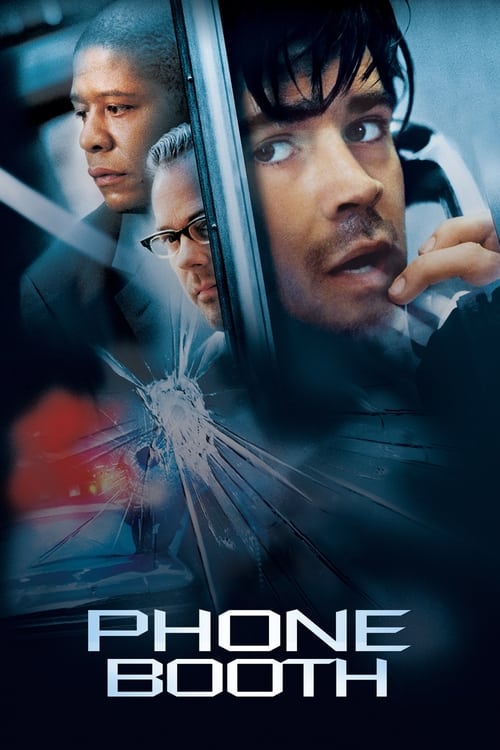
Phone Booth
A slick New York publicist who picks up a ringing receiver in a phone booth is told that if he hangs up, he'll be killed... and the little red light from a laser rifle sight is proof that the caller isn't kidding.
Despite its modest budget of $13.0M, Phone Booth became a massive hit, earning $97.8M worldwide—a remarkable 653% return. The film's distinctive approach resonated with audiences, proving that strong storytelling can transcend budget limitations.
1 win & 8 nominations


Plot Structure
Story beats plotted across runtime


Narrative Arc
Emotional journey through the story's key moments
Story Circle
Blueprint 15-beat structure
Arcplot Score Breakdown
Weighted: Precision (70%) + Arc (15%) + Theme (15%)
Phone Booth (2003) reveals precise narrative architecture, characteristic of Joel Schumacher's storytelling approach. This structural analysis examines how the film's 15-point plot structure maps to proven narrative frameworks across 1 hour and 21 minutes. With an Arcplot score of 7.2, the film balances conventional beats with creative variation.
Structural Analysis
The Status Quo at 1 minutes (1% through the runtime) establishes Stu Shepard walks through Times Square, barking orders into his cell phone, orchestrating lies and manipulation as a slick publicist who thrives on deception and image.. The analysis reveals that this early placement immediately immerses viewers in the story world.
The inciting incident occurs at 11 minutes when The phone booth rings after Stu hangs up with Pam. He answers and a mysterious caller reveals he knows everything about Stu's lies, his affair, and threatens to kill him if he hangs up or leaves the booth.. At 13% through the film, this Disruption is delayed, allowing extended setup of the story world. This beat shifts the emotional landscape, launching the protagonist into the central conflict.
The First Threshold at 21 minutes marks the transition into Act II, occurring at 26% of the runtime. This indicates the protagonist's commitment to The Caller shoots and kills Leon, the pimp demanding Stu leave the booth. Stu is now trapped—witnesses believe he's the shooter, police arrive, and escape becomes impossible. He must now play the Caller's game., moving from reaction to action.
At 41 minutes, the Midpoint arrives at 51% of the runtime—precisely centered, creating perfect narrative symmetry. Notably, this crucial beat Kelly arrives at the scene. The stakes shift from professional survival to personal—Stu must now face his wife while maintaining the Caller's demands. The Caller threatens to kill Kelly if Stu doesn't confess his emotional affair with Pam, raising the game from Stu's reputation to the lives of those he loves., fundamentally raising what's at risk. The emotional intensity shifts, dividing the narrative into clear before-and-after phases.
The Collapse moment at 61 minutes (75% through) represents the emotional nadir. Here, The Caller demands Stu choose who dies—Kelly or Pam—giving him seconds to decide. Stu's entire world of manipulation collapses as he faces the ultimate consequence of his lies: the potential death of someone he loves because of his deception., shows the protagonist at their lowest point. This beat's placement in the final quarter sets up the climactic reversal.
The Second Threshold at 65 minutes initiates the final act resolution at 81% of the runtime. Stu's genuine confession satisfies the Caller, who reveals he will spare everyone. Simultaneously, Ramey realizes the shooter is external and Stu is a victim. Stu steps out of the booth, finally free of his lies, ready to face consequences honestly., demonstrating the transformation achieved throughout the journey.
Emotional Journey
Phone Booth's emotional architecture traces a deliberate progression across 15 carefully calibrated beats.
Narrative Framework
This structural analysis employs systematic plot point analysis that identifies crucial turning points. By mapping Phone Booth against these established plot points, we can identify how Joel Schumacher utilizes or subverts traditional narrative conventions. The plot point approach reveals not only adherence to structural principles but also creative choices that distinguish Phone Booth within the thriller genre.
Joel Schumacher's Structural Approach
Among the 17 Joel Schumacher films analyzed on Arcplot, the average structural score is 7.0, reflecting strong command of classical structure. Phone Booth represents one of the director's most structurally precise works. For comparative analysis, explore the complete Joel Schumacher filmography.
Comparative Analysis
Additional thriller films include The Warriors, Thunderball and Rustom. For more Joel Schumacher analyses, see Batman Forever, The Phantom of the Opera and Trespass.
Plot Points by Act
Act I
SetupStatus Quo
Stu Shepard walks through Times Square, barking orders into his cell phone, orchestrating lies and manipulation as a slick publicist who thrives on deception and image.
Theme
Stu's assistant Adam remarks on how Stu removes his wedding ring before calling Pam, highlighting the theme: the masks we wear and the lies we tell will eventually demand accountability.
Worldbuilding
Stu's world of lies is established: he manipulates clients, cheats emotionally on his wife Kelly by pursuing aspiring actress Pam, and uses the last phone booth in Manhattan as his secret communication hub to hide his affair.
Disruption
The phone booth rings after Stu hangs up with Pam. He answers and a mysterious caller reveals he knows everything about Stu's lies, his affair, and threatens to kill him if he hangs up or leaves the booth.
Resistance
The Caller acts as a twisted moral guide, forcing Stu to confront his deceptions. Stu debates whether to comply or escape, testing boundaries while the Caller demonstrates his power by revealing intimate knowledge of Stu's life and showing he has a rifle trained on the booth.
Act II
ConfrontationFirst Threshold
The Caller shoots and kills Leon, the pimp demanding Stu leave the booth. Stu is now trapped—witnesses believe he's the shooter, police arrive, and escape becomes impossible. He must now play the Caller's game.
Mirror World
Captain Ramey arrives as the lead negotiator, establishing the relationship that will ultimately save Stu. Ramey represents honest, patient justice—the antithesis of both Stu's deception and the Caller's vigilante cruelty.
Premise
Stu is trapped in a psychological pressure cooker. The Caller forces him to insult a client on air, humiliate himself, and begins stripping away his false persona. Meanwhile, police surround the booth and the media circus grows as Stu desperately tries to survive without revealing the Caller's existence.
Midpoint
Kelly arrives at the scene. The stakes shift from professional survival to personal—Stu must now face his wife while maintaining the Caller's demands. The Caller threatens to kill Kelly if Stu doesn't confess his emotional affair with Pam, raising the game from Stu's reputation to the lives of those he loves.
Opposition
The Caller tightens the vice. Pam arrives, creating a confrontation between the two women in Stu's life. Police snipers take position. The Caller forces increasingly painful confessions from Stu, systematically destroying his carefully constructed facade while the world watches on live television.
Collapse
The Caller demands Stu choose who dies—Kelly or Pam—giving him seconds to decide. Stu's entire world of manipulation collapses as he faces the ultimate consequence of his lies: the potential death of someone he loves because of his deception.
Crisis
Stu breaks completely. Weeping into the phone, he publicly confesses everything—his lies, his manipulation, his emotional betrayal of Kelly, his pathetic attempts to seem important. He strips away every mask in a raw, genuine moment of total vulnerability witnessed by millions.
Act III
ResolutionSecond Threshold
Stu's genuine confession satisfies the Caller, who reveals he will spare everyone. Simultaneously, Ramey realizes the shooter is external and Stu is a victim. Stu steps out of the booth, finally free of his lies, ready to face consequences honestly.
Synthesis
Police locate and apparently kill the sniper in a nearby building. Stu is taken for medical treatment and debriefing. Kelly stays by his side, suggesting forgiveness may be possible. The ordeal resolves as Stu embraces honesty and accountability for the first time.
Transformation
In the hospital, the Caller phones one last time, revealing the dead man was a decoy and he remains free to continue his work. But Stu is transformed—he holds Kelly's hand, no longer hiding, finally authentic. The predator remains, but his prey has become honest.