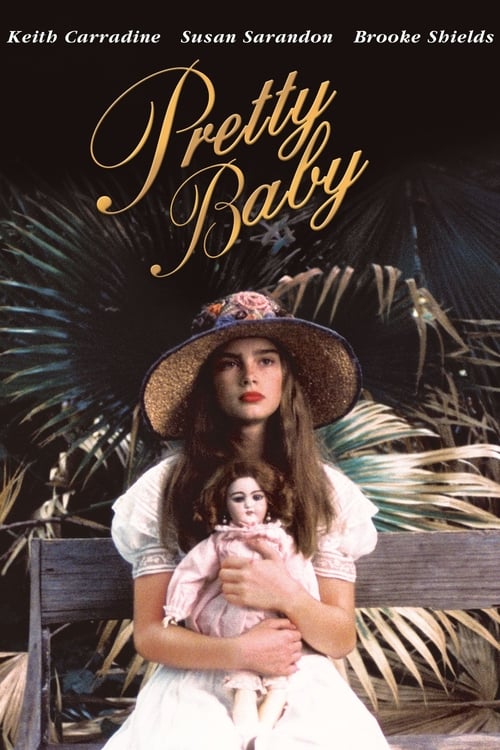
Pretty Baby
In 1917 New Orleans, a 12-year-old girl is raised in a brothel by her prostitute mother.
Despite its small-scale budget of $3.5M, Pretty Baby became a solid performer, earning $11.6M worldwide—a 231% return. The film's unique voice resonated with audiences, illustrating how strong storytelling can transcend budget limitations.
Nominated for 1 Oscar. 2 wins & 6 nominations


Plot Structure
Story beats plotted across runtime


Narrative Arc
Emotional journey through the story's key moments
Story Circle
Blueprint 15-beat structure
Arcplot Score Breakdown
Weighted: Precision (70%) + Arc (15%) + Theme (15%)
Pretty Baby (1978) showcases strategically placed narrative architecture, characteristic of Louis Malle's storytelling approach. This structural analysis examines how the film's 15-point plot structure maps to proven narrative frameworks across 1 hour and 50 minutes. With an Arcplot score of 7.4, the film balances conventional beats with creative variation.
Characters
Cast & narrative archetypes

Violet
Ernest J. Bellocq
Hattie
Madam Nell
Main Cast & Characters
Violet
Played by Brooke Shields
A 12-year-old girl growing up in a New Orleans brothel, daughter of prostitute Hattie, navigating innocence and premature adulthood in Storyville.
Ernest J. Bellocq
Played by Keith Carradine
An introverted photographer who documents Storyville's brothels and develops an unusual relationship with Violet.
Hattie
Played by Susan Sarandon
Violet's mother, a prostitute at Madam Nell's brothel who dreams of a better life and struggles between maternal duty and self-interest.
Madam Nell
Played by Frances Faye
The pragmatic, business-minded owner of the brothel who runs her establishment with firm authority.
Structural Analysis
The Status Quo at 1 minutes (1% through the runtime) establishes Violet is introduced in Madame Nell's brothel in Storyville, observing the daily life of prostitutes including her mother Hattie. She moves freely through this world of transactional sexuality as if it were completely normal, her childhood disturbingly intertwined with the brothel's operations.. Of particular interest, this early placement immediately immerses viewers in the story world.
The inciting incident occurs at 13 minutes when Violet's virginity is auctioned off at the brothel in a disturbing ceremony. This cruel rite of passage marks her transition from observer to participant in the brothel's economy, disrupting whatever innocence remained in her existence within these walls.. At 12% through the film, this Disruption aligns precisely with traditional story structure. This beat shifts the emotional landscape, launching the protagonist into the central conflict.
The First Threshold at 28 minutes marks the transition into Act II, occurring at 25% of the runtime. This reveals the protagonist's commitment to Hattie leaves the brothel to marry her wealthy suitor, abandoning Violet. Violet actively chooses to stay behind rather than go with her mother, beginning her independent journey and deepening her connection with Bellocq who offers her something different from the transactional world she knows., moving from reaction to action.
At 55 minutes, the Midpoint arrives at 50% of the runtime—precisely centered, creating perfect narrative symmetry. Structural examination shows that this crucial beat Bellocq asks Violet to marry him. This false victory offers the promise of escape from the brothel and entry into legitimate society. Violet accepts, believing she has found salvation through this unconventional but seemingly loving relationship with the gentle photographer., fundamentally raising what's at risk. The emotional intensity shifts, dividing the narrative into clear before-and-after phases.
The Collapse moment at 83 minutes (75% through) represents the emotional nadir. Here, Hattie returns, now respectably married, and demands custody of Violet. Violet destroys Bellocq's glass plate negatives in a rage - smashing the photographic record of her life and his art. This destruction represents the death of the fragile world they built together and Violet's inability to fully escape her past., shows the protagonist at their lowest point. This beat's placement in the final quarter sets up the climactic reversal.
The Second Threshold at 88 minutes initiates the final act resolution at 80% of the runtime. Violet makes the choice to leave with her mother and stepfather to begin a conventional bourgeois life. This decision synthesizes her experience - she chooses societal legitimacy over her unconventional marriage to Bellocq, accepting a different form of transaction for security and respectability., demonstrating the transformation achieved throughout the journey.
Emotional Journey
Pretty Baby's emotional architecture traces a deliberate progression across 15 carefully calibrated beats.
Narrative Framework
This structural analysis employs a 15-point narrative structure framework that maps key story moments. By mapping Pretty Baby against these established plot points, we can identify how Louis Malle utilizes or subverts traditional narrative conventions. The plot point approach reveals not only adherence to structural principles but also creative choices that distinguish Pretty Baby within the drama genre.
Louis Malle's Structural Approach
Among the 5 Louis Malle films analyzed on Arcplot, the average structural score is 7.0, demonstrating varied approaches to story architecture. Pretty Baby represents one of the director's most structurally precise works. For comparative analysis, explore the complete Louis Malle filmography.
Comparative Analysis
Additional drama films include After Thomas, South Pacific and Dirty Dancing: Havana Nights. For more Louis Malle analyses, see Atlantic City, Au Revoir les Enfants and Damage.
Plot Points by Act
Act I
SetupStatus Quo
Violet is introduced in Madame Nell's brothel in Storyville, observing the daily life of prostitutes including her mother Hattie. She moves freely through this world of transactional sexuality as if it were completely normal, her childhood disturbingly intertwined with the brothel's operations.
Theme
One of the prostitutes remarks that in Storyville, everything beautiful has a price - beauty itself is currency. This establishes the film's exploration of how innocence and beauty become commodified, and whether genuine human connection is possible in a world of transactions.
Worldbuilding
The elaborate world of Storyville's legal red-light district is established. We see Violet's unique position as a child in the brothel, her relationship with her mother Hattie, the other prostitutes who serve as surrogate family, and the social hierarchy within Madame Nell's establishment. Photographer Bellocq arrives to document the women.
Disruption
Violet's virginity is auctioned off at the brothel in a disturbing ceremony. This cruel rite of passage marks her transition from observer to participant in the brothel's economy, disrupting whatever innocence remained in her existence within these walls.
Resistance
Violet begins working as a child prostitute while photographer Bellocq continues visiting the brothel. She is drawn to Bellocq's artistic work and gentle nature, which contrasts sharply with the clients she now serves. Meanwhile, Hattie dreams of escaping to marry a client who promises respectability.
Act II
ConfrontationFirst Threshold
Hattie leaves the brothel to marry her wealthy suitor, abandoning Violet. Violet actively chooses to stay behind rather than go with her mother, beginning her independent journey and deepening her connection with Bellocq who offers her something different from the transactional world she knows.
Mirror World
Violet visits Bellocq's photography studio for the first time, entering his world of art and preservation. Here she is seen differently - as a subject worthy of artistic contemplation rather than a commodity. Their relationship represents the possibility of genuine connection and perhaps a different kind of life.
Premise
Violet navigates between two worlds - her life as a child prostitute at Madame Nell's and her growing relationship with Bellocq. She poses for his photographs, finding in his attention something that feels like respect and perhaps love. Their unusual bond develops as she increasingly seeks refuge in his company.
Midpoint
Bellocq asks Violet to marry him. This false victory offers the promise of escape from the brothel and entry into legitimate society. Violet accepts, believing she has found salvation through this unconventional but seemingly loving relationship with the gentle photographer.
Opposition
Violet struggles to adapt to domestic life with Bellocq. Her conditioning in the brothel clashes with his expectations of marriage. She acts out, tests boundaries, and brings the transactional mindset of Storyville into their home. The Navy closes Storyville, displacing the prostitutes and ending an era. Tensions mount in their marriage.
Collapse
Hattie returns, now respectably married, and demands custody of Violet. Violet destroys Bellocq's glass plate negatives in a rage - smashing the photographic record of her life and his art. This destruction represents the death of the fragile world they built together and Violet's inability to fully escape her past.
Crisis
Bellocq and Violet face the aftermath of her destructive outburst. The broken negatives lie scattered - images of the brothel women, of Violet herself, all destroyed. Their marriage appears irreparably damaged. Violet must confront what she truly wants and who she has become.
Act III
ResolutionSecond Threshold
Violet makes the choice to leave with her mother and stepfather to begin a conventional bourgeois life. This decision synthesizes her experience - she chooses societal legitimacy over her unconventional marriage to Bellocq, accepting a different form of transaction for security and respectability.
Synthesis
Violet prepares to depart with Hattie and her new husband. Bellocq watches her go, their brief and troubled marriage ending. The closing of Storyville and Violet's departure mark the end of an era. She transitions from the extraordinary circumstances of her childhood toward an outwardly normal existence.
Transformation
Violet is seen in bourgeois clothing, posed with her new family for a formal photograph - a stark contrast to Bellocq's artistic portraits. She has traded one form of objectification for another, her expression ambiguous. The transformation is external; whether she has truly escaped or merely changed cages remains uncertain.