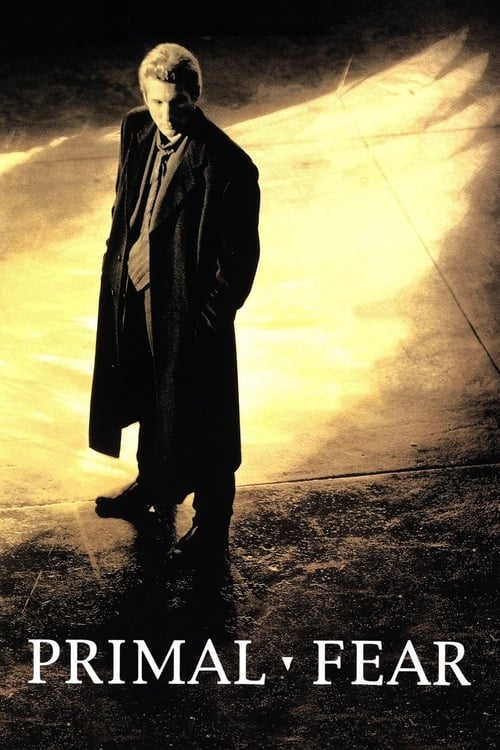
Primal Fear
Defense attorney Martin Vail takes on jobs for money and prestige rather than any sense of the greater good. His latest case involves an altar boy, accused of brutally murdering the archbishop of Chicago. Vail finds himself up against his ex-pupil and ex-lover, but as the case progresses and the Church's dark secrets are revealed, Vail finds that what appeared a simple case takes on a darker, more dangerous aspect.
Despite a respectable budget of $30.0M, Primal Fear became a financial success, earning $102.6M worldwide—a 242% return.
Nominated for 1 Oscar. 10 wins & 12 nominations


Plot Structure
Story beats plotted across runtime


Narrative Arc
Emotional journey through the story's key moments
Story Circle
Blueprint 15-beat structure
Arcplot Score Breakdown
Weighted: Precision (70%) + Arc (15%) + Theme (15%)
Primal Fear (1996) demonstrates carefully calibrated narrative design, characteristic of Gregory Hoblit's storytelling approach. This structural analysis examines how the film's 15-point plot structure maps to proven narrative frameworks across 2 hours and 11 minutes. With an Arcplot score of 7.0, the film balances conventional beats with creative variation.
Characters
Cast & narrative archetypes

Martin Vail
Aaron Stampler / Roy
Janet Venable
Dr. Molly Arrington
John Shaughnessy
Main Cast & Characters
Martin Vail
Played by Richard Gere
A high-profile defense attorney who takes on the case of an altar boy accused of murdering an archbishop.
Aaron Stampler / Roy
Played by Edward Norton
A stuttering altar boy accused of murder who exhibits signs of dissociative identity disorder.
Janet Venable
Played by Laura Linney
A prosecutor and Martin's former lover who is determined to convict Aaron Stampler.
Dr. Molly Arrington
Played by Frances McDormand
A psychiatrist who evaluates Aaron and diagnoses his multiple personality disorder.
John Shaughnessy
Played by John Mahoney
The district attorney prosecuting the case and Martin's rival.
Structural Analysis
The Status Quo at 2 minutes (2% through the runtime) establishes Martin Vail holds a press conference, basking in the spotlight after winning another high-profile case. He is established as a brilliant, media-savvy defense attorney who loves the game of winning more than justice itself.. Of particular interest, this early placement immediately immerses viewers in the story world.
The inciting incident occurs at 15 minutes when Martin sees Aaron Stampler on TV—a terrified altar boy arrested for Archbishop Rushman's brutal murder. Despite having no money, Aaron represents the ultimate career-making case. The disruption is Martin's recognition of opportunity in this seemingly impossible defense.. At 12% through the film, this Disruption aligns precisely with traditional story structure. This beat shifts the emotional landscape, launching the protagonist into the central conflict.
The First Threshold at 33 minutes marks the transition into Act II, occurring at 25% of the runtime. This indicates the protagonist's commitment to Martin fully commits to defending Aaron and begins building his defense strategy. He crosses into Act 2 by accepting that this case will define his career—he's all in on proving Aaron's innocence, discovering the truth about what happened that night., moving from reaction to action.
At 66 minutes, the Midpoint arrives at 50% of the runtime—precisely centered, creating perfect narrative symmetry. Notably, this crucial beat Roy emerges during a jailhouse interview—Aaron's violent alter personality reveals itself. This false victory appears to give Martin the perfect defense (dissociative identity disorder), raising stakes and seeming to guarantee acquittal. The game changes completely., fundamentally raising what's at risk. The emotional intensity shifts, dividing the narrative into clear before-and-after phases.
The Collapse moment at 99 minutes (76% through) represents the emotional nadir. Here, During explosive testimony, Janet triggers Roy on the stand, and Aaron violently attacks her in court. Martin's defense appears destroyed—the jury has seen violence firsthand. His career-defining case seems lost, and he has failed Aaron, who may face execution., demonstrates the protagonist at their lowest point. This beat's placement in the final quarter sets up the climactic reversal.
The Second Threshold at 105 minutes initiates the final act resolution at 80% of the runtime. Martin pieces together the final evidence: the missing altar boy, the real motive for murder. He synthesizes everything he's learned and delivers a powerful closing argument that Aaron killed in self-defense to protect himself and others from Rushman's abuse. The jury must see the truth., demonstrating the transformation achieved throughout the journey.
Emotional Journey
Primal Fear's emotional architecture traces a deliberate progression across 15 carefully calibrated beats.
Narrative Framework
This structural analysis employs structural analysis methodology used to understand storytelling architecture. By mapping Primal Fear against these established plot points, we can identify how Gregory Hoblit utilizes or subverts traditional narrative conventions. The plot point approach reveals not only adherence to structural principles but also creative choices that distinguish Primal Fear within the crime genre.
Gregory Hoblit's Structural Approach
Among the 6 Gregory Hoblit films analyzed on Arcplot, the average structural score is 7.1, reflecting strong command of classical structure. Primal Fear takes a more unconventional approach compared to the director's typical style. For comparative analysis, explore the complete Gregory Hoblit filmography.
Comparative Analysis
Additional crime films include The Bad Guys, Rustom and The Whole Ten Yards. For more Gregory Hoblit analyses, see Fallen, Hart's War and Untraceable.
Plot Points by Act
Act I
SetupStatus Quo
Martin Vail holds a press conference, basking in the spotlight after winning another high-profile case. He is established as a brilliant, media-savvy defense attorney who loves the game of winning more than justice itself.
Theme
Janet Venable warns Martin: "There are no heroes or villains, just people doing the best they can." This introduces the theme of moral ambiguity and the cost of manipulation in pursuit of victory.
Worldbuilding
We see Martin's world: Chicago legal circles, his relationship with Janet Venable, his hunger for publicity. Archbishop Rushman is murdered and the city erupts. Martin operates in a world where winning cases is everything, and truth is negotiable.
Disruption
Martin sees Aaron Stampler on TV—a terrified altar boy arrested for Archbishop Rushman's brutal murder. Despite having no money, Aaron represents the ultimate career-making case. The disruption is Martin's recognition of opportunity in this seemingly impossible defense.
Resistance
Martin debates taking the case pro bono, fights to get Aaron to trust him, and begins investigating. He meets resistance from the prosecutor's office and discovers Aaron's stutter and fragile mental state. Martin must convince Aaron he's on his side, not just using him.
Act II
ConfrontationFirst Threshold
Martin fully commits to defending Aaron and begins building his defense strategy. He crosses into Act 2 by accepting that this case will define his career—he's all in on proving Aaron's innocence, discovering the truth about what happened that night.
Mirror World
Martin's relationship with Aaron deepens as Aaron reveals his vulnerability and traumatic past. This bond represents the thematic counterpoint—Aaron seems to teach Martin about genuine human connection beyond courtroom games. Martin begins to care about Aaron as a person, not just a case.
Premise
The "fun and games" of legal maneuvering: Martin investigates, discovers the sex tape, uncovers the Archbishop's secrets, battles Janet in court. He's doing what he does best—finding angles, exposing corruption, building reasonable doubt. The thrill of the legal game.
Midpoint
Roy emerges during a jailhouse interview—Aaron's violent alter personality reveals itself. This false victory appears to give Martin the perfect defense (dissociative identity disorder), raising stakes and seeming to guarantee acquittal. The game changes completely.
Opposition
The prosecution fights back hard. Janet brings in expert witnesses to challenge the multiple personality defense. Martin's psychologist Molly faces intense cross-examination. Evidence mounts that could destroy the defense. Aaron/Roy becomes more unpredictable, and Martin struggles to maintain control.
Collapse
During explosive testimony, Janet triggers Roy on the stand, and Aaron violently attacks her in court. Martin's defense appears destroyed—the jury has seen violence firsthand. His career-defining case seems lost, and he has failed Aaron, who may face execution.
Crisis
Martin processes the seeming defeat. He grapples with whether he truly knows Aaron, questions his own judgment, and faces the dark possibility that he's been played or that Aaron really is beyond help. His emotional investment in saving Aaron confronts the reality of what happened in court.
Act III
ResolutionSecond Threshold
Martin pieces together the final evidence: the missing altar boy, the real motive for murder. He synthesizes everything he's learned and delivers a powerful closing argument that Aaron killed in self-defense to protect himself and others from Rushman's abuse. The jury must see the truth.
Synthesis
The verdict comes: Not guilty by reason of insanity. Martin has won the biggest case of his career. He visits Aaron in the psychiatric hospital to celebrate and say goodbye. The legal battle is over—Martin triumphed using every skill he possesses.
Transformation
Aaron reveals there never was a Roy—he manipulated Martin completely. "Suppose there never was an Aaron?" The innocent stuttering boy was the performance. Martin stands frozen, realizing he didn't win—he was played by a master manipulator who got away with murder. The closer is reversed on the closer.