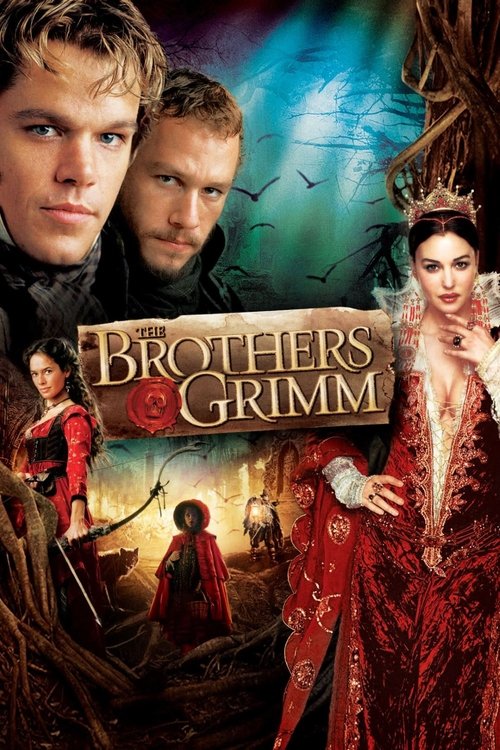
The Brothers Grimm
Folklore collectors and con artists, Jake and Will Grimm, travel from village to village pretending to protect townsfolk from enchanted creatures and performing exorcisms. However, they are put to the test when they encounter a real magical curse in a haunted forest with real magical beings, requiring genuine courage.
Working with a substantial budget of $88.0M, the film achieved a steady performer with $105.3M in global revenue (+20% profit margin).
4 wins & 5 nominations


Plot Structure
Story beats plotted across runtime


Narrative Arc
Emotional journey through the story's key moments
Story Circle
Blueprint 15-beat structure
Arcplot Score Breakdown
Weighted: Precision (70%) + Arc (15%) + Theme (15%)
The Brothers Grimm (2005) exemplifies deliberately positioned story structure, characteristic of Terry Gilliam's storytelling approach. This structural analysis examines how the film's 15-point plot structure maps to proven narrative frameworks across 1 hour and 58 minutes. With an Arcplot score of 7.7, the film showcases strong structural fundamentals.
Characters
Cast & narrative archetypes

Wilhelm Grimm
Jacob Grimm
Angelika
Cavaldi
Mirror Queen
Delatombe
Main Cast & Characters
Wilhelm Grimm
Played by Matt Damon
The romantic, idealistic brother who believes in fairy tales and the supernatural despite being a con artist.
Jacob Grimm
Played by Heath Ledger
The pragmatic, cynical brother who relies on logic and science while running cons with Wilhelm.
Angelika
Played by Lena Headey
A fierce huntress and guide who helps the brothers investigate the mysterious disappearances in the enchanted forest.
Cavaldi
Played by Peter Stormare
An Italian torturer and henchman working for the French who forces the Grimms to solve the mystery.
Mirror Queen
Played by Monica Bellucci
The ancient evil witch who kidnaps children to restore her beauty and youth through dark magic.
Delatombe
Played by Jonathan Pryce
The pompous French general who occupies German territory and initially dismisses the supernatural threats.
Structural Analysis
The Status Quo at 2 minutes (2% through the runtime) establishes The Brothers Grimm are introduced as traveling con artists who stage fake supernatural hauntings and "exorcisms" to bilk superstitious villagers out of their money. Their elaborate scheme shows their world of deception and showmanship.. Notably, this early placement immediately immerses viewers in the story world.
The inciting incident occurs at 15 minutes when The brothers are arrested by Cavaldi, an Italian torturer working for the French, who has discovered their con. They're given an ultimatum: expose another pair of 'charlatans' in the village of Marbaden or face execution.. At 13% through the film, this Disruption is delayed, allowing extended setup of the story world. This beat shifts the emotional landscape, launching the protagonist into the central conflict.
The First Threshold at 31 minutes marks the transition into Act II, occurring at 26% of the runtime. This demonstrates the protagonist's commitment to The brothers actively choose to enter the enchanted forest to investigate the disappearances, despite the danger. This marks their transition from con artists avoiding real magic to confronting genuinely supernatural forces., moving from reaction to action.
At 62 minutes, the Midpoint arrives at 52% of the runtime—precisely centered, creating perfect narrative symmetry. The analysis reveals that this crucial beat The brothers discover the truth: the Mirror Queen, a 500-year-old sorceress, is kidnapping children to restore her youth and beauty. The stakes are raised as they realize this isn't a con they can talk their way out of - real magic requires real heroism. False defeat: they're captured., fundamentally raising what's at risk. The emotional intensity shifts, dividing the narrative into clear before-and-after phases.
The Collapse moment at 87 minutes (74% through) represents the emotional nadir. Here, Angelika is captured and taken to the Mirror Queen's tower. The brothers' attempt to save the children fails catastrophically. Jake's cowardice is fully exposed, and his relationship with Will hits rock bottom. The "whiff of death": children are dying, hope seems lost., reveals the protagonist at their lowest point. This beat's placement in the final quarter sets up the climactic reversal.
The Second Threshold at 92 minutes initiates the final act resolution at 78% of the runtime. Jake experiences a transformation, finally embracing belief in magic and heroism. The brothers synthesize their skills: Will's knowledge of fairy tales combined with Jake's newfound courage. They discover how to defeat the Mirror Queen and choose to make a final stand., demonstrating the transformation achieved throughout the journey.
Emotional Journey
The Brothers Grimm's emotional architecture traces a deliberate progression across 15 carefully calibrated beats.
Narrative Framework
This structural analysis employs structural analysis methodology used to understand storytelling architecture. By mapping The Brothers Grimm against these established plot points, we can identify how Terry Gilliam utilizes or subverts traditional narrative conventions. The plot point approach reveals not only adherence to structural principles but also creative choices that distinguish The Brothers Grimm within the adventure genre.
Terry Gilliam's Structural Approach
Among the 8 Terry Gilliam films analyzed on Arcplot, the average structural score is 7.1, reflecting strong command of classical structure. The Brothers Grimm represents one of the director's most structurally precise works. For comparative analysis, explore the complete Terry Gilliam filmography.
Comparative Analysis
Additional adventure films include The Black Stallion, The Bad Guys and Puss in Boots. For more Terry Gilliam analyses, see Time Bandits, Monty Python and the Holy Grail and Fear and Loathing in Las Vegas.
Plot Points by Act
Act I
SetupStatus Quo
The Brothers Grimm are introduced as traveling con artists who stage fake supernatural hauntings and "exorcisms" to bilk superstitious villagers out of their money. Their elaborate scheme shows their world of deception and showmanship.
Theme
During their con, discussion emerges about the power of stories and belief. Will expresses genuine fascination with fairy tales while Jake dismisses them as tools for profit, establishing the theme of belief versus cynicism.
Worldbuilding
Setup of the brothers' con artist operation in French-occupied Germany, their contrasting personalities (Will the romantic believer, Jake the pragmatic skeptic), their strained relationship, and the oppressive historical context of French occupation.
Disruption
The brothers are arrested by Cavaldi, an Italian torturer working for the French, who has discovered their con. They're given an ultimatum: expose another pair of 'charlatans' in the village of Marbaden or face execution.
Resistance
The brothers reluctantly travel to Marbaden, debating whether to flee or comply. They meet the locals who describe genuinely supernatural events - children disappearing into the forest. Jake remains skeptical while Will begins to suspect something real is happening.
Act II
ConfrontationFirst Threshold
The brothers actively choose to enter the enchanted forest to investigate the disappearances, despite the danger. This marks their transition from con artists avoiding real magic to confronting genuinely supernatural forces.
Mirror World
Introduction of Angelika, the brave huntress who has lost her sisters to the forest. She represents genuine courage and belief, serving as a thematic mirror to Will's suppressed romanticism and challenging Jake's cynicism.
Premise
The "fun and games" of encountering real fairy tale magic: enchanted forests, living trees, magical creatures, gingerbread house, and various supernatural threats. The brothers use their knowledge of fairy tales to survive while uncovering the mystery of the Mirror Queen.
Midpoint
The brothers discover the truth: the Mirror Queen, a 500-year-old sorceress, is kidnapping children to restore her youth and beauty. The stakes are raised as they realize this isn't a con they can talk their way out of - real magic requires real heroism. False defeat: they're captured.
Opposition
The Mirror Queen's forces intensify their attacks. Cavaldi interferes with the brothers' efforts. Jake's cynicism and cowardice nearly doom them. The brothers' relationship fractures as their character flaws are exposed under pressure. More children are taken.
Collapse
Angelika is captured and taken to the Mirror Queen's tower. The brothers' attempt to save the children fails catastrophically. Jake's cowardice is fully exposed, and his relationship with Will hits rock bottom. The "whiff of death": children are dying, hope seems lost.
Crisis
The brothers confront their failures and fears in their darkest moment. Jake must face his cowardice and lack of belief. Will must reconcile his romantic ideals with harsh reality. They process what it means to be true heroes versus con artists.
Act III
ResolutionSecond Threshold
Jake experiences a transformation, finally embracing belief in magic and heroism. The brothers synthesize their skills: Will's knowledge of fairy tales combined with Jake's newfound courage. They discover how to defeat the Mirror Queen and choose to make a final stand.
Synthesis
The finale: the brothers storm the Mirror Queen's tower, rescue the children and Angelika, and confront the sorceress. They use their knowledge of fairy tales and newfound genuine courage to break the curse. The tower is destroyed, magic is defeated through belief and sacrifice.
Transformation
Final image mirrors the opening but transformed: the brothers are now writing down the true fairy tales they experienced, having become genuine storytellers rather than con artists. Jake has learned to believe, Will has found courage. They've transformed from frauds to heroes.