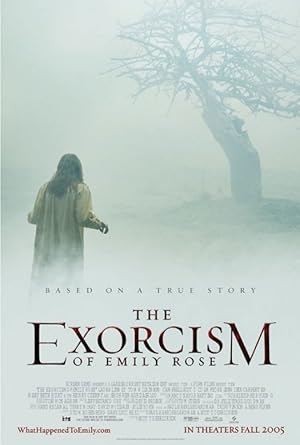
The Exorcism of Emily Rose
When a younger girl called Emily Rose dies, everyone puts blame on the exorcism which was performed on her by Father Moore prior to her death. The priest is arrested on suspicion of murder. The trial begins with lawyer Erin Bruner representing Moore, but it is not going to be easy, as no one wants to believe what Father Moore says is true.
Despite a moderate budget of $19.0M, The Exorcism of Emily Rose became a massive hit, earning $145.2M worldwide—a remarkable 664% return.
4 wins & 9 nominations


Plot Structure
Story beats plotted across runtime


Narrative Arc
Emotional journey through the story's key moments
Story Circle
Blueprint 15-beat structure
Arcplot Score Breakdown
Weighted: Precision (70%) + Arc (15%) + Theme (15%)
The Exorcism of Emily Rose (2005) exemplifies meticulously timed narrative design, characteristic of Scott Derrickson's storytelling approach. This structural analysis examines how the film's 15-point plot structure maps to proven narrative frameworks across 2 hours and 2 minutes. With an Arcplot score of 6.3, the film takes an unconventional approach to traditional narrative frameworks.
Characters
Cast & narrative archetypes

Erin Bruner
Father Richard Moore
Emily Rose
Ethan Thomas
Dr. Sadira Adani
Dr. Graham Cartwright
Karl Gunderson
Main Cast & Characters
Erin Bruner
Played by Laura Linney
Defense attorney who takes on the controversial case of Father Moore, initially motivated by career advancement but gradually transformed by the case's spiritual dimensions.
Father Richard Moore
Played by Tom Wilkinson
Catholic priest charged with negligent homicide after performing an exorcism on Emily Rose. Deeply faithful and believes he was carrying out God's work.
Emily Rose
Played by Jennifer Carpenter
Young college student who died following an exorcism. Devoutly religious, suffered from what was either demonic possession or psychotic epilepsy.
Ethan Thomas
Played by Campbell Scott
Prosecuting attorney representing the state against Father Moore. Methodical, rational, and determined to prove negligent homicide through medical evidence.
Dr. Sadira Adani
Played by Shohreh Aghdashloo
Anthropologist and expert witness who testifies about the cultural and historical context of exorcism and possession across different societies.
Dr. Graham Cartwright
Played by Duncan Fraser
Medical doctor who treated Emily Rose and testifies that her condition was psychotic epileptic disorder, not demonic possession.
Karl Gunderson
Played by Colm Feore
Senior partner at Erin's law firm who brings her the case and has his own motivations for taking on the church's defense.
Structural Analysis
The Status Quo at 1 minutes (1% through the runtime) establishes The film opens on the Rose family farm where Dr. Cartwright examines Emily Rose's lifeless, contorted body as Father Moore watches in grief. The bleak, overcast imagery establishes a world already shattered by tragedy.. Notably, this early placement immediately immerses viewers in the story world.
The inciting incident occurs at 15 minutes when Erin is assigned to defend Father Moore in what her firm considers an unwinnable case. She's told winning will guarantee her partnership, but the case will challenge everything she believes—or doesn't believe.. At 12% through the film, this Disruption aligns precisely with traditional story structure. This beat shifts the emotional landscape, launching the protagonist into the central conflict.
The First Threshold at 31 minutes marks the transition into Act II, occurring at 25% of the runtime. This demonstrates the protagonist's commitment to Erin commits fully to Father Moore's defense after hearing his account and reviewing Emily's case. She decides to argue that demonic possession was medically plausible, crossing from safe legal strategy into spiritually dangerous territory., moving from reaction to action.
At 61 minutes, the Midpoint arrives at 50% of the runtime—precisely centered, creating perfect narrative symmetry. Of particular interest, this crucial beat The prosecution's medical expert delivers devastating testimony that Emily died from self-inflicted wounds and malnutrition caused by psychotic epilepsy, not possession. The scientific explanation appears irrefutable—a false defeat that seems to doom the defense., fundamentally raising what's at risk. The emotional intensity shifts, dividing the narrative into clear before-and-after phases.
The Collapse moment at 92 minutes (75% through) represents the emotional nadir. Here, Erin's star witness recants under pressure, and the archdiocese threatens to withdraw support. Father Moore reveals that Emily chose to refuse the final exorcism, accepting her suffering as a message from the Virgin Mary. This revelation represents the death of Erin's conventional legal strategy., demonstrates the protagonist at their lowest point. This beat's placement in the final quarter sets up the climactic reversal.
The Second Threshold at 98 minutes initiates the final act resolution at 80% of the runtime. Father Moore gives Erin a letter Emily wrote before her death, describing her vision of the Virgin Mary and her choice to suffer as proof of the spiritual realm. Erin decides to read this letter in court, abandoning legal strategy for Emily's truth., demonstrating the transformation achieved throughout the journey.
Emotional Journey
The Exorcism of Emily Rose's emotional architecture traces a deliberate progression across 15 carefully calibrated beats.
Narrative Framework
This structural analysis employs a 15-point narrative structure framework that maps key story moments. By mapping The Exorcism of Emily Rose against these established plot points, we can identify how Scott Derrickson utilizes or subverts traditional narrative conventions. The plot point approach reveals not only adherence to structural principles but also creative choices that distinguish The Exorcism of Emily Rose within the drama genre.
Scott Derrickson's Structural Approach
Among the 6 Scott Derrickson films analyzed on Arcplot, the average structural score is 6.9, demonstrating varied approaches to story architecture. The Exorcism of Emily Rose takes a more unconventional approach compared to the director's typical style. For comparative analysis, explore the complete Scott Derrickson filmography.
Comparative Analysis
Additional drama films include After Thomas, South Pacific and Dirty Dancing: Havana Nights. For more Scott Derrickson analyses, see Doctor Strange, Deliver Us from Evil and The Black Phone.
Plot Points by Act
Act I
SetupStatus Quo
The film opens on the Rose family farm where Dr. Cartwright examines Emily Rose's lifeless, contorted body as Father Moore watches in grief. The bleak, overcast imagery establishes a world already shattered by tragedy.
Theme
Karl Gunderson, Erin's boss, tells her: "This case is not about truth. It's about what can be proven in a court of law." This statement encapsulates the film's central thematic conflict between faith and empirical evidence.
Worldbuilding
We meet skeptical defense attorney Erin Bruner, an ambitious agnostic pursuing partnership at her firm. Father Moore is arraigned for negligent homicide. The courtroom world and competing worldviews of faith versus science are established.
Disruption
Erin is assigned to defend Father Moore in what her firm considers an unwinnable case. She's told winning will guarantee her partnership, but the case will challenge everything she believes—or doesn't believe.
Resistance
Erin initially approaches the case purely as legal strategy, wanting Father Moore to plead guilty. He refuses, insisting Emily's story must be told. Through flashbacks, we see Emily's early symptoms at college—the hallucinations, the seizures, the medical misdiagnosis.
Act II
ConfrontationFirst Threshold
Erin commits fully to Father Moore's defense after hearing his account and reviewing Emily's case. She decides to argue that demonic possession was medically plausible, crossing from safe legal strategy into spiritually dangerous territory.
Mirror World
Father Moore becomes Erin's spiritual mirror, representing faith against her skepticism. Their late-night conversations reveal his unwavering belief that Emily was genuinely possessed, challenging Erin's materialist worldview.
Premise
The trial unfolds through testimony and flashbacks showing Emily's deterioration. We see her demonic contortions, speaking in tongues, and the failed medical interventions. Erin cross-examines witnesses while experiencing her own supernatural phenomena—waking at 3 AM, sensing presences.
Midpoint
The prosecution's medical expert delivers devastating testimony that Emily died from self-inflicted wounds and malnutrition caused by psychotic epilepsy, not possession. The scientific explanation appears irrefutable—a false defeat that seems to doom the defense.
Opposition
The prosecution gains ground as medical testimony overwhelms spiritual claims. Erin experiences increasingly disturbing supernatural encounters. A key witness, Dr. Sadira Adani, is blocked from testifying about possession as an anthropological phenomenon. The church pressures Father Moore to accept a plea deal.
Collapse
Erin's star witness recants under pressure, and the archdiocese threatens to withdraw support. Father Moore reveals that Emily chose to refuse the final exorcism, accepting her suffering as a message from the Virgin Mary. This revelation represents the death of Erin's conventional legal strategy.
Crisis
Erin grapples with the impossibility of her position—she cannot prove demonic possession in a court of law. She faces the dark night of reconciling her growing belief in the supernatural with her role as a rational advocate.
Act III
ResolutionSecond Threshold
Father Moore gives Erin a letter Emily wrote before her death, describing her vision of the Virgin Mary and her choice to suffer as proof of the spiritual realm. Erin decides to read this letter in court, abandoning legal strategy for Emily's truth.
Synthesis
Erin reads Emily's letter to the jury, presenting her suffering as a choice to prove the supernatural exists. The full exorcism sequence plays in flashback. Father Moore testifies about Emily's final peaceful moments. The jury delivers a guilty verdict but recommends time served—a moral victory acknowledging Emily's story.
Transformation
Erin visits Emily's grave, leaving her locket—a gesture of faith from the former skeptic. She has transformed from a cynical careerist to someone who has embraced mystery and belief. Father Moore walks free, Emily's story told.