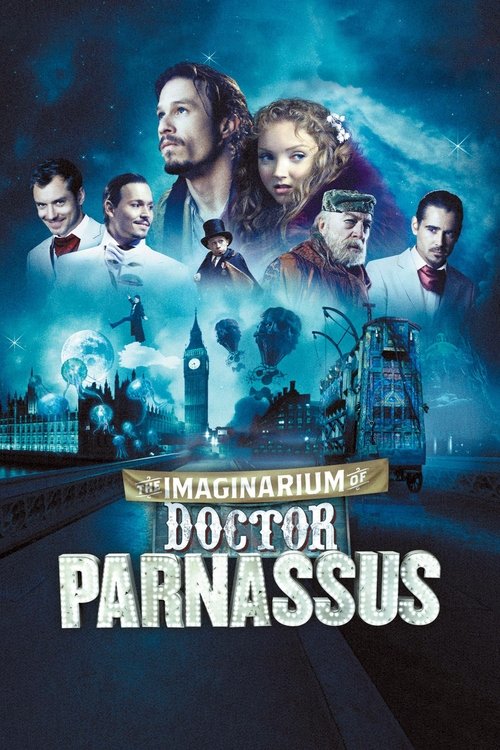
The Imaginarium of Doctor Parnassus
After a carnival troupe saves his life, a man agrees to help its immortal leader collect five souls and win a bet with the devil.
Despite a respectable budget of $30.0M, The Imaginarium of Doctor Parnassus became a box office success, earning $64.4M worldwide—a 115% return.
Nominated for 2 Oscars. 5 wins & 23 nominations


Plot Structure
Story beats plotted across runtime


Narrative Arc
Emotional journey through the story's key moments
Story Circle
Blueprint 15-beat structure
Arcplot Score Breakdown
Weighted: Precision (70%) + Arc (15%) + Theme (15%)
The Imaginarium of Doctor Parnassus (2009) reveals strategically placed narrative architecture, characteristic of Terry Gilliam's storytelling approach. This structural analysis examines how the film's 15-point plot structure maps to proven narrative frameworks across 2 hours and 3 minutes. With an Arcplot score of 7.1, the film balances conventional beats with creative variation.
Structural Analysis
The Status Quo at 1 minutes (1% through the runtime) establishes The traveling Imaginarium theater troupe performs in modern London, a shabby, antiquated show led by the ancient Dr. Parnassus. The show is failing, broke, and barely draws an audience, but Parnassus possesses a mystical mirror that allows people to enter their imaginations.. The analysis reveals that this early placement immediately immerses viewers in the story world.
The inciting incident occurs at 15 minutes when The troupe discovers Tony hanging from a noose under Blackfriars Bridge, a mysterious stranger with a pipe lodged in his throat preventing his death. They rescue and revive him. Tony has amnesia and no memory of who he is or how he got there, but he brings unexpected energy to the group.. At 12% through the film, this Disruption aligns precisely with traditional story structure. This beat shifts the emotional landscape, launching the protagonist into the central conflict.
The First Threshold at 30 minutes marks the transition into Act II, occurring at 25% of the runtime. This demonstrates the protagonist's commitment to Parnassus accepts Mr. Nick's wager to compete for five souls through the mirror, risking Valentina's fate on his ability to guide people toward enlightenment over temptation. The game officially begins, and Tony's involvement becomes crucial to attracting people into the Imaginarium., moving from reaction to action.
At 63 minutes, the Midpoint arrives at 51% of the runtime—precisely centered, creating perfect narrative symmetry. Notably, this crucial beat Tony's true identity is revealed: he's a fraudulent charity organizer being pursued by Russian gangsters. The police and criminals are looking for him. What seemed like a stroke of luck (finding Tony) now appears dangerous. Additionally, Mr. Nick is winning the wager—more souls are choosing temptation. False defeat: the stakes raise dramatically., fundamentally raising what's at risk. The emotional intensity shifts, dividing the narrative into clear before-and-after phases.
The Collapse moment at 91 minutes (74% through) represents the emotional nadir. Here, Mr. Nick wins the fifth soul, claiming victory in the wager. Valentina is now his. Tony's past fully catches up with him—the gangsters arrive. Parnassus is devastated, drunk, and defeated. His faith in imagination and humanity has failed. Everything collapses: the wager is lost, Valentina will be taken, Tony is exposed as a fraud, and the troupe dissolves., demonstrates the protagonist at their lowest point. This beat's placement in the final quarter sets up the climactic reversal.
The Second Threshold at 99 minutes initiates the final act resolution at 81% of the runtime. Parnassus realizes the truth: Valentina must choose for herself. He cannot save her through tricks or wagers—she has her own imagination, her own will. Meanwhile, Tony enters the Imaginarium one final time, confronting his true self. The synthesis comes from accepting that people must choose their own paths; imagination offers possibilities, but individuals must embrace or reject them., demonstrating the transformation achieved throughout the journey.
Emotional Journey
The Imaginarium of Doctor Parnassus's emotional architecture traces a deliberate progression across 15 carefully calibrated beats.
Narrative Framework
This structural analysis employs structural analysis methodology used to understand storytelling architecture. By mapping The Imaginarium of Doctor Parnassus against these established plot points, we can identify how Terry Gilliam utilizes or subverts traditional narrative conventions. The plot point approach reveals not only adherence to structural principles but also creative choices that distinguish The Imaginarium of Doctor Parnassus within the adventure genre.
Terry Gilliam's Structural Approach
Among the 8 Terry Gilliam films analyzed on Arcplot, the average structural score is 7.1, reflecting strong command of classical structure. The Imaginarium of Doctor Parnassus represents one of the director's most structurally precise works. For comparative analysis, explore the complete Terry Gilliam filmography.
Comparative Analysis
Additional adventure films include The Black Stallion, The Bad Guys and Puss in Boots. For more Terry Gilliam analyses, see Time Bandits, Monty Python and the Holy Grail and Fear and Loathing in Las Vegas.
Plot Points by Act
Act I
SetupStatus Quo
The traveling Imaginarium theater troupe performs in modern London, a shabby, antiquated show led by the ancient Dr. Parnassus. The show is failing, broke, and barely draws an audience, but Parnassus possesses a mystical mirror that allows people to enter their imaginations.
Theme
Mr. Nick (the Devil) appears and discusses with Parnassus the nature of their ancient wager: "Nothing is permanent, not even death." The theme of stories, imagination, and the battle between enlightenment and base desires is established through their conversation about humanity's choices.
Worldbuilding
We learn Parnassus is immortal, bound by an ancient wager with Mr. Nick (the Devil). His daughter Valentina is turning 16, which means she'll be claimed by the Devil per their bargain. The troupe struggles financially and emotionally. Parnassus is an alcoholic dreamer living in the past, while his troupe (Anton, Percy) and daughter try to keep the show alive.
Disruption
The troupe discovers Tony hanging from a noose under Blackfriars Bridge, a mysterious stranger with a pipe lodged in his throat preventing his death. They rescue and revive him. Tony has amnesia and no memory of who he is or how he got there, but he brings unexpected energy to the group.
Resistance
Tony recovers and quickly integrates himself into the troupe, demonstrating charm and showmanship skills. He helps modernize their act and attracts audiences. Meanwhile, Parnassus negotiates a new wager with Mr. Nick: instead of automatically claiming Valentina, they'll compete to win five souls through the Imaginarium first. Tony becomes both helper and potential complication.
Act II
ConfrontationFirst Threshold
Parnassus accepts Mr. Nick's wager to compete for five souls through the mirror, risking Valentina's fate on his ability to guide people toward enlightenment over temptation. The game officially begins, and Tony's involvement becomes crucial to attracting people into the Imaginarium.
Mirror World
Tony and Valentina's relationship deepens as they work together. She represents innocence and imagination, everything pure that Parnassus wants to protect. Tony, despite his mysterious past, seems genuinely drawn to her. Their romance becomes the emotional heart that carries the thematic question: can imagination and love triumph over cynicism and corruption?
Premise
The competition unfolds as various people enter the Imaginarium mirror. Inside, they face their desires and choices in fantastical landscapes shaped by their imaginations. Tony becomes increasingly important to luring people in, but we also see glimpses of his shady past—he may be a con man. The score rises: some souls choose enlightenment (Parnassus), others choose base desires (Mr. Nick). Anton grows jealous of Tony's connection with Valentina.
Midpoint
Tony's true identity is revealed: he's a fraudulent charity organizer being pursued by Russian gangsters. The police and criminals are looking for him. What seemed like a stroke of luck (finding Tony) now appears dangerous. Additionally, Mr. Nick is winning the wager—more souls are choosing temptation. False defeat: the stakes raise dramatically.
Opposition
Pressure intensifies from all sides. The Russian gangsters close in on Tony. Mr. Nick continues to win souls, moving closer to claiming Valentina. Tony's corruption influences the Imaginarium itself—when he enters, the fantasy worlds reflect his materialistic, manipulative nature. Anton's jealousy peaks. Parnassus drinks more heavily, losing faith. The troupe begins to fracture.
Collapse
Mr. Nick wins the fifth soul, claiming victory in the wager. Valentina is now his. Tony's past fully catches up with him—the gangsters arrive. Parnassus is devastated, drunk, and defeated. His faith in imagination and humanity has failed. Everything collapses: the wager is lost, Valentina will be taken, Tony is exposed as a fraud, and the troupe dissolves.
Crisis
Parnassus experiences his dark night, confronting his failures across centuries. Valentina prepares to accept her fate with Mr. Nick. Tony faces his own reckoning in the Imaginarium, where his greed and corruption manifest. The question becomes whether anyone can be redeemed, whether imagination and love mean anything in a corrupt world.
Act III
ResolutionSecond Threshold
Parnassus realizes the truth: Valentina must choose for herself. He cannot save her through tricks or wagers—she has her own imagination, her own will. Meanwhile, Tony enters the Imaginarium one final time, confronting his true self. The synthesis comes from accepting that people must choose their own paths; imagination offers possibilities, but individuals must embrace or reject them.
Synthesis
Inside the Imaginarium, Tony faces the consequences of his choices and is destroyed by his own greed—consumed by the fantasy world he corrupted. Valentina chooses to reject Mr. Nick, asserting her independence. Mr. Nick, bound by the rules, must accept her choice. Parnassus lets go of his daughter, allowing her to live her own life rather than keeping her in his eternal story. The troupe disbands, each member moving forward.
Transformation
Valentina walks away into the real world with Anton, free to live her own story. Parnassus, no longer bound by his wager, continues as a simple street performer with Percy, telling stories to children. The Imaginarium persists in humbler form. Where the Status Quo showed a desperate, failing showman clinging to immortality and past glory, the Transformation shows a liberated man at peace, having learned that stories matter not for control but for the freedom they offer.