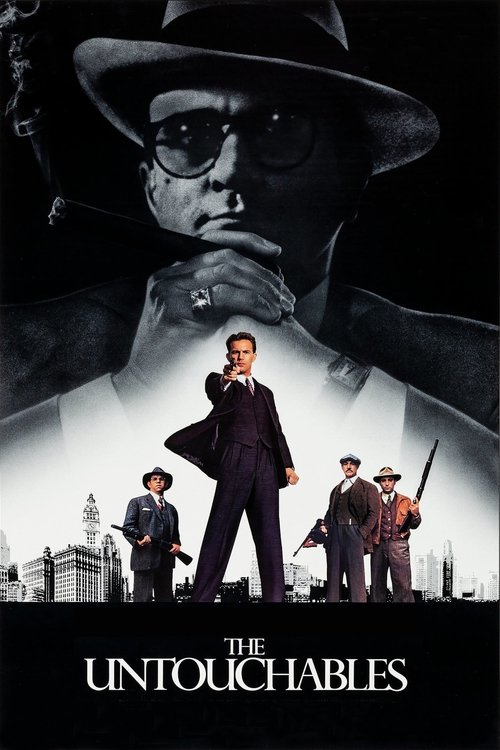
The Untouchables
Elliot Ness, an ambitious prohibition agent, is determined to take down Al Capone. In order to achieve this goal, he forms a group given the nickname “The Untouchables”.
Despite a respectable budget of $25.0M, The Untouchables became a commercial success, earning $76.3M worldwide—a 205% return.
1 Oscar. 11 wins & 18 nominations


Plot Structure
Story beats plotted across runtime


Narrative Arc
Emotional journey through the story's key moments
Story Circle
Blueprint 15-beat structure
Arcplot Score Breakdown
Weighted: Precision (70%) + Arc (15%) + Theme (15%)
The Untouchables (1987) showcases carefully calibrated narrative design, characteristic of Brian De Palma's storytelling approach. This structural analysis examines how the film's 15-point plot structure maps to proven narrative frameworks across 1 hour and 59 minutes. With an Arcplot score of 7.4, the film balances conventional beats with creative variation.
Characters
Cast & narrative archetypes

Eliot Ness
Jim Malone
Al Capone
George Stone (Giuseppe Petri)
Oscar Wallace
Frank Nitti
Main Cast & Characters
Eliot Ness
Played by Kevin Costner
A dedicated Treasury agent determined to bring down Al Capone through legal means, building an incorruptible team to fight organized crime in Prohibition-era Chicago.
Jim Malone
Played by Sean Connery
A weathered Irish-American beat cop who becomes Ness's mentor, teaching him the harsh realities of fighting crime in corrupt Chicago.
Al Capone
Played by Robert De Niro
The ruthless and flamboyant crime lord who controls Chicago through violence and corruption, viewing himself as a businessman providing a public service.
George Stone (Giuseppe Petri)
Played by Andy Garcia
A young Italian-American rookie cop and sharpshooter who joins the Untouchables, eager to prove himself and fight the criminals tarnishing his heritage.
Oscar Wallace
Played by Charles Martin Smith
An earnest accountant recruited by Ness to build a tax evasion case against Capone, bringing crucial financial expertise to the team.
Frank Nitti
Played by Billy Drago
Capone's cold and efficient enforcer who carries out brutal murders with calculated precision, serving as the operational head of violence.
Structural Analysis
The Status Quo at 1 minutes (1% through the runtime) establishes Al Capone receives a luxurious shave while holding court, establishing the untouchable power of organized crime in Prohibition-era Chicago. Ness arrives as an idealistic, by-the-book Treasury agent in a corrupt city.. Significantly, this early placement immediately immerses viewers in the story world.
The inciting incident occurs at 12 minutes when A young girl is killed in a bombing at a Capone speakeasy raid gone wrong. Ness realizes his conventional approach has failed catastrophically, and innocent people are dying because of corruption.. At 11% through the film, this Disruption aligns precisely with traditional story structure. This beat shifts the emotional landscape, launching the protagonist into the central conflict.
The First Threshold at 29 minutes marks the transition into Act II, occurring at 24% of the runtime. This reveals the protagonist's commitment to The Untouchables make their first major raid on a Canadian border warehouse, seizing a massive illegal liquor shipment. Ness chooses to step outside the system and take the fight directly to Capone., moving from reaction to action.
At 60 minutes, the Midpoint arrives at 50% of the runtime—precisely centered, creating perfect narrative symmetry. Structural examination shows that this crucial beat The iconic train station shootout. The Untouchables successfully capture Capone's bookkeeper with crucial evidence. False victory - they think they have enough to convict Capone, but the stakes are about to reverse., fundamentally raising what's at risk. The emotional intensity shifts, dividing the narrative into clear before-and-after phases.
The Collapse moment at 88 minutes (74% through) represents the emotional nadir. Here, Malone is brutally murdered by Capone's enforcer Nitti. The mentor dies, whispering crucial information about the bookkeeper. Ness loses his moral compass and best friend. Everything seems lost., indicates the protagonist at their lowest point. This beat's placement in the final quarter sets up the climactic reversal.
The Second Threshold at 95 minutes initiates the final act resolution at 80% of the runtime. Ness decodes Malone's dying words and locates the bookkeeper. He combines Malone's Chicago way with his own integrity - he'll bend the rules but won't break his core values. Switches the jury to ensure a fair trial., demonstrating the transformation achieved throughout the journey.
Emotional Journey
The Untouchables's emotional architecture traces a deliberate progression across 15 carefully calibrated beats.
Narrative Framework
This structural analysis employs proven narrative structure principles that track dramatic progression. By mapping The Untouchables against these established plot points, we can identify how Brian De Palma utilizes or subverts traditional narrative conventions. The plot point approach reveals not only adherence to structural principles but also creative choices that distinguish The Untouchables within the crime genre.
Brian De Palma's Structural Approach
Among the 18 Brian De Palma films analyzed on Arcplot, the average structural score is 6.7, demonstrating varied approaches to story architecture. The Untouchables represents one of the director's most structurally precise works. For comparative analysis, explore the complete Brian De Palma filmography.
Comparative Analysis
Additional crime films include The Bad Guys, Rustom and The Whole Ten Yards. For more Brian De Palma analyses, see Obsession, Carrie and The Black Dahlia.
Plot Points by Act
Act I
SetupStatus Quo
Al Capone receives a luxurious shave while holding court, establishing the untouchable power of organized crime in Prohibition-era Chicago. Ness arrives as an idealistic, by-the-book Treasury agent in a corrupt city.
Theme
Malone asks Ness: "What are you prepared to do?" This question becomes the thematic spine - how far will Ness bend his principles to achieve justice in a world where the rules don't work?
Worldbuilding
Establishing Prohibition Chicago: Capone's empire, police corruption, bootlegging operations. Ness meets his wife, tries traditional law enforcement methods. The world shows him that playing by the rules is futile.
Disruption
A young girl is killed in a bombing at a Capone speakeasy raid gone wrong. Ness realizes his conventional approach has failed catastrophically, and innocent people are dying because of corruption.
Resistance
Ness meets beat cop Malone, who becomes his mentor. Malone teaches him the Chicago way - "They pull a knife, you pull a gun." Together they recruit Stone and Wallace, forming the Untouchables team. Preparation and training.
Act II
ConfrontationFirst Threshold
The Untouchables make their first major raid on a Canadian border warehouse, seizing a massive illegal liquor shipment. Ness chooses to step outside the system and take the fight directly to Capone.
Mirror World
Ness and his team bond as brothers in arms. Their loyalty and moral code contrasts with Capone's organization. This relationship subplot carries the theme of integrity versus corruption.
Premise
The promise of the premise: watching the Untouchables outsmart and outfight Capone's empire. Multiple raids, gathering evidence, small victories. The team works together, building their case through unorthodox means.
Midpoint
The iconic train station shootout. The Untouchables successfully capture Capone's bookkeeper with crucial evidence. False victory - they think they have enough to convict Capone, but the stakes are about to reverse.
Opposition
Capone strikes back viciously. The judge is bribed, witnesses threatened. Wallace is murdered in an elevator. Malone discovers the jury has been bought. The team fragments under pressure, their flaws and vulnerabilities exposed.
Collapse
Malone is brutally murdered by Capone's enforcer Nitti. The mentor dies, whispering crucial information about the bookkeeper. Ness loses his moral compass and best friend. Everything seems lost.
Crisis
Ness cradles Malone's body, contemplating vengeance versus justice. He processes his rage and grief, questions whether it's worth continuing. The dark night before finding new resolve.
Act III
ResolutionSecond Threshold
Ness decodes Malone's dying words and locates the bookkeeper. He combines Malone's Chicago way with his own integrity - he'll bend the rules but won't break his core values. Switches the jury to ensure a fair trial.
Synthesis
The trial finale: Ness orchestrates the jury switch, secures testimony, and confronts Nitti on the courthouse roof. Capone is convicted. Justice is served through a synthesis of law and necessary force.
Transformation
Ness walks away from the courthouse as Stone asks what he'll do when Prohibition ends. "I think I'll have a drink," Ness replies. The idealist has become a pragmatist who won, but at great cost.