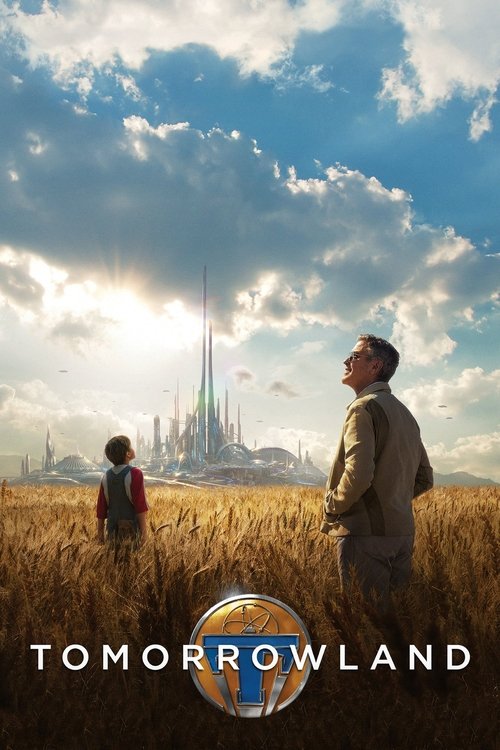
Tomorrowland
Bound by a shared destiny, a bright, optimistic teen bursting with scientific curiosity and a former boy-genius inventor jaded by disillusionment embark on a danger-filled mission to unearth the secrets of an enigmatic place somewhere in time and space that exists in their collective memory as "Tomorrowland."
Working with a enormous budget of $190.0M, the film achieved a steady performer with $209.2M in global revenue (+10% profit margin).
2 wins & 19 nominations


Plot Structure
Story beats plotted across runtime


Narrative Arc
Emotional journey through the story's key moments
Story Circle
Blueprint 15-beat structure
Arcplot Score Breakdown
Weighted: Precision (70%) + Arc (15%) + Theme (15%)
Tomorrowland (2015) exhibits carefully calibrated narrative architecture, characteristic of Brad Bird's storytelling approach. This structural analysis examines how the film's 15-point plot structure maps to proven narrative frameworks across 2 hours and 10 minutes. With an Arcplot score of 7.5, the film showcases strong structural fundamentals.
Characters
Cast & narrative archetypes

Casey Newton
Frank Walker
Athena
David Nix
Main Cast & Characters
Casey Newton
Played by Britt Robertson
Optimistic teenage girl and inventor's daughter who refuses to accept a dystopian future and seeks to change the world.
Frank Walker
Played by George Clooney
Disillusioned former boy genius and inventor who was exiled from Tomorrowland and now lives as a recluse.
Athena
Played by Raffey Cassidy
Mysterious and ageless audio-animatronic recruiter for Tomorrowland who searches for dreamers to save the future.
David Nix
Played by Hugh Laurie
Governor of Tomorrowland who believes humanity has chosen its own destruction and maintains the doomsday broadcast.
Structural Analysis
The Status Quo at 1 minutes (1% through the runtime) establishes Young Frank Walker arrives at the 1964 World's Fair with his homemade jetpack, full of optimism and wonder about the future. This establishes the film's central tension: a dreamer in a world that doesn't believe.. Significantly, this early placement immediately immerses viewers in the story world.
The inciting incident occurs at 15 minutes when Casey is arrested for sabotage and finds a mysterious Tomorrowland pin in her belongings. When she touches it, she's transported to a vision of an impossible, gleaming city. The ordinary world is shattered—proof that something extraordinary exists.. At 12% through the film, this Disruption aligns precisely with traditional story structure. This beat shifts the emotional landscape, launching the protagonist into the central conflict.
The First Threshold at 32 minutes marks the transition into Act II, occurring at 25% of the runtime. This shows the protagonist's commitment to Casey chooses to go with Athena to find Frank Walker, actively committing to the adventure despite the danger. She leaves her normal life behind to discover what Tomorrowland really is., moving from reaction to action.
At 64 minutes, the Midpoint arrives at 50% of the runtime—precisely centered, creating perfect narrative symmetry. Significantly, this crucial beat They reach Tomorrowland only to discover it's falling apart—the once-gleaming city is now abandoned and decaying. False defeat: the dream destination is a dystopian ruin. Plus, they discover Nix has been broadcasting Earth's apocalypse, creating a self-fulfilling prophecy., fundamentally raising what's at risk. The emotional intensity shifts, dividing the narrative into clear before-and-after phases.
The Collapse moment at 95 minutes (73% through) represents the emotional nadir. Here, Athena sacrifices herself to save Casey and Frank, shutting down to prevent her own destruction. The whiff of death—the literal death of the one who believed in both of them. Frank loses his oldest friend; Casey loses her guide., illustrates the protagonist at their lowest point. This beat's placement in the final quarter sets up the climactic reversal.
The Second Threshold at 104 minutes initiates the final act resolution at 80% of the runtime. Casey realizes that Athena's sacrifice wasn't in vain—it proved that changing fate is possible. She synthesizes the lesson: the future isn't fixed; it's what we make it. Frank rediscovers his hope. They formulate a plan to destroy the transmitter., demonstrating the transformation achieved throughout the journey.
Emotional Journey
Tomorrowland's emotional architecture traces a deliberate progression across 15 carefully calibrated beats.
Narrative Framework
This structural analysis employs structural analysis methodology used to understand storytelling architecture. By mapping Tomorrowland against these established plot points, we can identify how Brad Bird utilizes or subverts traditional narrative conventions. The plot point approach reveals not only adherence to structural principles but also creative choices that distinguish Tomorrowland within the adventure genre.
Brad Bird's Structural Approach
Among the 6 Brad Bird films analyzed on Arcplot, the average structural score is 5.6, showcasing experimental approaches to narrative form. Tomorrowland represents one of the director's most structurally precise works. For comparative analysis, explore the complete Brad Bird filmography.
Comparative Analysis
Additional adventure films include The Black Stallion, The Bad Guys and Puss in Boots. For more Brad Bird analyses, see Mission: Impossible - Ghost Protocol, The Incredibles and Incredibles 2.
Plot Points by Act
Act I
SetupStatus Quo
Young Frank Walker arrives at the 1964 World's Fair with his homemade jetpack, full of optimism and wonder about the future. This establishes the film's central tension: a dreamer in a world that doesn't believe.
Theme
Nix tells young Frank, "You're not good enough," but Athena sees his potential anyway. The theme: dreamers who refuse to give up can change the world, even when told they aren't ready.
Worldbuilding
Intercut between young Frank's 1964 story and present-day Casey Newton, a teenage optimist sabotaging NASA equipment to save her father's job. We see two dreamers in different eras, both fighting against those who have given up.
Disruption
Casey is arrested for sabotage and finds a mysterious Tomorrowland pin in her belongings. When she touches it, she's transported to a vision of an impossible, gleaming city. The ordinary world is shattered—proof that something extraordinary exists.
Resistance
Casey pursues the mystery of the pin, searching for answers. She encounters Athena (revealed as an Audio-Animatronic) and is attacked by robots. Casey debates whether to continue this dangerous path or return to normal life.
Act II
ConfrontationFirst Threshold
Casey chooses to go with Athena to find Frank Walker, actively committing to the adventure despite the danger. She leaves her normal life behind to discover what Tomorrowland really is.
Mirror World
Casey meets the older, bitter Frank Walker—a man who once believed in the future but has given up entirely. He represents what Casey could become if she loses hope. Their relationship will define whether optimism or cynicism wins.
Premise
The "fun and games" of Casey and Frank's reluctant partnership. Spectacular action sequences, Frank's amazing house full of inventions, battling robots, and the road trip to get to Tomorrowland. Casey's optimism begins to crack Frank's cynical shell.
Midpoint
They reach Tomorrowland only to discover it's falling apart—the once-gleaming city is now abandoned and decaying. False defeat: the dream destination is a dystopian ruin. Plus, they discover Nix has been broadcasting Earth's apocalypse, creating a self-fulfilling prophecy.
Opposition
Nix and his forces close in. Frank and Casey learn about the tachyon transmitter that has been showing humanity its own doom, causing them to give up. The weight of saving two worlds falls on them. Nix argues that humanity deserves its fate.
Collapse
Athena sacrifices herself to save Casey and Frank, shutting down to prevent her own destruction. The whiff of death—the literal death of the one who believed in both of them. Frank loses his oldest friend; Casey loses her guide.
Crisis
Frank and Casey mourn Athena. Frank, especially, is broken—he's lost everything he loved. They process the weight of Athena's sacrifice and what it means. The darkest emotional moment before the dawn.
Act III
ResolutionSecond Threshold
Casey realizes that Athena's sacrifice wasn't in vain—it proved that changing fate is possible. She synthesizes the lesson: the future isn't fixed; it's what we make it. Frank rediscovers his hope. They formulate a plan to destroy the transmitter.
Synthesis
Frank and Casey confront Nix and destroy the tachyon transmitter in a climactic battle. They reject the narrative of inevitable doom. Nix falls with his machine. Tomorrowland can be rebuilt—not as an escape from Earth, but as a beacon of hope for it.
Transformation
Casey, now a recruiter like Athena once was, finds other dreamers around the world and brings them to Tomorrowland. The closing image mirrors the opening: a young dreamer arriving at something wondrous. But this time, Casey is the one welcoming them. Hope is restored and spreading.