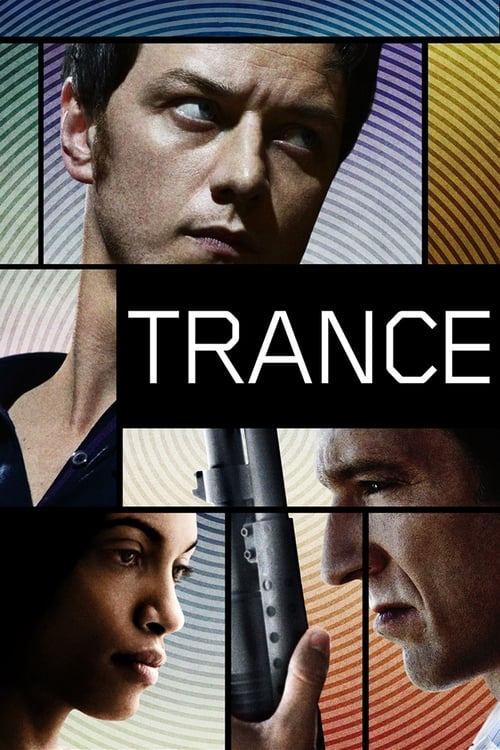
Trance
A violent gang enlists the help of a hypnotherapist in an attempt to locate a painting which somehow vanished in the middle of a heist.
Working with a mid-range budget of $20.0M, the film achieved a modest success with $24.3M in global revenue (+22% profit margin).
3 wins & 3 nominations


Plot Structure
Story beats plotted across runtime


Narrative Arc
Emotional journey through the story's key moments
Story Circle
Blueprint 15-beat structure
Arcplot Score Breakdown
Weighted: Precision (70%) + Arc (15%) + Theme (15%)
Trance (2013) reveals strategically placed narrative architecture, characteristic of Danny Boyle's storytelling approach. This structural analysis examines how the film's 15-point plot structure maps to proven narrative frameworks across 1 hour and 41 minutes. With an Arcplot score of 7.1, the film balances conventional beats with creative variation.
Characters
Cast & narrative archetypes

Simon Newton
Elizabeth Lamb
Franck
Main Cast & Characters
Simon Newton
Played by James McAvoy
An art auctioneer suffering from amnesia after a heist, unable to remember where he hid a stolen Goya painting
Elizabeth Lamb
Played by Rosario Dawson
A hypnotherapist hired to help Simon recover his memory, who becomes entangled in dangerous psychological games
Franck
Played by Vincent Cassel
The ruthless leader of the heist gang who employs increasingly violent methods to find the painting
Structural Analysis
The Status Quo at 1 minutes (1% through the runtime) establishes Simon narrates his role as an art auctioneer, explaining auction house security protocols and how to protect priceless paintings during a heist. His calm, professional demeanor establishes his ordinary world.. Of particular interest, this early placement immediately immerses viewers in the story world.
The inciting incident occurs at 12 minutes when The gang discovers the painting is missing - Simon hid it somewhere before his head injury but now cannot remember where. Franck tortures Simon, who genuinely has no memory of what he did with the Goya.. At 12% through the film, this Disruption aligns precisely with traditional story structure. This beat shifts the emotional landscape, launching the protagonist into the central conflict.
The First Threshold at 26 minutes marks the transition into Act II, occurring at 26% of the runtime. This illustrates the protagonist's commitment to Simon begins hypnotherapy sessions with Elizabeth. He makes the active choice to open his subconscious to her, not knowing she will gain complete access to his mind - and his darkest secrets., moving from reaction to action.
At 51 minutes, the Midpoint arrives at 51% of the runtime—precisely centered, creating perfect narrative symmetry. The analysis reveals that this crucial beat Simon experiences violent flashes suggesting he knew Elizabeth before the heist. A false defeat emerges as Simon realizes his memories are being manipulated - but he doesn't yet understand the full truth of their past relationship., fundamentally raising what's at risk. The emotional intensity shifts, dividing the narrative into clear before-and-after phases.
The Collapse moment at 76 minutes (75% through) represents the emotional nadir. Here, The devastating truth emerges: Simon was Elizabeth's abusive, stalker ex-boyfriend. She orchestrated the entire heist through hypnotic suggestion to escape him. Simon's identity as protagonist collapses - he is revealed as the monster., illustrates the protagonist at their lowest point. This beat's placement in the final quarter sets up the climactic reversal.
The Second Threshold at 81 minutes initiates the final act resolution at 80% of the runtime. Armed with full knowledge of his crimes and Elizabeth's manipulation, Simon must choose how to end this. He finds the painting's location in his recovered memories - it was hidden in his car, which he set on fire., demonstrating the transformation achieved throughout the journey.
Emotional Journey
Trance's emotional architecture traces a deliberate progression across 15 carefully calibrated beats.
Narrative Framework
This structural analysis employs a 15-point narrative structure framework that maps key story moments. By mapping Trance against these established plot points, we can identify how Danny Boyle utilizes or subverts traditional narrative conventions. The plot point approach reveals not only adherence to structural principles but also creative choices that distinguish Trance within the thriller genre.
Danny Boyle's Structural Approach
Among the 12 Danny Boyle films analyzed on Arcplot, the average structural score is 6.6, demonstrating varied approaches to story architecture. Trance represents one of the director's most structurally precise works. For comparative analysis, explore the complete Danny Boyle filmography.
Comparative Analysis
Additional thriller films include The Warriors, Thunderball and Rustom. For more Danny Boyle analyses, see Yesterday, Millions and T2 Trainspotting.
Plot Points by Act
Act I
SetupStatus Quo
Simon narrates his role as an art auctioneer, explaining auction house security protocols and how to protect priceless paintings during a heist. His calm, professional demeanor establishes his ordinary world.
Theme
Simon's voiceover states that "for a man with nothing, a painting can mean everything" - establishing the theme of obsession and the dangerous power of possession over both art and people.
Worldbuilding
The heist unfolds at the auction house. Simon appears to be a victim helping protect the Goya painting, but secretly works with Franck's gang. The robbery goes wrong when Simon attacks Franck and is struck on the head, causing amnesia.
Disruption
The gang discovers the painting is missing - Simon hid it somewhere before his head injury but now cannot remember where. Franck tortures Simon, who genuinely has no memory of what he did with the Goya.
Resistance
Unable to extract the location through violence, the gang debates alternatives. Simon suggests hypnotherapy to recover his buried memories. Franck reluctantly agrees to find a hypnotist, and they select Elizabeth Lamb from a list of practitioners.
Act II
ConfrontationFirst Threshold
Simon begins hypnotherapy sessions with Elizabeth. He makes the active choice to open his subconscious to her, not knowing she will gain complete access to his mind - and his darkest secrets.
Mirror World
Elizabeth reveals she knows the gang is using her and negotiates to become a full partner in the heist. Her presence introduces a romantic and psychological subplot, as both Simon and Franck become drawn to her.
Premise
The hypnotherapy sessions create a surreal, fragmented narrative as Simon's memories surface in dreamlike sequences. Elizabeth deepens her control while starting a relationship with Franck. The line between reality and hypnotic suggestion blurs.
Midpoint
Simon experiences violent flashes suggesting he knew Elizabeth before the heist. A false defeat emerges as Simon realizes his memories are being manipulated - but he doesn't yet understand the full truth of their past relationship.
Opposition
Jealousy and paranoia consume Simon as Elizabeth and Franck's relationship intensifies. Gang members die in increasingly violent circumstances. Simon's repressed memories surface in disturbing fragments revealing his obsessive, possessive past.
Collapse
The devastating truth emerges: Simon was Elizabeth's abusive, stalker ex-boyfriend. She orchestrated the entire heist through hypnotic suggestion to escape him. Simon's identity as protagonist collapses - he is revealed as the monster.
Crisis
Elizabeth recounts how Simon's obsession escalated to violence, how she used hypnotherapy to implant the heist plan in his mind, and how she manipulated events to orchestrate her freedom. Simon confronts the horror of who he truly is.
Act III
ResolutionSecond Threshold
Armed with full knowledge of his crimes and Elizabeth's manipulation, Simon must choose how to end this. He finds the painting's location in his recovered memories - it was hidden in his car, which he set on fire.
Synthesis
A violent confrontation unfolds. Franck is shot. Simon attempts to reclaim Elizabeth but she uses a hypnotic trigger phrase that paralyzes him. Elizabeth shoots Simon in the head, finally freeing herself from his obsession.
Transformation
Elizabeth drives away with the Goya, sending a video message to the recovering Franck explaining everything and offering him a choice: forget her through hypnotic suggestion, or remember. The power of memory and choice remains with the survivor.