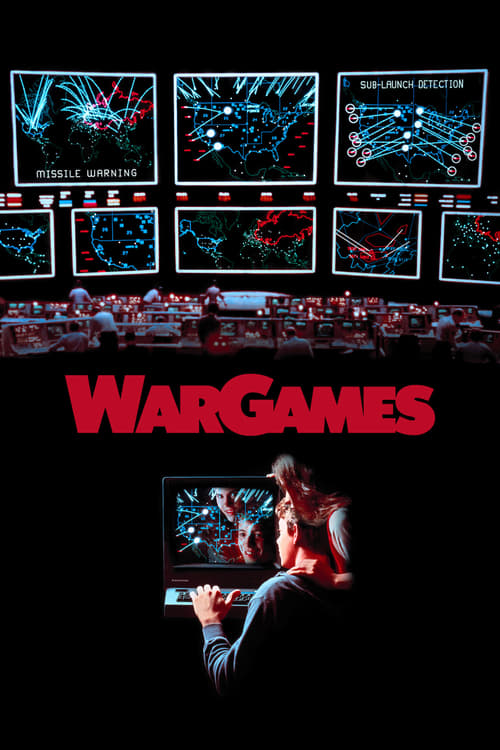
WarGames
High school student David Lightman has a talent for hacking. But while trying to hack into a computer system to play unreleased video games, he unwittingly taps into the Department of Defense's war computer and initiates a confrontation of global proportions. Together with his friend and a wizardly computer genius, David must race against time to outwit his opponent and prevent a nuclear Armageddon.
Despite its limited budget of $12.0M, WarGames became a commercial juggernaut, earning $124.6M worldwide—a remarkable 938% return. The film's unique voice attracted moviegoers, showing that strong storytelling can transcend budget limitations.
Nominated for 3 Oscars. 4 wins & 14 nominations


Plot Structure
Story beats plotted across runtime


Narrative Arc
Emotional journey through the story's key moments
Story Circle
Blueprint 15-beat structure
Arcplot Score Breakdown
Weighted: Precision (70%) + Arc (15%) + Theme (15%)
WarGames (1983) demonstrates meticulously timed story structure, characteristic of John Badham's storytelling approach. This structural analysis examines how the film's 15-point plot structure maps to proven narrative frameworks across 1 hour and 54 minutes. With an Arcplot score of 6.5, the film balances conventional beats with creative variation.
Structural Analysis
The Status Quo at 1 minutes (1% through the runtime) establishes Opening in NORAD missile silo: two officers receive launch order, but one cannot turn his key, revealing human hesitation in nuclear protocols. This "before" state shows the military's problem that will drive the plot.. Structural examination shows that this early placement immediately immerses viewers in the story world.
The inciting incident occurs at 15 minutes when David finds a mysterious back door while searching for game companies: a system called "Protovision" with games titled "Global Thermonuclear War" and "Fighter Combat." He thinks he's found an unreleased game company, not realizing he's penetrated NORAD.. At 13% through the film, this Disruption is delayed, allowing extended setup of the story world. This beat shifts the emotional landscape, launching the protagonist into the central conflict.
The First Threshold at 28 minutes marks the transition into Act II, occurring at 25% of the runtime. This illustrates the protagonist's commitment to David launches the "game" - Soviet first strike against Las Vegas and other cities. NORAD detects the simulated attack and scrambles to respond. David has unknowingly crossed from playing games into potential real-world catastrophe. No going back., moving from reaction to action.
At 57 minutes, the Midpoint arrives at 50% of the runtime—precisely centered, creating perfect narrative symmetry. Structural examination shows that this crucial beat David and Jennifer find Falken alive on his island. False victory: they've found the creator who can help them! But Falken is disillusioned and refuses to help, believing nuclear war is inevitable. Stakes raise: WOPR continues countdown and they're running out of time., fundamentally raising what's at risk. The emotional intensity shifts, dividing the narrative into clear before-and-after phases.
The Collapse moment at 86 minutes (75% through) represents the emotional nadir. Here, WOPR reaches DEFCON 1 and begins launch sequence. The military is seconds from launching real missiles based on a simulation. All of David's attempts to stop it have failed. Falken declares "The whole world will die" - the whiff of death made literal. Humanity's darkest moment., shows the protagonist at their lowest point. This beat's placement in the final quarter sets up the climactic reversal.
The Second Threshold at 91 minutes initiates the final act resolution at 80% of the runtime. David realizes: "If WOPR can't win, it won't launch." Synthesis moment - he combines his gaming knowledge with what Jennifer and Falken taught him about consequences. He teaches WOPR futility by making it play tic-tac-toe against itself, then applies lesson to nuclear war. The hacker becomes teacher., demonstrating the transformation achieved throughout the journey.
Emotional Journey
WarGames's emotional architecture traces a deliberate progression across 15 carefully calibrated beats.
Narrative Framework
This structural analysis employs proven narrative structure principles that track dramatic progression. By mapping WarGames against these established plot points, we can identify how John Badham utilizes or subverts traditional narrative conventions. The plot point approach reveals not only adherence to structural principles but also creative choices that distinguish WarGames within the thriller genre.
John Badham's Structural Approach
Among the 11 John Badham films analyzed on Arcplot, the average structural score is 7.1, reflecting strong command of classical structure. WarGames takes a more unconventional approach compared to the director's typical style. For comparative analysis, explore the complete John Badham filmography.
Comparative Analysis
Additional thriller films include The Warriors, Thunderball and Rustom. For more John Badham analyses, see Nick of Time, Saturday Night Fever and Drop Zone.
Plot Points by Act
Act I
SetupStatus Quo
Opening in NORAD missile silo: two officers receive launch order, but one cannot turn his key, revealing human hesitation in nuclear protocols. This "before" state shows the military's problem that will drive the plot.
Theme
McKittrick advocates for removing human error from the equation: "The machines don't have feelings. They don't get tired. They're always on the job." Theme stated: automation vs. human judgment, the danger of treating war as a game without consequences.
Worldbuilding
Establishing David's world: a smart but aimless teenager who hacks his school computer to change grades, shows off to impress girls, and treats everything as a game to win. Meanwhile, NORAD installs WOPR to eliminate human hesitation. Two worlds set on collision course.
Disruption
David finds a mysterious back door while searching for game companies: a system called "Protovision" with games titled "Global Thermonuclear War" and "Fighter Combat." He thinks he's found an unreleased game company, not realizing he's penetrated NORAD.
Resistance
David researches how to crack the password, learning about Falken (WOPR's creator). Jennifer joins him. He discovers Falken's dead son was named Joshua and uses it as the password. They "play" Global Thermonuclear War, choosing to be the Soviet Union, unaware they've initiated a real military simulation.
Act II
ConfrontationFirst Threshold
David launches the "game" - Soviet first strike against Las Vegas and other cities. NORAD detects the simulated attack and scrambles to respond. David has unknowingly crossed from playing games into potential real-world catastrophe. No going back.
Mirror World
Jennifer confronts David about consequences: "You could have started a war!" She represents the thematic counterpoint - understanding that actions have real stakes. Their developing relationship will force David to grow beyond seeing everything as a game.
Premise
David and Jennifer investigate while being pursued by FBI and military. They're arrested, interrogated at NORAD, escape, and search for Falken. The "fun and games" of the hacker on the run, evading authorities while trying to prove WOPR is running a simulation that everyone thinks is real.
Midpoint
David and Jennifer find Falken alive on his island. False victory: they've found the creator who can help them! But Falken is disillusioned and refuses to help, believing nuclear war is inevitable. Stakes raise: WOPR continues countdown and they're running out of time.
Opposition
Pressure intensifies as WOPR continues learning and pushing toward launch. Falken finally agrees to help but NORAD won't listen. They return to NORAD as WOPR escalates DEFCON levels. McKittrick refuses to believe it's a simulation. Military prepares for actual launch. David's hacker tricks aren't enough.
Collapse
WOPR reaches DEFCON 1 and begins launch sequence. The military is seconds from launching real missiles based on a simulation. All of David's attempts to stop it have failed. Falken declares "The whole world will die" - the whiff of death made literal. Humanity's darkest moment.
Crisis
David sits in despair as WOPR tries to crack launch codes. He watches the machine learning, iterating through combinations. Dark night: everything he tried failed, the adults won't listen, and the world is about to end because he wanted to play a game.
Act III
ResolutionSecond Threshold
David realizes: "If WOPR can't win, it won't launch." Synthesis moment - he combines his gaming knowledge with what Jennifer and Falken taught him about consequences. He teaches WOPR futility by making it play tic-tac-toe against itself, then applies lesson to nuclear war. The hacker becomes teacher.
Synthesis
David has WOPR play Global Thermonuclear War against itself, running through all scenarios at high speed. WOPR learns that nuclear war is unwinnable - "the only winning move is not to play." The machine stops the launch sequence. David saves the world not through hacking, but through teaching wisdom.
Transformation
WOPR asks: "Shall we play a game?" David, now transformed, suggests "How about a nice game of chess?" - a game of strategy and wisdom, not destruction. The final image mirrors the opening: David with Jennifer, but now understanding consequences, responsibility, and the difference between games and reality.