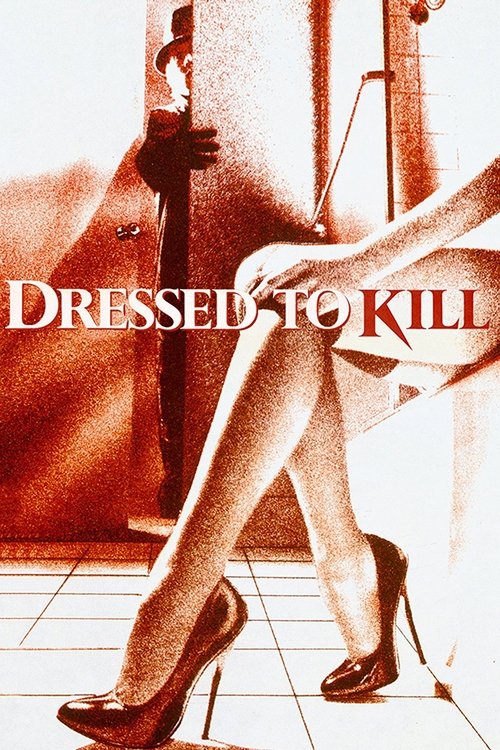
Dressed to Kill
After witnessing a mysterious woman brutally slay a homemaker, prostitute Liz Blake finds herself trapped in a dangerous situation. While the police thinks she is the murderer, the real killer is intent on silencing her only witness.
Despite its small-scale budget of $6.5M, Dressed to Kill became a commercial success, earning $31.9M worldwide—a 391% return. The film's innovative storytelling connected with viewers, confirming that strong storytelling can transcend budget limitations.
1 win & 10 nominations


Plot Structure
Story beats plotted across runtime


Narrative Arc
Emotional journey through the story's key moments
Story Circle
Blueprint 15-beat structure
Arcplot Score Breakdown
Weighted: Precision (70%) + Arc (15%) + Theme (15%)
Dressed to Kill (1980) reveals strategically placed story structure, characteristic of Brian De Palma's storytelling approach. This structural analysis examines how the film's 15-point plot structure maps to proven narrative frameworks across 1 hour and 45 minutes. With an Arcplot score of 6.9, the film balances conventional beats with creative variation.
Characters
Cast & narrative archetypes

Kate Miller
Liz Blake
Dr. Robert Elliott
Peter Miller
Detective Marino
Main Cast & Characters
Kate Miller
Played by Angie Dickinson
A sexually frustrated housewife who becomes the first victim of a mysterious killer wielding a straight razor.
Liz Blake
Played by Nancy Allen
A high-class call girl who witnesses Kate's murder and becomes the next target while helping solve the case.
Dr. Robert Elliott
Played by Michael Caine
Kate's psychiatrist who becomes involved in the investigation, harboring a dark secret identity.
Peter Miller
Played by Keith Gordon
Kate's intelligent teenage son who uses his technical skills to help investigate his mother's murder.
Detective Marino
Played by Dennis Franz
The skeptical NYPD detective assigned to the murder case who initially suspects Liz.
Structural Analysis
The Status Quo at 1 minutes (1% through the runtime) establishes Kate Miller in shower fantasy sequence, establishing her unfulfilled sexual desires and dissatisfaction in her comfortable but passionless marriage.. The analysis reveals that this early placement immediately immerses viewers in the story world.
The inciting incident occurs at 12 minutes when Kate follows a mysterious stranger at the Metropolitan Museum of Art, beginning a dangerous game of seduction that pulls her from her safe world into risk.. At 12% through the film, this Disruption aligns precisely with traditional story structure. This beat shifts the emotional landscape, launching the protagonist into the central conflict.
The First Threshold at 26 minutes marks the transition into Act II, occurring at 25% of the runtime. This demonstrates the protagonist's commitment to Kate makes the active choice to have sex with the stranger in his apartment, crossing from fantasy into dangerous reality., moving from reaction to action.
At 51 minutes, the Midpoint arrives at 49% of the runtime—precisely centered, creating perfect narrative symmetry. Significantly, this crucial beat False defeat: Liz is stalked by the blonde killer in the subway, barely escaping. The danger becomes personal - she's now a target, raising the stakes dramatically., fundamentally raising what's at risk. The emotional intensity shifts, dividing the narrative into clear before-and-after phases.
The Collapse moment at 77 minutes (74% through) represents the emotional nadir. Here, Liz discovers the truth - Dr. Elliott IS Bobbi, a split personality. Elliott/Bobbi murders Mike when he gets too close to the truth. Death of innocence and safety., demonstrates the protagonist at their lowest point. This beat's placement in the final quarter sets up the climactic reversal.
The Second Threshold at 82 minutes initiates the final act resolution at 78% of the runtime. Liz realizes she must use herself as bait to trap Elliott/Bobbi. She synthesizes what she's learned about desire and danger to set up the confrontation., demonstrating the transformation achieved throughout the journey.
Emotional Journey
Dressed to Kill's emotional architecture traces a deliberate progression across 15 carefully calibrated beats.
Narrative Framework
This structural analysis employs proven narrative structure principles that track dramatic progression. By mapping Dressed to Kill against these established plot points, we can identify how Brian De Palma utilizes or subverts traditional narrative conventions. The plot point approach reveals not only adherence to structural principles but also creative choices that distinguish Dressed to Kill within the thriller genre.
Brian De Palma's Structural Approach
Among the 18 Brian De Palma films analyzed on Arcplot, the average structural score is 6.7, demonstrating varied approaches to story architecture. Dressed to Kill represents one of the director's most structurally precise works. For comparative analysis, explore the complete Brian De Palma filmography.
Comparative Analysis
Additional thriller films include The Warriors, Thunderball and Rustom. For more Brian De Palma analyses, see Obsession, Carrie and The Black Dahlia.
Plot Points by Act
Act I
SetupStatus Quo
Kate Miller in shower fantasy sequence, establishing her unfulfilled sexual desires and dissatisfaction in her comfortable but passionless marriage.
Theme
Dr. Elliott tells Kate "There's nothing wrong with your marriage - you're just bored," stating the theme of desire versus safety, the danger of suppressed needs.
Worldbuilding
Establishing Kate's world: therapy sessions with Dr. Elliott, her relationship with her son Peter, her mundane married life, and her growing restlessness.
Disruption
Kate follows a mysterious stranger at the Metropolitan Museum of Art, beginning a dangerous game of seduction that pulls her from her safe world into risk.
Resistance
The museum seduction sequence and taxi ride - Kate debates acting on her desires, oscillating between restraint and recklessness, ultimately choosing to follow the stranger.
Act II
ConfrontationFirst Threshold
Kate makes the active choice to have sex with the stranger in his apartment, crossing from fantasy into dangerous reality.
Mirror World
Kate discovers the stranger's STD test results and flees - meeting Liz Blake in the elevator just before Kate is brutally murdered by a blonde woman with a straight razor.
Premise
Liz Blake becomes the witness/investigator - the call girl who saw the killer. Detective Marino investigates while Liz and Peter team up to find the murderer, exploring the dangerous world of secrets and sexuality.
Midpoint
False defeat: Liz is stalked by the blonde killer in the subway, barely escaping. The danger becomes personal - she's now a target, raising the stakes dramatically.
Opposition
Liz and Peter investigate Dr. Elliott's patients, closing in on the killer's identity. The killer pursues Liz. Pressure mounts as they discover Bobbi, Dr. Elliott's trans patient.
Collapse
Liz discovers the truth - Dr. Elliott IS Bobbi, a split personality. Elliott/Bobbi murders Mike when he gets too close to the truth. Death of innocence and safety.
Crisis
Liz processes the horror of the revelation. Dr. Elliott, the trusted therapist, is the killer. She must now face him/Bobbi directly with this knowledge.
Act III
ResolutionSecond Threshold
Liz realizes she must use herself as bait to trap Elliott/Bobbi. She synthesizes what she's learned about desire and danger to set up the confrontation.
Synthesis
The finale: Liz confronts Elliott/Bobbi in the institution. Bobbi emerges and attacks. Detective Marino saves Liz. Elliott/Bobbi is captured and institutionalized.
Transformation
Liz's nightmare: attacked again by Bobbi, revealing lasting trauma. She awakens screaming - mirroring Kate's opening fantasy but showing fear has replaced desire. Transformation from naivety to awareness of danger.