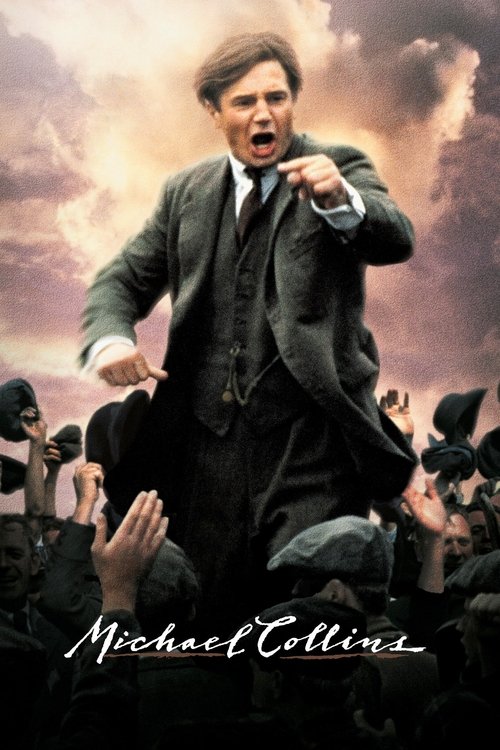
Michael Collins
Michael Collins plays a crucial role in the establishment of the Irish Free State in the 1920s, but becomes vilified by those hoping to create a completely independent Irish republic.
The film disappointed at the box office against its mid-range budget of $25.0M, earning $16.9M globally (-32% loss). While initial box office returns were modest, the film has gained appreciation for its unconventional structure within the war genre.
Nominated for 2 Oscars. 4 wins & 17 nominations


Plot Structure
Story beats plotted across runtime


Narrative Arc
Emotional journey through the story's key moments
Story Circle
Blueprint 15-beat structure
Arcplot Score Breakdown
Weighted: Precision (70%) + Arc (15%) + Theme (15%)
Michael Collins (1996) exhibits strategically placed story structure, characteristic of Neil Jordan's storytelling approach. This structural analysis examines how the film's 15-point plot structure maps to proven narrative frameworks across 2 hours and 12 minutes. With an Arcplot score of 7.0, the film balances conventional beats with creative variation.
Characters
Cast & narrative archetypes

Michael Collins
Harry Boland
Kitty Kiernan
Éamon de Valera
Joe O'Reilly
Ned Broy
Soames
Main Cast & Characters
Michael Collins
Played by Liam Neeson
Irish revolutionary leader who masterminds guerrilla warfare against British forces and negotiates the Anglo-Irish Treaty.
Harry Boland
Played by Aidan Quinn
Collins' close friend and fellow revolutionary who becomes romantically interested in Kitty Kiernan.
Kitty Kiernan
Played by Julia Roberts
The woman caught between two revolutionaries, Michael Collins and Harry Boland, ultimately becoming Collins' fiancée.
Éamon de Valera
Played by Alan Rickman
Senior Irish political leader who becomes President of the Irish Republic and sends Collins to negotiate the treaty.
Joe O'Reilly
Played by Ian Hart
Collins' loyal bodyguard and intelligence operative who remains devoted throughout the struggle.
Ned Broy
Played by Stephen Rea
Detective in Dublin Castle who secretly feeds intelligence to Michael Collins, risking his life as a British police officer.
Soames
Played by Charles Dance
British intelligence officer hunting Michael Collins and his network.
Structural Analysis
The Status Quo at 2 minutes (2% through the runtime) establishes Opening montage establishes Ireland under British occupation in 1916. Collins and his comrades are engaged in the struggle for Irish independence, preparing for the Easter Rising rebellion.. Of particular interest, this early placement immediately immerses viewers in the story world.
The inciting incident occurs at 15 minutes when The Easter Rising begins and quickly fails. Collins and his comrades are captured and imprisoned. The rebellion is crushed, leaders executed, and their cause seems lost.. At 11% through the film, this Disruption aligns precisely with traditional story structure. This beat shifts the emotional landscape, launching the protagonist into the central conflict.
The First Threshold at 33 minutes marks the transition into Act II, occurring at 25% of the runtime. This reveals the protagonist's commitment to Collins makes the active choice to wage a new kind of war. He establishes his intelligence network and begins targeted assassinations of British agents, fully committing to revolutionary guerrilla warfare., moving from reaction to action.
At 65 minutes, the Midpoint arrives at 50% of the runtime—precisely centered, creating perfect narrative symmetry. Notably, this crucial beat False victory: Bloody Sunday operation succeeds spectacularly. Collins' squad eliminates British intelligence officers. The IRA seems to be winning, but this escalation raises stakes tremendously and brings brutal British reprisals., fundamentally raising what's at risk. The emotional intensity shifts, dividing the narrative into clear before-and-after phases.
The Collapse moment at 98 minutes (74% through) represents the emotional nadir. Here, Collins is forced to negotiate the Anglo-Irish Treaty, which falls short of a republic. His mentor relationship with de Valera dies as Dev refuses to sign, making Collins take responsibility. Collins realizes his dream of full independence is impossible., shows the protagonist at their lowest point. This beat's placement in the final quarter sets up the climactic reversal.
The Second Threshold at 104 minutes initiates the final act resolution at 79% of the runtime. Collins accepts that the treaty, though imperfect, gives Ireland "freedom to achieve freedom." He synthesizes his revolutionary ideals with political pragmatism, choosing to build a nation rather than die for an impossible dream., demonstrating the transformation achieved throughout the journey.
Emotional Journey
Michael Collins's emotional architecture traces a deliberate progression across 15 carefully calibrated beats.
Narrative Framework
This structural analysis employs structural analysis methodology used to understand storytelling architecture. By mapping Michael Collins against these established plot points, we can identify how Neil Jordan utilizes or subverts traditional narrative conventions. The plot point approach reveals not only adherence to structural principles but also creative choices that distinguish Michael Collins within the war genre.
Neil Jordan's Structural Approach
Among the 10 Neil Jordan films analyzed on Arcplot, the average structural score is 7.2, reflecting strong command of classical structure. Michael Collins takes a more unconventional approach compared to the director's typical style. For comparative analysis, explore the complete Neil Jordan filmography.
Comparative Analysis
Additional war films include Fury, Shenandoah and More American Graffiti. For more Neil Jordan analyses, see The End of the Affair, The Brave One and Interview with the Vampire.
Plot Points by Act
Act I
SetupStatus Quo
Opening montage establishes Ireland under British occupation in 1916. Collins and his comrades are engaged in the struggle for Irish independence, preparing for the Easter Rising rebellion.
Theme
During preparations, a character states that freedom requires sacrifice and that they must be willing to use unconventional methods against a superior force - establishing the film's exploration of revolutionary violence and political compromise.
Worldbuilding
Introduction of key players: Michael Collins, Eamon de Valera, Harry Boland, and Kitty Kiernan. Establishes the political landscape, British occupation, and the idealistic revolutionary movement planning the Easter Rising.
Disruption
The Easter Rising begins and quickly fails. Collins and his comrades are captured and imprisoned. The rebellion is crushed, leaders executed, and their cause seems lost.
Resistance
In prison and after release, Collins debates strategy with de Valera. He realizes conventional warfare won't work and conceives guerrilla tactics and intelligence warfare. Collins struggles with whether to continue fighting or accept defeat.
Act II
ConfrontationFirst Threshold
Collins makes the active choice to wage a new kind of war. He establishes his intelligence network and begins targeted assassinations of British agents, fully committing to revolutionary guerrilla warfare.
Mirror World
Collins' deepening relationship with Kitty Kiernan represents the personal life and future Ireland he's fighting for. She embodies the cost of violence and the question of whether the ends justify the means.
Premise
Collins' guerrilla campaign - the promise of the premise. Brilliant intelligence operations, assassinations of British agents on Bloody Sunday, cat-and-mouse with British forces. Collins becomes a legendary figure, constantly evading capture.
Midpoint
False victory: Bloody Sunday operation succeeds spectacularly. Collins' squad eliminates British intelligence officers. The IRA seems to be winning, but this escalation raises stakes tremendously and brings brutal British reprisals.
Opposition
British forces intensify with Black and Tans creating terror. Violence spirals. De Valera returns from America and political tensions emerge. The human cost mounts. Collins begins questioning the endless cycle of violence.
Collapse
Collins is forced to negotiate the Anglo-Irish Treaty, which falls short of a republic. His mentor relationship with de Valera dies as Dev refuses to sign, making Collins take responsibility. Collins realizes his dream of full independence is impossible.
Crisis
Collins grapples with the treaty compromise. Dark night as he faces betrayal by former comrades, including his best friend Boland who sides with de Valera. The movement fractures into civil war. Everything Collins fought for is tearing Ireland apart.
Act III
ResolutionSecond Threshold
Collins accepts that the treaty, though imperfect, gives Ireland "freedom to achieve freedom." He synthesizes his revolutionary ideals with political pragmatism, choosing to build a nation rather than die for an impossible dream.
Synthesis
Collins leads the Free State forces in civil war against his former comrades. He tries to end the conflict and build the new Ireland, but extremists on both sides perpetuate violence. Final journey back to his home county Cork.
Transformation
Collins is assassinated in an ambush at Béal na Bláth. The closing images mirror the opening - another Irish funeral, another fallen leader. But Ireland has transformed: it now has its freedom, bought with Collins' pragmatic sacrifice, though the cost was his life.