Munich
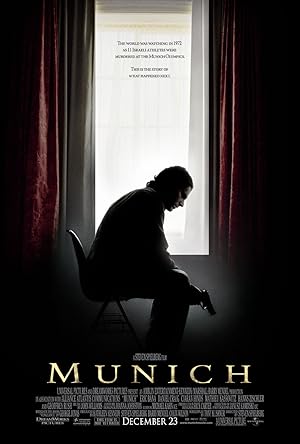
After Black September's assassination of Israeli athletes at the Munich Olympics in 1972, Prime Minister Golda Meir okays a covert operation to hunt down and kill all involved. A team of five gathers in Switzerland led by Avner, a low-level Mossad techie whose father was a war hero and whose wife is pregnant. It's an expendable team, but relying on paid informants, they track and kill several in Europe and Lebanon. They must constantly look over their shoulders for the CIA, KGB, PLO, and their own sources. As the body count mounts -- with retribution following retribution -- so do questions, doubts, and sleepless nights. Loyalties blur. What does it mean to be a Jew?
Working with a mid-range budget of $70.0M, the film achieved a respectable showing with $131.0M in global revenue (+87% profit margin).
Nominated for 5 Oscars. 14 wins & 75 nominations


Plot Structure
Story beats plotted across runtime


Narrative Arc
Emotional journey through the story's key moments
Story Circle
Blueprint 15-beat structure
Arcplot Score Breakdown
Weighted: Precision (70%) + Arc (15%) + Theme (15%)
Munich (2005) exemplifies carefully calibrated dramatic framework, characteristic of Steven Spielberg's storytelling approach. This structural analysis examines how the film's 15-point plot structure maps to proven narrative frameworks across 2 hours and 44 minutes. With an Arcplot score of 5.5, the film takes an unconventional approach to traditional narrative frameworks.
Characters
Cast & narrative archetypes

Avner Kaufman
Ephraim
Steve
Carl
Robert
Hans
Louis
Daphna Kaufman
Main Cast & Characters
Avner Kaufman
Played by Eric Bana
A young Mossad agent chosen to lead a covert assassination team targeting those responsible for the Munich massacre. Struggles with moral complexity as the mission progresses.
Ephraim
Played by Geoffrey Rush
Avner's Mossad handler who provides intelligence and manages the operation from Israel. Pragmatic and focused on the mission's political objectives.
Steve
Played by Daniel Craig
The team's South African driver and getaway specialist. Passionate and hot-headed, struggles with the moral weight of their actions.
Carl
Played by Ciarán Hinds
The team's document forger and cleaner. Methodical and cautious, becomes increasingly paranoid as the mission continues.
Robert
Played by Mathieu Kassovitz
The team's Belgian toymaker and bomb specialist. Gentle and professorial, haunted by the violence he enables.
Hans
Played by Hanns Zischler
The team's oldest member and antiques dealer who secures documents. Experienced and philosophical about their mission.
Louis
Played by Mathieu Amalric
A mysterious French information broker who sells intelligence to anyone who can pay. Operates with his father in the shadows of Cold War espionage.
Daphna Kaufman
Played by Ayelet Zurer
Avner's pregnant wife who remains in Israel. Represents the normal life and moral anchor Avner is leaving behind.
Structural Analysis
The Status Quo at 1 minutes (1% through the runtime) establishes September 5, 1972: Munich Olympic Village shown in peaceful state before dawn. Athletes sleeping, representing the innocence and international cooperation of the Olympic Games.. Structural examination shows that this early placement immediately immerses viewers in the story world.
The inciting incident occurs at 17 minutes when Avner is recruited by Ephraim for a secret Mossad mission: to assassinate eleven Palestinians believed responsible for Munich. His ordinary life as a bodyguard is over.. At 10% through the film, this Disruption aligns precisely with traditional story structure. This beat shifts the emotional landscape, launching the protagonist into the central conflict.
The First Threshold at 37 minutes marks the transition into Act II, occurring at 23% of the runtime. This illustrates the protagonist's commitment to The team executes their first assassination in Rome, killing Abdel Wael Zwaiter. Avner crosses the threshold from protector to assassin. No going back., moving from reaction to action.
At 74 minutes, the Midpoint arrives at 45% of the runtime—arriving early, accelerating into Act IIb complications. Structural examination shows that this crucial beat False defeat: The bomb intended for Salameh kills his daughter and innocents instead. Avner is shaken. The mission becomes morally complicated. Additionally, they realize they're being hunted - someone knows who they are., fundamentally raising what's at risk. The emotional intensity shifts, dividing the narrative into clear before-and-after phases.
The Collapse moment at 108 minutes (66% through) represents the emotional nadir. Here, Robert is killed by a bomb explosion in his own trap. The team's gentle "maker of toys" dies - representing the death of innocence and technical detachment. Avner is devastated, fully comprehending the human cost., indicates the protagonist at their lowest point. This beat's placement in the final quarter sets up the climactic reversal.
The Second Threshold at 116 minutes initiates the final act resolution at 71% of the runtime. Avner decides to complete the final mission despite his doubts. Synthesis: he'll finish what he started, then return home to his family. He accepts moral ambiguity rather than certainty., demonstrating the transformation achieved throughout the journey.
Emotional Journey
Munich's emotional architecture traces a deliberate progression across 15 carefully calibrated beats.
Narrative Framework
This structural analysis employs proven narrative structure principles that track dramatic progression. By mapping Munich against these established plot points, we can identify how Steven Spielberg utilizes or subverts traditional narrative conventions. The plot point approach reveals not only adherence to structural principles but also creative choices that distinguish Munich within the drama genre.
Steven Spielberg's Structural Approach
Among the 33 Steven Spielberg films analyzed on Arcplot, the average structural score is 5.8, showcasing experimental approaches to narrative form. Munich takes a more unconventional approach compared to the director's typical style. For comparative analysis, explore the complete Steven Spielberg filmography.
Comparative Analysis
Additional drama films include After Thomas, South Pacific and Dirty Dancing: Havana Nights. For more Steven Spielberg analyses, see The Adventures of Tintin, Close Encounters of the Third Kind and War Horse.
Plot Points by Act
Act I
SetupStatus Quo
September 5, 1972: Munich Olympic Village shown in peaceful state before dawn. Athletes sleeping, representing the innocence and international cooperation of the Olympic Games.
Theme
Golda Meir states: "Every civilization finds it necessary to negotiate compromises with its own values." This encapsulates the film's exploration of moral compromise in the face of terrorism and revenge.
Worldbuilding
The Black September attack on Israeli athletes unfolds. Eleven hostages killed. Avner's ordinary life with his pregnant wife Daphna is established. He works as a bodyguard for the Israeli embassy.
Disruption
Avner is recruited by Ephraim for a secret Mossad mission: to assassinate eleven Palestinians believed responsible for Munich. His ordinary life as a bodyguard is over.
Resistance
Avner debates accepting the mission, meets his team (Steve, Carl, Robert, Hans), receives training and briefing. He must leave his pregnant wife and "disappear" from official records. The team prepares and plans their approach.
Act II
ConfrontationFirst Threshold
The team executes their first assassination in Rome, killing Abdel Wael Zwaiter. Avner crosses the threshold from protector to assassin. No going back.
Mirror World
Introduction to Louis and Papa, the French intelligence brokers who sell information for money. They represent a morally ambiguous world where loyalty is transactional, contrasting with Avner's idealistic commitment to Israel.
Premise
The team methodically hunts and kills targets across Europe: Paris, Cyprus, London. The "promise of the premise" - spy thriller mechanics, careful planning, execution of missions. They grow more efficient and professional.
Midpoint
False defeat: The bomb intended for Salameh kills his daughter and innocents instead. Avner is shaken. The mission becomes morally complicated. Additionally, they realize they're being hunted - someone knows who they are.
Opposition
Paranoia sets in. Carl is killed by a female assassin. The team discovers their safehouse was compromised. Trust erodes. Avner questions whether their targets were truly responsible. Violence begets violence - more terrorism occurs despite their efforts.
Collapse
Robert is killed by a bomb explosion in his own trap. The team's gentle "maker of toys" dies - representing the death of innocence and technical detachment. Avner is devastated, fully comprehending the human cost.
Crisis
Avner's dark night: he suffers nightmares and flashbacks to Munich massacre. He can't sleep. His moral certainty crumbles. Steve wants to quit. Hans is uncertain. Avner is haunted, questioning everything.
Act III
ResolutionSecond Threshold
Avner decides to complete the final mission despite his doubts. Synthesis: he'll finish what he started, then return home to his family. He accepts moral ambiguity rather than certainty.
Synthesis
Final assassination attempt on Ali Hassan Salameh. Avner returns to New York, reunites with Daphna and his daughter. Confronts Ephraim, refusing further work. Philosophical conversation about the necessity and futility of their actions.
Transformation
Final image: Avner in Brooklyn with his family, but looking across the water at Manhattan's Twin Towers (symbol of future terrorism). He's physically home but spiritually lost. The cycle of violence continues. Transformation is tragic - innocence lost, certainty destroyed.