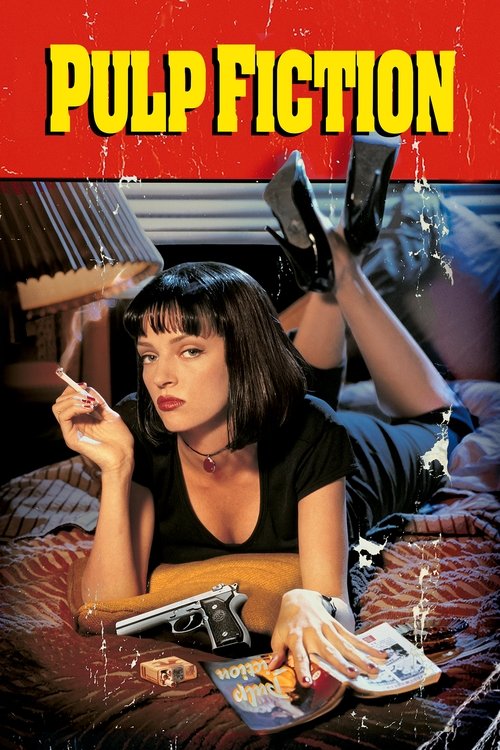
Pulp Fiction
A burger-loving hit man, his philosophical partner, a drug-addled gangster's moll and a washed-up boxer converge in this sprawling, comedic crime caper. Their adventures unfurl in three stories that ingeniously trip back and forth in time.
Despite its modest budget of $8.0M, Pulp Fiction became a massive hit, earning $213.9M worldwide—a remarkable 2574% return. The film's unconventional structure engaged audiences, confirming that strong storytelling can transcend budget limitations.
Academy Award for Best Original Screenplay. Palme d'Or at Cannes. Nominated for Best Picture, Best Director, Best Actor, Best Supporting Actor, Best Supporting Actress.
Roger Ebert
"Ebert praises the film's structure and dialogue, noting that Tarantino creates a world where criminals are funny, scary, and oddly sympathetic. He observes that the nonlinear structure serves a purpose beyond cleverness - it allows the film to be about storytelling itself and how the order of events shapes their meaning. The violence is stylized but never gratuitous, always serving character and theme. Ebert particularly notes Jules's transformation as the film's moral center."Read Full Review


Narrative Tropes
10 totalPlot Structure
Story beats plotted across runtime


Narrative Arc
Emotional journey through the story's key moments
Story Circle
Blueprint 15-beat structure
Arcplot Score Breakdown
Weighted: Precision (70%) + Arc (15%) + Theme (15%)
Pulp Fiction (1994) exemplifies carefully calibrated narrative design, characteristic of Quentin Tarantino's storytelling approach. This structural analysis examines how the film's 15-point plot structure maps to proven narrative frameworks across 2 hours and 34 minutes. With an Arcplot score of 6.8, the film balances conventional beats with creative variation.
Characters
Cast & narrative archetypes
Vincent Vega

Jules Winnfield

Mia Wallace

Butch Coolidge
Marsellus Wallace
Pumpkin

Honey Bunny

Winston Wolfe

Fabienne
Character Screen Time
Screen time mapped to story structure
Main Cast & Characters
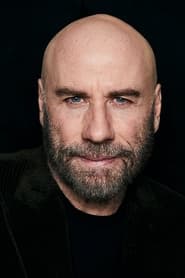
Vincent Vega
Played by John Travolta
69% screen time (102 min)
A philosophical hitman recently returned from Amsterdam, tasked with entertaining his boss's wife. His heroin habit and casual attitude toward violence define his arc.
Jules Winnfield
Played by Samuel L. Jackson
38% screen time (57 min)
Vincent's partner, a hitman who quotes Scripture before killing. A miraculous survival leads him to question his life of violence.
Mia Wallace
Played by Uma Thurman
17% screen time (26 min)
Marsellus Wallace's wife, a former actress with a dangerous taste for drugs. Her near-fatal overdose is the centerpiece of her story.
Butch Coolidge
Played by Bruce Willis
33% screen time (49 min)
A boxer paid to throw a fight who double-crosses the mob, then risks everything to retrieve his father's watch.
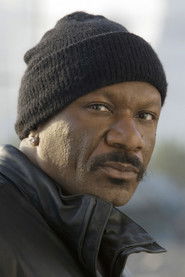
Marsellus Wallace
Played by Ving Rhames
15% screen time (22 min)
A powerful crime boss whose presence looms over all three stories. He's betrayed by Butch and suffers a horrific ordeal.
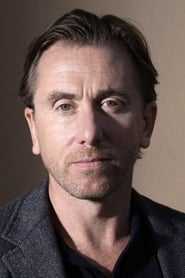
Pumpkin
Played by Tim Roth
9% screen time (14 min)
A small-time robber whose diner heist bookends the film. His confrontation with Jules becomes a moment of unexpected grace.
Honey Bunny
Played by Amanda Plummer
9% screen time (14 min)
Pumpkin's volatile girlfriend and partner in crime. Her hysteria during the robbery escalates the tension.
Winston Wolfe
Played by Harvey Keitel
9% screen time (13 min)
A legendary fixer called in to clean up messy situations. His calm efficiency and sharp suits embody cool professionalism.
Fabienne
Played by Maria de Medeiros
10% screen time (15 min)
Butch's devoted French girlfriend whose forgetfulness sets the gold watch sequence in motion.
Structural Analysis
The Status Quo at 0 minutes (0% through the runtime) establishes CARRIER: Pumpkin & Honey Bunny. Two small-time criminals sit in a Los Angeles diner, debating the safest type of robbery. Their conversation is charming, romantic even—then suddenly they kiss, pull guns, and freeze on their moment of "triumph." Violence as casual calculation. Crime as lifestyle choice, not moral crisis. This is the world BEFORE transformation.. Of particular interest, this early placement immediately immerses viewers in the story world.
The inciting incident occurs at 15 minutes when CARRIER: Jules/Vincent. The interrogation begins at Brett's apartment. "Let me take a wild guess here. You're Brett, right?" Jules begins the Big Kahuna Burger intimidation routine. The job crosses the point of no return—they're committed to violence. This external event sets everything in motion: the execution, the miracle, the diverging fates.. At 10% through the film, this Disruption aligns precisely with traditional story structure. This beat shifts the emotional state to -1, launching the protagonist into the central conflict.
The First Threshold at 28 minutes marks the transition into Act II, occurring at 18% of the runtime. This indicates the protagonist's commitment to CARRIER: Vincent. Vincent buys heroin from Lance, preparing for his date with Mia Wallace. He's committed to this dangerous assignment—taking the boss's wife out, knowing what happened to Tony Rocky Horror. THE UPSIDE-DOWN WORLD: Vincent enters Act II alone. Without Jules's philosophical counterweight, he makes increasingly bad decisions. The heroin he buys will nearly kill Mia., moving from reaction to action. The emotional journey here reflects -1.
At 75 minutes, the Midpoint arrives at 49% of the runtime—precisely centered, creating perfect narrative symmetry. Significantly, this crucial beat CARRIER: Butch. FALSE DEFEAT BECOMES TRUE STAKES. Butch has escaped with the money, but Fabienne tells him she forgot to pack his father's gold watch. "It's not just a watch. It was on your daddy's wrist when he was shot down." Butch MUST go back. The watch represents his father's legacy, his honor code, everything that makes him more than just a criminal. He CHOOSES to risk his life for what matters. The turn: from running away to running toward. From survival to honor., fundamentally raising what's at risk. The emotional state shifts to -1, dividing the narrative into clear before-and-after phases.
The Collapse moment at 112 minutes (73% through) represents the emotional nadir. Here, CARRIER: Jules. WORLDVIEW DEATH. "We should be fuckin' dead, man." The Bonnie Situation shows us what happened AFTER Brett's apartment (shown LATE in presented order). A hidden assailant fired at Jules and Vincent from point-blank range with a hand cannon. Every bullet missed. Vincent: "We was lucky." Jules: "That shit wasn't luck. This was divine intervention." Jules can no longer dismiss what happened. Either his entire worldview is wrong, or God intervened. His certainty is shattered., shows the protagonist at their lowest point with -3. This beat's placement in the final quarter sets up the climactic reversal.
The Second Threshold at 117 minutes initiates the final act resolution at 76% of the runtime. CARRIER: Jules. SYNTHESIS—THE DECISION. "You wanna play blind man, go walk with the shepherd, but me, my eyes are wide fuckin' open." Vincent challenges. Jules responds: "That's it for me. From here on in, you can consider my ass retired." THE DECISION IS MADE HERE—in the car, not the diner. Jules has synthesized what he learned: the miracle was real, Vincent's path leads to death, the Ezekiel passage is a call. Immediately after: Marvin is shot in the face, testing Jules's resolve. He doesn't waver., demonstrating the transformation achieved throughout the journey. The emotional culmination reaches 1.
Emotional Journey
Pulp Fiction's emotional architecture traces a deliberate progression from -1 to 2. The narrative's emotional pivot at the midpoint—-1—divides the journey into distinct phases, with the first half building toward this moment of transformation and the second half exploring its consequences. With 5 core emotional states, the narrative maintains focused emotional clarity, allowing sustained thematic development.
Narrative Framework
This structural analysis employs structural analysis methodology used to understand storytelling architecture. By mapping Pulp Fiction against these established plot points, we can identify how Quentin Tarantino utilizes or subverts traditional narrative conventions. The plot point approach reveals not only adherence to structural principles but also creative choices that distinguish Pulp Fiction within the thriller genre.
Quentin Tarantino's Structural Approach
Among the 11 Quentin Tarantino films analyzed on Arcplot, the average structural score is 4.6, showcasing experimental approaches to narrative form. Pulp Fiction represents one of the director's most structurally precise works. For comparative analysis, explore the complete Quentin Tarantino filmography.
Comparative Analysis
Additional thriller films include The Warriors, Thunderball and Rustom. For more Quentin Tarantino analyses, see Kill Bill: The Whole Bloody Affair, Reservoir Dogs and Django Unchained.
Plot Points by Act
Act I
SetupStatus Quo
CARRIER: Pumpkin & Honey Bunny. Two small-time criminals sit in a Los Angeles diner, debating the safest type of robbery. Their conversation is charming, romantic even—then suddenly they kiss, pull guns, and freeze on their moment of "triumph." Violence as casual calculation. Crime as lifestyle choice, not moral crisis. This is the world BEFORE transformation.
Theme
CARRIER: Vincent/Jules. The foot massage debate. Vincent: "Foot massages don't mean shit!" Jules counters that touching Marsellus Wallace's wife "in a familiar way" absolutely means something—context creates meaning. THE THEME: Do actions have inherent meaning, or is meaning something we choose to see? This question determines who lives and who dies. Vincent will dismiss the miracle as "a freak occurrence" and die. Jules will see divine intervention and live.
Worldbuilding
CARRIERS: Pumpkin & Honey Bunny → Jules & Vincent. We meet the world: Professional hitmen who discuss pop culture between murders. Royale with Cheese. The mysterious glowing briefcase. Marsellus Wallace's unseen power. The casual brutality of this life. Key elements planted: Jules's Ezekiel passage (used as intimidation), Vincent's dismissiveness ("chill, this shit happens"), the hierarchy of criminal power.
Disruption
CARRIER: Jules/Vincent. The interrogation begins at Brett's apartment. "Let me take a wild guess here. You're Brett, right?" Jules begins the Big Kahuna Burger intimidation routine. The job crosses the point of no return—they're committed to violence. This external event sets everything in motion: the execution, the miracle, the diverging fates.
Resistance
CARRIERS: Jules → Vincent (baton passing). The execution unfolds. Jules recites Ezekiel 25:17 as "cold-blooded shit to say before you pop a cap in his ass"—hollow intimidation. Brett and friends killed. Cut to: Marsellus Wallace's back, talking to Butch about throwing the fight. The criminal world's hierarchy established. Vincent prepares to take Mia out—the dangerous assignment that will test him.
Act II
ConfrontationFirst Threshold
CARRIER: Vincent. Vincent buys heroin from Lance, preparing for his date with Mia Wallace. He's committed to this dangerous assignment—taking the boss's wife out, knowing what happened to Tony Rocky Horror. THE UPSIDE-DOWN WORLD: Vincent enters Act II alone. Without Jules's philosophical counterweight, he makes increasingly bad decisions. The heroin he buys will nearly kill Mia.
Mirror World
CARRIERS: Vincent & Mia. The Jack Rabbit Slim's date begins. They discuss uncomfortable silences, Vincent's Europe trip, the failed TV pilot "Fox Force Five." They dance the twist, win the trophy. Connection forms between two people navigating the same dangerous world. But this isn't a love story—it's a cautionary tale. Vincent faces consequences (Mia's overdose) but doesn't learn.
Premise
CARRIERS: Vincent → Butch. PROMISE OF THE PREMISE—Tarantino's style in full effect. (1) Vincent/Mia segment: $5 shake, twist contest, then Mia finds Vincent's heroin, mistakes it for cocaine, overdoses. Frantic drive to Lance's, adrenaline shot to the heart. She survives; Vincent goes home unchanged. (2) "The Gold Watch": Captain Koons delivers young Butch's birthright—the watch his father hid for years in a Vietnamese prison camp. Butch wakes up victorious, having won the fight he was supposed to throw.
Midpoint
CARRIER: Butch. FALSE DEFEAT BECOMES TRUE STAKES. Butch has escaped with the money, but Fabienne tells him she forgot to pack his father's gold watch. "It's not just a watch. It was on your daddy's wrist when he was shot down." Butch MUST go back. The watch represents his father's legacy, his honor code, everything that makes him more than just a criminal. He CHOOSES to risk his life for what matters. The turn: from running away to running toward. From survival to honor.
Opposition
CARRIERS: Butch → Jules. Butch returns to his apartment, kills Vincent on the toilet (we already know this; we saw it coming). Escapes, hits Marsellus with his car, chased into a pawn shop, both men captured by sadistic rapists Maynard and Zed. Butch escapes. He could flee—no one would blame him. Instead: hammer, baseball bat, chainsaw, samurai sword. He chooses the sword. Goes back down. Saves Marsellus Wallace—his enemy. Marsellus, freed: "We're cool." THEN: "THE BONNIE SITUATION" title card. Baton returns to Jules.
Collapse
CARRIER: Jules. WORLDVIEW DEATH. "We should be fuckin' dead, man." The Bonnie Situation shows us what happened AFTER Brett's apartment (shown LATE in presented order). A hidden assailant fired at Jules and Vincent from point-blank range with a hand cannon. Every bullet missed. Vincent: "We was lucky." Jules: "That shit wasn't luck. This was divine intervention." Jules can no longer dismiss what happened. Either his entire worldview is wrong, or God intervened. His certainty is shattered.
Crisis
CARRIER: Jules (with Vincent as foil). Ninety seconds of reckoning. "That means God came down from Heaven and stopped the bullets." / "That's right. That's exactly what it means." Vincent refuses to engage: "Yeah, maybe. Can we go now?" Jules insists: "What just happened was a fuckin' miracle!" Vincent dismisses: "Chill. This shit happens." The two men who experienced the same event reach opposite conclusions. One will live. One will die.
Act III
ResolutionSecond Threshold
CARRIER: Jules. SYNTHESIS—THE DECISION. "You wanna play blind man, go walk with the shepherd, but me, my eyes are wide fuckin' open." Vincent challenges. Jules responds: "That's it for me. From here on in, you can consider my ass retired." THE DECISION IS MADE HERE—in the car, not the diner. Jules has synthesized what he learned: the miracle was real, Vincent's path leads to death, the Ezekiel passage is a call. Immediately after: Marvin is shot in the face, testing Jules's resolve. He doesn't waver.
Synthesis
CARRIER: Jules. The Wolf arrives to clean up Marvin—cold efficiency of the criminal world Jules is leaving. They deliver the briefcase to Marsellus. Cut to: the diner. Jules and Vincent at breakfast. Jules restates his decision: "I'm gonna walk the earth. Like Caine in Kung Fu." Vincent: "You're gonna be a bum." Pumpkin and Honey Bunny stand up—we've returned to the Opening Image. Robbery unfolds. Jules has the power to kill them easily. Instead: final Ezekiel recitation, now with UNDERSTANDING. Three interpretations, ending: "You're the weak, and I'm the tyranny of evil men. But I'm tryin', Ringo. I'm tryin' real hard to be the shepherd." Jules chooses mercy. Lets them go.
Transformation
CARRIERS: Jules & Vincent. Two guys walk out of a diner after breakfast, briefcase in hand. Mundane. But we know: Vincent will die (we already saw it in Butch's bathroom). Jules will live (he chose to leave). Opening Image: Pumpkin & Honey Bunny frozen in moment of criminal "triumph"—casual violence. Final Image: Jules frozen in moment of grace—conscious mercy. The theme answered: Meaning exists when we choose to see it. That choice determines our fate.