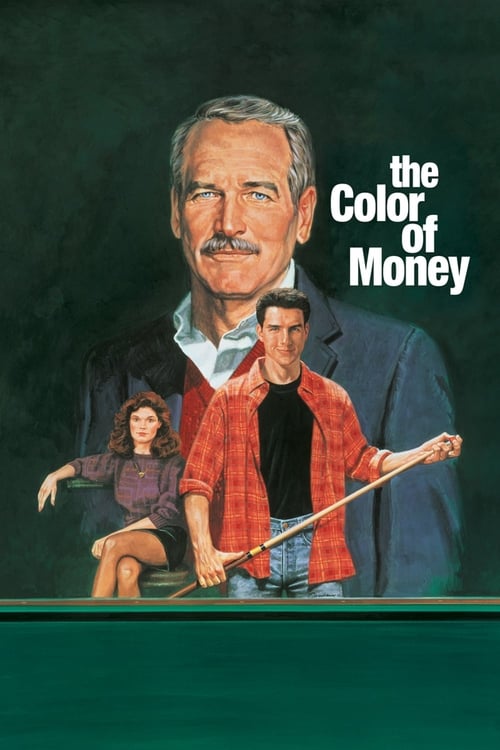
The Color of Money
Former pool hustler "Fast Eddie" Felson decides he wants to return to the game by taking a pupil. He meets talented but green Vincent Lauria and proposes a partnership. As they tour pool halls, Eddie teaches Vincent the tricks of scamming, but he eventually grows frustrated with Vincent's showboat antics, leading to an argument and a falling-out. Eddie takes up playing again and soon crosses paths with Vincent as an opponent.
Despite its modest budget of $13.8M, The Color of Money became a box office success, earning $52.3M worldwide—a 279% return. The film's bold vision attracted moviegoers, illustrating how strong storytelling can transcend budget limitations.
1 Oscar. 3 wins & 10 nominations


Plot Structure
Story beats plotted across runtime


Narrative Arc
Emotional journey through the story's key moments
Story Circle
Blueprint 15-beat structure
Arcplot Score Breakdown
Weighted: Precision (70%) + Arc (15%) + Theme (15%)
The Color of Money (1986) exhibits precise narrative architecture, characteristic of Martin Scorsese's storytelling approach. This structural analysis examines how the film's 15-point plot structure maps to proven narrative frameworks across 1 hour and 59 minutes. With an Arcplot score of 7.4, the film balances conventional beats with creative variation.
Characters
Cast & narrative archetypes

Eddie Felson
Vincent Lauria
Carmen
Julian
Main Cast & Characters
Eddie Felson
Played by Paul Newman
Aging pool hustler and former champion who takes on a protégé to recapture his competitive edge and confront his past.
Vincent Lauria
Played by Tom Cruise
Talented but immature young pool player with natural gifts who needs guidance to harness his abilities professionally.
Carmen
Played by Mary Elizabeth Mastrantonio
Vincent's girlfriend and manager who understands the business side of pool hustling and fiercely protects Vincent's interests.
Julian
Played by John Turturro
Smooth-talking professional gambler and pool hustler who represents the modern generation of players.
Structural Analysis
The Status Quo at 1 minutes (1% through the runtime) establishes Eddie Felson, now a liquor salesman, hustles small-time pool games with his girlfriend Carmen, showcasing his manipulative skills but living a diminished life compared to his former glory as "Fast Eddie.".. The analysis reveals that this early placement immediately immerses viewers in the story world.
The inciting incident occurs at 14 minutes when Eddie discovers Vincent Lauria, a young pool prodigy with raw talent but no discipline. Watching Vincent play awakens something dormant in Eddie—a chance to relive his glory days through a protégé.. At 12% through the film, this Disruption aligns precisely with traditional story structure. This beat shifts the emotional landscape, launching the protagonist into the central conflict.
The First Threshold at 29 minutes marks the transition into Act II, occurring at 24% of the runtime. This shows the protagonist's commitment to Eddie commits to taking Vincent and Carmen on the road to Atlantic City for the big tournament. He actively chooses to re-enter the world of professional pool, leaving his safe liquor business behind., moving from reaction to action.
At 58 minutes, the Midpoint arrives at 49% of the runtime—precisely centered, creating perfect narrative symmetry. Notably, this crucial beat Vincent refuses to throw a crucial game despite Eddie's instructions, winning instead and exposing their hustle. Eddie's control collapses. The false victory of Vincent's win is actually Eddie's defeat—he realizes he's lost control of his protégé., fundamentally raising what's at risk. The emotional intensity shifts, dividing the narrative into clear before-and-after phases.
The Collapse moment at 87 minutes (73% through) represents the emotional nadir. Here, Eddie is humiliated in a pool game by a younger player, Amos. His pride and identity as "Fast Eddie" die. He realizes he's been dead inside, playing it safe, and has lost his competitive edge—the very thing that made him alive., demonstrates the protagonist at their lowest point. This beat's placement in the final quarter sets up the climactic reversal.
The Second Threshold at 95 minutes initiates the final act resolution at 79% of the runtime. Eddie decides to enter the Atlantic City tournament himself as a player, not a stakehorse. He synthesizes what he taught Vincent (character, discipline) with his natural talent. He chooses to compete for his own redemption., demonstrating the transformation achieved throughout the journey.
Emotional Journey
The Color of Money's emotional architecture traces a deliberate progression across 15 carefully calibrated beats.
Narrative Framework
This structural analysis employs systematic plot point analysis that identifies crucial turning points. By mapping The Color of Money against these established plot points, we can identify how Martin Scorsese utilizes or subverts traditional narrative conventions. The plot point approach reveals not only adherence to structural principles but also creative choices that distinguish The Color of Money within the drama genre.
Martin Scorsese's Structural Approach
Among the 18 Martin Scorsese films analyzed on Arcplot, the average structural score is 6.0, showcasing experimental approaches to narrative form. The Color of Money represents one of the director's most structurally precise works. For comparative analysis, explore the complete Martin Scorsese filmography.
Comparative Analysis
Additional drama films include After Thomas, South Pacific and Dirty Dancing: Havana Nights. For more Martin Scorsese analyses, see Casino, Killers of the Flower Moon and After Hours.
Plot Points by Act
Act I
SetupStatus Quo
Eddie Felson, now a liquor salesman, hustles small-time pool games with his girlfriend Carmen, showcasing his manipulative skills but living a diminished life compared to his former glory as "Fast Eddie."
Theme
Eddie tells Vincent: "You got natural character, but you need to develop yourself." The theme of talent versus character, and the need for internal development beyond natural gifts, is established.
Worldbuilding
Eddie's world of small-time hustling with Carmen is established. We see his routine of setting up marks, his relationship dynamics, and the hollowness of his current existence compared to his legendary past.
Disruption
Eddie discovers Vincent Lauria, a young pool prodigy with raw talent but no discipline. Watching Vincent play awakens something dormant in Eddie—a chance to relive his glory days through a protégé.
Resistance
Eddie debates whether to take Vincent on. He tries to teach Vincent about hustling and character, but Vincent resists being controlled. Carmen and Vincent's girlfriend Carmen add complications. Eddie wrestles with his motivations.
Act II
ConfrontationFirst Threshold
Eddie commits to taking Vincent and Carmen on the road to Atlantic City for the big tournament. He actively chooses to re-enter the world of professional pool, leaving his safe liquor business behind.
Mirror World
Vincent and Carmen's relationship reflects Eddie's thematic journey. Vincent embodies the raw talent Eddie once had, while Carmen represents the manipulative hustler Eddie has become—creating a mirror for Eddie's internal conflict.
Premise
The road trip delivers on the premise: Eddie teaching Vincent the art of the hustle. Games, cons, and lessons fill this section as Eddie tries to mold Vincent into a controlled weapon while Vincent's girlfriend Carmen complicates the dynamic.
Midpoint
Vincent refuses to throw a crucial game despite Eddie's instructions, winning instead and exposing their hustle. Eddie's control collapses. The false victory of Vincent's win is actually Eddie's defeat—he realizes he's lost control of his protégé.
Opposition
Eddie's relationship with Vincent deteriorates. Vincent and Carmen go their own way. Eddie faces the emptiness of his life and realizes he's been living vicariously. The opposition comes from within—Eddie's own loss of identity and purpose.
Collapse
Eddie is humiliated in a pool game by a younger player, Amos. His pride and identity as "Fast Eddie" die. He realizes he's been dead inside, playing it safe, and has lost his competitive edge—the very thing that made him alive.
Crisis
Eddie contemplates his wasted years and empty existence. He processes the death of his former self and the realization that he must play for himself, not through Vincent. Dark night of recognizing his cowardice.
Act III
ResolutionSecond Threshold
Eddie decides to enter the Atlantic City tournament himself as a player, not a stakehorse. He synthesizes what he taught Vincent (character, discipline) with his natural talent. He chooses to compete for his own redemption.
Synthesis
Eddie competes in the tournament, battling through rounds with his rediscovered passion and skill. The finale culminates in facing Vincent, where Eddie must prove he's reclaimed his identity and self-worth through honest competition.
Transformation
After Vincent deliberately loses to Eddie (trying to hustle him), Eddie rejects the con: "I just want to win again." Eddie has transformed from manipulator to authentic competitor, reclaiming his identity and self-respect on his own terms.