Von Ryan's Express
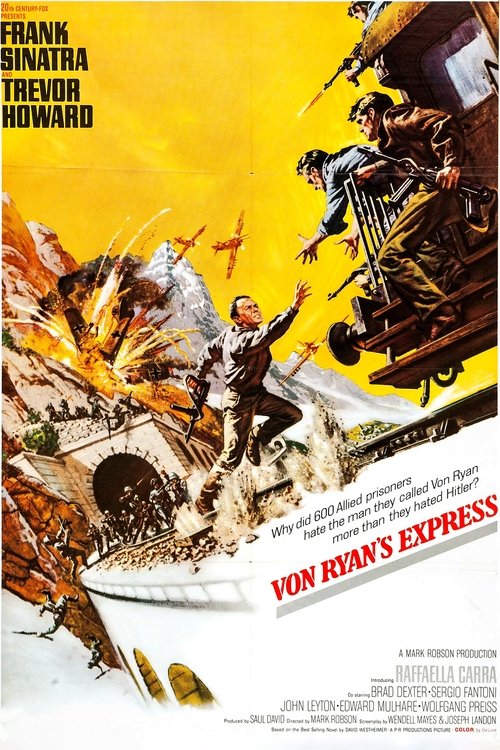
Von Ryan's Express stars Frank Sinatra as a POW colonel who leads a daring escape from WWII Italy by taking over a freight train, but he has to win over the British soldiers he finds himself commanding.
Despite its limited budget of $5.8M, Von Ryan's Express became a financial success, earning $17.1M worldwide—a 197% return.
Nominated for 1 Oscar. 1 win & 3 nominations


Plot Structure
Story beats plotted across runtime


Narrative Arc
Emotional journey through the story's key moments
Story Circle
Blueprint 15-beat structure
Arcplot Score Breakdown
Weighted: Precision (70%) + Arc (15%) + Theme (15%)
Von Ryan's Express (1965) showcases carefully calibrated narrative design, characteristic of Mark Robson's storytelling approach. This structural analysis examines how the film's 15-point plot structure maps to proven narrative frameworks across 1 hour and 57 minutes. With an Arcplot score of 7.0, the film balances conventional beats with creative variation.
Structural Analysis
The Status Quo at 1 minutes (1% through the runtime) establishes Allied POWs are force-marched through Italian countryside in brutal conditions, establishing their desperate situation under incompetent British leadership before Ryan arrives.. Significantly, this early placement immediately immerses viewers in the story world.
The inciting incident occurs at 14 minutes when Italy surrenders to the Allies. The Italian guards abandon the camp, creating unexpected opportunity for freedom and forcing Ryan to take command of the entire prisoner population.. At 12% through the film, this Disruption aligns precisely with traditional story structure. This beat shifts the emotional landscape, launching the protagonist into the central conflict.
The First Threshold at 29 minutes marks the transition into Act II, occurring at 25% of the runtime. This shows the protagonist's commitment to Ryan makes the active choice to seize control of the German prison train, committing the POWs to a dangerous escape attempt rather than passive imprisonment. The men are now fugitives in enemy territory., moving from reaction to action.
At 59 minutes, the Midpoint arrives at 50% of the runtime—precisely centered, creating perfect narrative symmetry. Structural examination shows that this crucial beat False defeat: The train is diverted away from the Swiss border and ordered to Milan, deep into German-controlled territory. Their escape route is cut off and stakes are raised—they're heading into greater danger rather than toward freedom., fundamentally raising what's at risk. The emotional intensity shifts, dividing the narrative into clear before-and-after phases.
The Collapse moment at 88 minutes (75% through) represents the emotional nadir. Here, Their cover is blown and German forces mobilize to stop the train. Major Fincham is killed during the firefight at the airfield, providing the "whiff of death." Ryan loses his moral compass and the mission seems doomed., demonstrates the protagonist at their lowest point. This beat's placement in the final quarter sets up the climactic reversal.
The Second Threshold at 94 minutes initiates the final act resolution at 81% of the runtime. Ryan synthesizes Fincham's lessons about sacrifice with his own tactical skills. He commits to getting his men to freedom no matter the personal cost, fully embracing the leadership role he initially resisted. The transformed Ryan emerges., demonstrating the transformation achieved throughout the journey.
Emotional Journey
Von Ryan's Express's emotional architecture traces a deliberate progression across 15 carefully calibrated beats.
Narrative Framework
This structural analysis employs a 15-point narrative structure framework that maps key story moments. By mapping Von Ryan's Express against these established plot points, we can identify how Mark Robson utilizes or subverts traditional narrative conventions. The plot point approach reveals not only adherence to structural principles but also creative choices that distinguish Von Ryan's Express within the war genre.
Mark Robson's Structural Approach
Among the 3 Mark Robson films analyzed on Arcplot, the average structural score is 7.3, reflecting strong command of classical structure. Von Ryan's Express takes a more unconventional approach compared to the director's typical style. For comparative analysis, explore the complete Mark Robson filmography.
Comparative Analysis
Additional war films include Fury, Shenandoah and More American Graffiti. For more Mark Robson analyses, see Earthquake, Valley of the Dolls.
Plot Points by Act
Act I
SetupStatus Quo
Allied POWs are force-marched through Italian countryside in brutal conditions, establishing their desperate situation under incompetent British leadership before Ryan arrives.
Theme
British Major Fincham tells Ryan that survival isn't just about orders—it's about maintaining dignity and looking after your men, foreshadowing Ryan's journey from pragmatist to true leader.
Worldbuilding
Ryan arrives at Italian POW camp and immediately clashes with British Major Fincham. Ryan's pragmatic approach (cooperating with captors for survival) earns him the derisive nickname "Von Ryan." Camp dynamics, power structure, and character relationships established.
Disruption
Italy surrenders to the Allies. The Italian guards abandon the camp, creating unexpected opportunity for freedom and forcing Ryan to take command of the entire prisoner population.
Resistance
Ryan debates whether to wait for Allied liberation or attempt escape. Germans arrive and recapture the camp before Allied forces reach them. Ryan realizes his cautious strategy failed and must now plan active escape.
Act II
ConfrontationFirst Threshold
Ryan makes the active choice to seize control of the German prison train, committing the POWs to a dangerous escape attempt rather than passive imprisonment. The men are now fugitives in enemy territory.
Mirror World
Ryan and Fincham begin working together as partners. Fincham represents the values Ryan needs to learn—courage, sacrifice, and caring about men over mere survival. Their relationship carries the film's thematic weight.
Premise
The "fun and games" of impersonating Germans and operating the train. POWs navigate checkpoints, bluff their way through stations, and execute clever deceptions. This is the adventure the audience came for—the promise of the premise.
Midpoint
False defeat: The train is diverted away from the Swiss border and ordered to Milan, deep into German-controlled territory. Their escape route is cut off and stakes are raised—they're heading into greater danger rather than toward freedom.
Opposition
Germans close in as suspicions grow. The men must maintain their disguise under increasing pressure. Multiple close calls at stations, a dangerous rerouting through populated areas, and narrowing options as the net tightens around them.
Collapse
Their cover is blown and German forces mobilize to stop the train. Major Fincham is killed during the firefight at the airfield, providing the "whiff of death." Ryan loses his moral compass and the mission seems doomed.
Crisis
Dark moment as Ryan grapples with Fincham's death and the weight of command. The men are exhausted, Germans are in pursuit, and the border is still miles away. Ryan must find the resolve to push forward despite the losses.
Act III
ResolutionSecond Threshold
Ryan synthesizes Fincham's lessons about sacrifice with his own tactical skills. He commits to getting his men to freedom no matter the personal cost, fully embracing the leadership role he initially resisted. The transformed Ryan emerges.
Synthesis
The finale: desperate push to the Swiss border with Germans in pursuit. Ryan executes brilliant tactical decisions, ensuring his men reach safety. He stays behind to complete the final task, embodying the selfless leadership Fincham represented.
Transformation
Ryan is shot down by German fire just as his men cross into Switzerland. The closing image shows the POWs safe in Switzerland watching their leader fall—Ryan has transformed from "Von Ryan" the pragmatic survivor into a true hero who sacrificed everything for his men.